When Is Nerve Grafting Needed? 7 Critical Facts to Know
When Is Nerve Grafting Needed is an important question for people who have experienced nerve damage due to accidents, injuries, or other causes. Peripheral nerves carry signals between the brain, spinal cord, muscles, and skin. When one of these nerves is severely damaged, a person may experience numbness, pain, muscle weakness, or difficulty moving the affected body part. Depending on the nature and extent of the injury, surgical repair may be considered.
Nerve grafting is a specialised surgical technique used when a damaged section of a nerve cannot be repaired by directly joining its healthy ends without excessive tension. In this procedure, a suitable nerve segment is used to bridge the gap and provide a pathway for nerve fibres to regenerate. Whether this treatment is appropriate depends on the injury, the length of the nerve gap, the location of the damage, and the patient’s overall condition.
What Is Nerve Grafting?
Nerve grafting is a reconstructive procedure used to repair a damaged peripheral nerve when a direct connection between the healthy nerve ends is not possible. The damaged portion may need to be removed, leaving a gap that prevents the nerve ends from reaching each other comfortably.
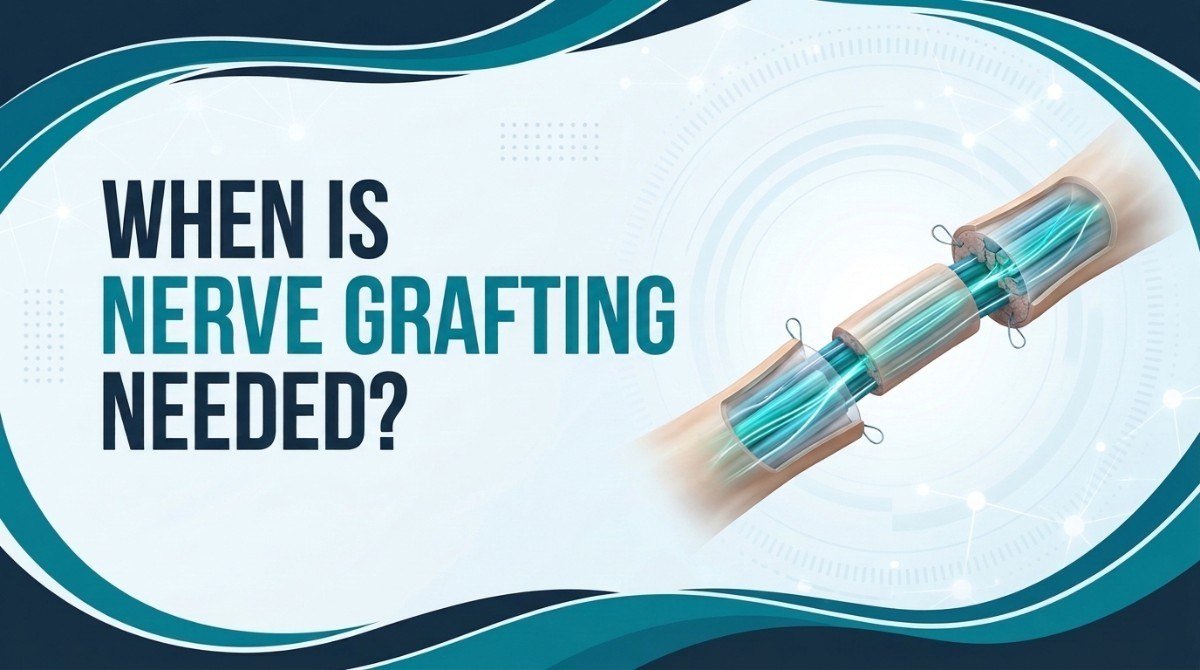
A nerve graft is placed between the two ends to bridge this gap. It acts as a pathway that supports the growth of nerve fibres towards the area that has lost its nerve supply.
Depending on the individual case, the graft may be obtained from another nerve in the patient’s body or selected from an appropriate alternative graft material. The choice depends on the location, length, and type of nerve defect, as well as the treatment plan.
Nerve grafting does not immediately restore sensation or movement. Nerve fibres need time to grow through the repaired area, and the extent of functional recovery varies between patients.
When Is Nerve Grafting Needed?
Nerve grafting may be considered when the damaged nerve cannot be repaired directly without creating tension at the repair site. The decision is based on clinical examination, investigations, and the findings during surgical assessment.
Some situations in which nerve grafting may be considered include:
1. When There Is a Gap Between the Nerve Ends
A severe injury may completely divide a nerve or destroy a section of nerve tissue. After the damaged portion is removed, the remaining healthy ends may be too far apart for direct reconnection.
In such cases, a nerve graft may be used to bridge the gap. The surgeon evaluates the length and location of the defect before selecting the appropriate reconstruction method.
2. After Severe Traumatic Nerve Injuries
Road traffic accidents, workplace injuries, sharp-object injuries, and other forms of trauma can cause significant peripheral nerve damage.
Some injuries affect only the outer structures of a nerve, while others may disrupt its internal fibres or completely divide it. When the damage is extensive and direct repair is not possible, grafting may be considered as part of nerve reconstruction.
3. When Damaged Nerve Tissue Must Be Removed
In certain injuries, the damaged nerve section may contain scar tissue or non-functional tissue. The surgeon may need to remove this section to reach healthier nerve ends.
If removing the affected tissue creates a gap that cannot be closed without tension, nerve grafting may be considered.
4. In Selected Brachial Plexus Injuries
The brachial plexus is a network of nerves that carries signals from the neck region to the shoulder, arm, and hand. Injuries to this network can affect movement, sensation, and muscle strength.
Some brachial plexus injuries involve nerve damage that may require reconstruction. Depending on the injury pattern and the availability of suitable nerve ends, nerve grafting may be considered alone or alongside other procedures, such as nerve transfers.
5. When Direct Nerve Repair Would Create Excessive Tension
Direct nerve repair is generally considered when the healthy ends can be brought together without undue tension. Pulling the ends together forcefully may compromise the repair.
When a tension-free direct connection is not possible, a graft may provide an alternative way to bridge the damaged section.
Who May Be Suitable for Nerve Grafting?
Not every person with nerve damage requires nerve graft surgery. Some nerve injuries may recover without an operation, while others may need a different surgical technique.
Nerve grafting may be considered for individuals who:
Have a significant peripheral nerve defect.
Have a nerve injury in which direct repair is not technically suitable.
Have lost nerve continuity due to trauma or removal of damaged tissue.
Have a nerve injury that requires reconstructive treatment after specialist assessment.
Have suitable nerve ends and surrounding tissue conditions for the proposed reconstruction.
Eligibility cannot be determined by symptoms alone. The surgeon must evaluate the injury pattern, the time since the injury, the condition of the muscles supplied by the nerve, and the possibility of spontaneous recovery.
What Tests Help Determine Whether Nerve Grafting Is Needed?
A detailed evaluation helps the surgeon understand the location and severity of the nerve injury. The investigations recommended may vary according to the symptoms and the suspected injury.
Clinical Examination
The assessment may include checking muscle strength, movement, sensation, pain, and reflexes. The examination helps identify which nerve or nerve group may be affected.
Nerve Conduction Studies
Nerve conduction studies measure how electrical signals travel through peripheral nerves. They can help identify abnormalities in nerve function and provide information about the affected area.
Electromyography (EMG)
EMG evaluates electrical activity in selected muscles. It may help identify changes associated with nerve injury and assess whether the affected muscles show signs of nerve supply.
Imaging Tests
Depending on the injury, imaging such as ultrasound or magnetic resonance imaging may be recommended to examine the nerve and surrounding structures. The choice of investigation depends on the suspected location and type of damage.
The findings from these assessments are considered together. No single test automatically determines whether nerve grafting is required.
Nerve Grafting vs Direct Nerve Repair
Both procedures aim to restore continuity in a damaged nerve, but they are used in different situations.
Direct nerve repair involves joining the healthy ends of an injured nerve when they can be brought together without excessive tension.
Nerve grafting involves placing a graft between the healthy nerve ends when a gap prevents suitable direct repair.
The surgeon selects the method according to the condition of the nerve, the size of the gap, the location of the injury, and the possibility of achieving a tension-free reconstruction.
In some complex injuries, other procedures, including nerve transfers, may also be considered.
How Is Nerve Graft Surgery Performed?
The exact surgical approach depends on the location and extent of the nerve injury. The procedure is generally planned around the following stages:
1. Accessing the Injured Nerve
The surgeon makes an incision to reach the affected nerve and examines the damaged area.
2. Identifying Healthy Nerve Ends
The injured section is assessed. If necessary, non-functional or severely damaged tissue is removed to identify healthier nerve ends.
3. Selecting the Graft
A suitable graft is selected based on the length and characteristics of the nerve defect. In some cases, a sensory nerve from another part of the patient’s body may be used.
4. Bridging the Nerve Gap
The graft is positioned between the healthy nerve ends and connected using microsurgical techniques. The aim is to establish a suitable pathway for nerve regeneration without excessive tension.
5. Completing the Repair
The surgical area is checked, and the incision is closed. Depending on the location and extent of the procedure, temporary support or immobilisation may be recommended.
What Factors Influence Recovery After Nerve Grafting?
Recovery following nerve graft surgery varies according to several factors. The procedure provides a pathway for nerve regeneration, but the return of sensation and muscle function takes time.
Important factors include:
Location of the injury: Nerve injuries closer to the muscles or skin being supplied may have a different recovery pattern from injuries located farther away.
Length of the nerve gap: Longer grafts may require a greater distance for regenerating nerve fibres to travel.
Time since injury: Delayed treatment may affect the condition of the nerve and the muscles it supplies.
Type and severity of damage: The extent of nerve disruption influences the treatment approach and potential recovery.
Patient-related factors: Age, general health, associated injuries, and rehabilitation participation may influence recovery.
Follow-up assessments help monitor changes in sensation, movement, and muscle function. Physiotherapy or occupational therapy may also be recommended according to individual needs.
When Should You Consult a Nerve Specialist?
Persistent numbness, weakness, loss of movement, or unusual sensations following an injury should be medically evaluated. A penetrating injury associated with an immediate loss of nerve function needs prompt medical attention.
An early assessment can help identify the extent of nerve damage and determine whether observation, rehabilitation, direct nerve repair, grafting, or another treatment approach should be considered.
Patients should not assume that every nerve injury requires surgery. The treatment plan should be based on the clinical findings and the likelihood of natural recovery.
Individual Assessment for Nerve Grafting
Nerve grafting is one of the reconstructive options used for selected peripheral nerve injuries. It may be considered when a damaged nerve has a gap that cannot be repaired directly without excessive tension. Careful evaluation helps determine whether grafting, direct repair, nerve transfer, or another approach is appropriate.
The treatment decision should account for the type of injury, the condition of the nerve ends, the time since damage, and the patient’s functional needs. A consultation with a qualified specialist can help patients understand the available options and the expected stages of treatment and rehabilitation.
- Brachial Plexus Surgery in Kerala
- What Is Nerve Repair Surgery?
- What Is Nerve Graft Surgery?
- Nerve Repair vs Nerve Graft
- When Is Nerve Grafting Needed?
- Recovery After Nerve Graft Surgery
- Can a Damaged Nerve Be Repaired?
- How Long Does Nerve Repair Take to Heal?
- Brachial Plexus Injury Specialist in Kerala
- Brachial Plexus Surgery Specialist in Kerala
- Brachial Plexus Reconstruction in Kerala

Dr. Pradeep Kumar
Plastic & Reconstructive Surgeon – Brachial Plexus & Nerve Surgery Specialist
Dr. Pradeep Kumar is an experienced plastic and reconstructive surgeon known for his expertise in brachial plexus and peripheral nerve surgery. With extensive microsurgical experience, he focuses on restoring movement and function for patients with complex nerve injuries.
Sushrutha Institute of Plastic Surgery, Elite Mission Hospital, Thrissur
Frequently Asked Questions
Frequently Asked Questions About Nerve Grafting
Nerve grafting may be needed when a damaged nerve has a gap that cannot be repaired by directly joining the healthy ends without excessive tension. The surgeon evaluates the injury and determines whether grafting is an appropriate treatment option.
No. Some nerve injuries may recover without surgery, while others may be treated through direct nerve repair, nerve grafting or nerve transfer. The choice depends on the location, severity and pattern of the injury.
A nerve graft may be taken from a suitable sensory nerve in another part of the patient's body. The surgeon selects the graft based on the location and length of the damaged nerve section and the patient's individual needs.
Nerve graft surgery aims to provide a pathway for nerve fibres to regenerate. Improvement in movement and sensation depends on factors such as the severity and location of the injury, the distance to the target muscles and the patient's recovery. Complete recovery cannot be guaranteed.
Yes. Nerve grafting uses a graft to bridge a gap between damaged nerve ends. Nerve transfer uses a functioning donor nerve or part of it to provide a new source of nerve supply to an affected area.
Recovery varies according to the injury, graft length and distance nerve fibres need to travel. Nerve regeneration and functional improvement may take several months or longer. Regular follow-up and rehabilitation may be recommended.