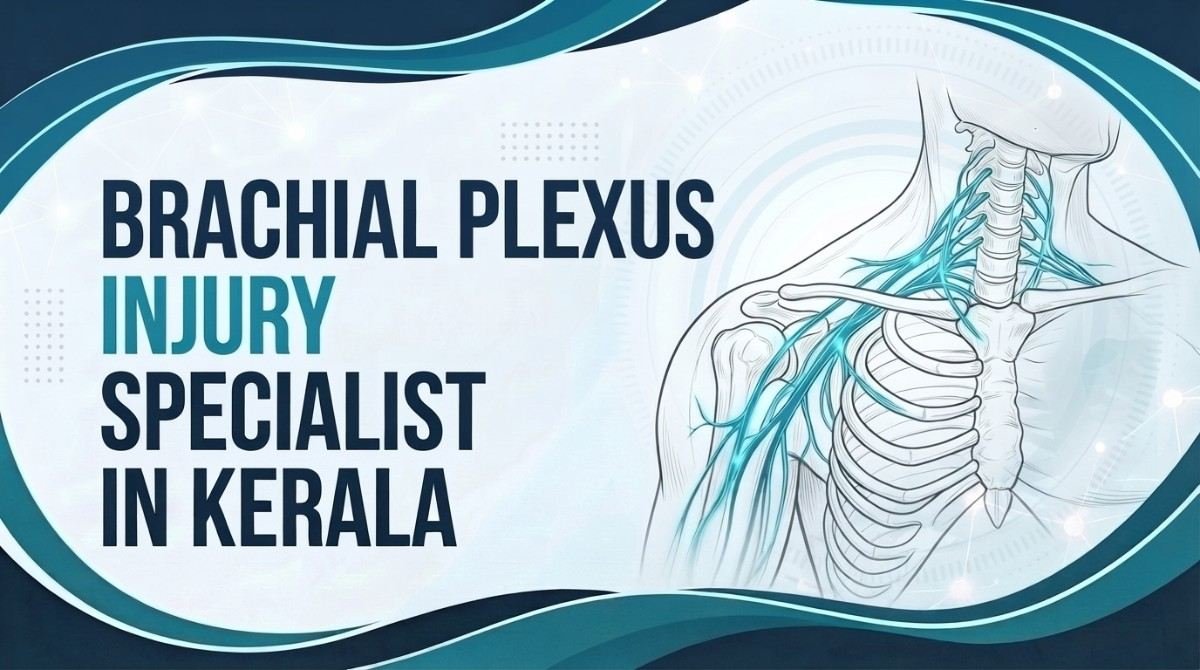
Brachial Plexus Injury Specialist in Kerala: 7 Comprehensive Facts
Brachial Plexus Injury Specialist in Kerala is an important consideration for individuals experiencing shoulder, arm or hand weakness following an accident, fall, sports injury or other traumatic event. The brachial plexus is a network of nerves that originates near the neck and extends towards the shoulder, arm and hand. These nerves control movement and sensation in the upper limb. Damage to this network can result in pain, numbness, muscle weakness or partial or complete loss of arm movement. The type and severity of the injury determine the appropriate treatment approach. Specialist evaluation helps identify the affected nerves, assess functional limitations and determine whether observation, rehabilitation or surgical intervention may be appropriate.
What Is a Brachial Plexus Injury?
The brachial plexus is a complex network of nerves formed by the nerve roots originating from the lower cervical and upper thoracic spinal regions, generally C5 to T1.
These nerves carry motor and sensory signals between the spinal cord and the upper limb. They help control several important functions, including:
Shoulder movement and stability
Elbow bending and straightening
Wrist movement
Finger movement and grip strength
Sensation in the arm and hand
A brachial plexus injury occurs when one or more of these nerves become stretched, compressed, torn or separated from their origin.
The injury may affect a small part of the nerve network or involve multiple nerve roots, resulting in different levels of functional impairment.
What Causes Brachial Plexus Injuries?
Brachial plexus injuries can occur following traumatic events or certain medical conditions that affect the nerves.
1. Road Traffic Accidents
Motorcycle accidents and other road traffic injuries are common causes of traumatic brachial plexus damage. A sudden force involving the neck and shoulder can stretch or tear the nerves.
2. Sports Injuries
Contact sports, falls and high-impact activities may cause excessive stretching of the shoulder and neck region, potentially damaging the brachial plexus.
3. Falls and Physical Trauma
A fall from a height or direct impact to the shoulder may injure the nerve network. The severity depends on the direction and force of the injury.
4. Birth-Related Injuries
During difficult deliveries, excessive stretching of the baby’s neck and shoulder region may damage the brachial plexus. These injuries are commonly referred to as obstetric brachial plexus injuries.
5. Compression and Other Medical Conditions
In certain cases, the brachial plexus may be affected by prolonged compression, tumours, inflammation or other conditions involving nearby structures.
What Are the Symptoms of a Brachial Plexus Injury?
Symptoms vary according to the nerves affected and the extent of the injury. Some individuals experience mild sensory disturbances, while others develop significant weakness or loss of movement.
Common symptoms include:
Shoulder Weakness
Damage to certain upper brachial plexus nerves can affect shoulder movement. Patients may find it difficult to lift the arm, rotate the shoulder or perform overhead activities.
Difficulty Bending the Elbow
Involvement of the nerves responsible for elbow movement may cause difficulty bending the arm. This can affect activities such as lifting objects or bringing the hand towards the face.
Loss of Grip Strength
More extensive injuries may affect the nerves controlling wrist and finger movement. Patients may experience reduced grip strength or difficulty holding everyday objects.
Numbness and Tingling
Damage to sensory nerve fibres may cause reduced sensation, tingling, burning sensations or numbness in different parts of the arm and hand.
Severe Nerve Pain
Some patients experience persistent burning, shooting or electric-shock-like pain following a brachial plexus injury.
Partial or Complete Loss of Arm Movement
Severe injuries may result in substantial weakness or paralysis affecting the shoulder, arm, wrist or hand.
Sudden weakness or loss of movement following trauma requires prompt medical assessment.
Types of Brachial Plexus Injuries
Understanding the type of injury is important when determining the treatment approach.
1. Neurapraxia
Neurapraxia is generally considered a mild form of nerve injury involving temporary disruption of nerve signalling without complete disruption of the nerve structure.
Recovery may occur naturally, although the duration depends on the extent of the injury.
2. Axonotmesis
Axonotmesis involves damage to the internal nerve fibres while some of the surrounding connective tissue structures remain intact.
Nerve regeneration may occur, but recovery can take several months and may require monitoring and rehabilitation.
3. Neurotmesis
Neurotmesis is a severe nerve injury involving disruption of the nerve’s internal and supporting structures.
Spontaneous recovery is generally limited, and surgical assessment may be necessary to determine whether nerve repair or reconstruction is appropriate.
4. Nerve Root Avulsion
Nerve root avulsion occurs when a nerve root is pulled away from its attachment to the spinal cord.
This is a particularly severe form of brachial plexus injury. The treatment approach may involve specialised reconstructive procedures, including selected nerve transfer techniques.
When Should You Consult a Brachial Plexus Injury Specialist?
Not every shoulder or arm injury involves brachial plexus damage. However, certain symptoms following trauma should prompt specialist evaluation.
Consider seeking assessment when you experience:
Persistent weakness following a neck or shoulder injury
Difficulty lifting or rotating the arm
Loss of elbow, wrist or finger movement
Numbness affecting the arm or hand
Reduced grip strength
Severe nerve-related pain
Loss of sensation following an accident
Progressive muscle weakness or wasting
Early assessment is important because certain severe nerve injuries may benefit from timely surgical evaluation.
A specialist can determine whether the symptoms are related to the brachial plexus, another peripheral nerve or a different musculoskeletal or neurological condition.
How Is a Brachial Plexus Injury Diagnosed?
Diagnosis involves understanding the injury mechanism, evaluating nerve function and identifying the location and severity of damage.
A specialist may recommend several investigations.
1. Clinical Examination
A detailed physical examination is an important part of the diagnostic process.
The specialist may assess:
Shoulder and elbow movement
Wrist and finger strength
Muscle power
Sensory function
Reflexes
Muscle wasting
Functional limitations
The pattern of weakness and sensory changes can help identify the nerves involved.
2. Nerve Conduction Studies
Nerve conduction studies measure how electrical signals travel through peripheral nerves.
These tests may help identify abnormalities in nerve function and provide information about the location and extent of certain nerve injuries.
3. Electromyography (EMG)
EMG evaluates the electrical activity of muscles and helps identify signs of nerve-related muscle dysfunction.
It can provide useful information about nerve injury and possible reinnervation during follow-up.
4. MRI and MR Neurography
MRI may help examine the brachial plexus, surrounding soft tissues and associated injuries.
MR neurography is a specialised imaging technique that can provide additional information about nerve structures in selected cases.
5. CT Myelography
CT myelography may be recommended in selected cases when nerve root avulsion is suspected.
It can help assess the spinal nerve roots and provide information that supports surgical planning.
Not every patient requires all these investigations. The selection depends on the clinical findings and suspected injury pattern.
Treatment Options for Brachial Plexus Injuries
Treatment depends on the severity of the injury, the nerves involved, the duration of symptoms and the patient’s functional requirements.
Some injuries may improve with observation and rehabilitation, while others require specialised surgical procedures.
1. Observation and Monitoring
Selected mild nerve injuries may recover without surgery.
During this period, the specialist monitors changes in muscle strength, sensation and movement to identify signs of recovery.
2. Physiotherapy and Rehabilitation
Rehabilitation plays an important role in managing brachial plexus injuries.
Depending on the condition, physiotherapy may help:
Maintain shoulder and elbow movement
Prevent joint stiffness
Reduce the risk of contractures
Maintain muscle flexibility
Support functional use of the affected arm
Occupational therapy may also help patients adapt everyday activities when hand or arm function is affected.
3. Pain Management
Nerve-related pain can be an important concern following brachial plexus injury.
Treatment may involve appropriate medications, rehabilitation and other pain-management approaches depending on the cause and severity of symptoms.
4. Nerve Repair
Nerve repair may be considered when the damaged nerve ends can be identified and reconnected without excessive tension.
The procedure uses specialised microsurgical techniques to restore nerve continuity and provide a pathway for regeneration.
5. Nerve Grafting
When a damaged nerve has a gap that cannot be closed through direct repair, nerve grafting may be considered.
A suitable donor nerve segment is used to bridge the gap between the injured nerve ends.
6. Nerve Transfer
Nerve transfer is an important reconstructive option for selected severe brachial plexus injuries.
A functioning donor nerve or nerve branch is redirected to a damaged nerve to restore a specific function.
The procedure may be considered when direct repair is not possible or when the original nerve pathway is unlikely to provide adequate recovery.
Why Is Early Specialist Evaluation Important?
The timing of assessment and treatment can influence the available options for certain brachial plexus injuries.
In severe injuries, prolonged interruption of nerve supply may result in changes to the muscles that depend on those nerves.
Early specialist evaluation helps to:
Identify the extent of nerve damage.
Distinguish between injuries that may recover naturally and those requiring intervention.
Determine whether nerve root avulsion or complete nerve disruption is present.
Evaluate the suitability and timing of reconstructive procedures.
Develop an appropriate monitoring and rehabilitation plan.
However, the ideal treatment timing varies according to the injury. Some patients require immediate evaluation, while others may undergo a period of structured observation.
What Factors Influence Recovery After a Brachial Plexus Injury?
Recovery varies considerably between individuals. Several factors influence the possibility of regaining useful movement and sensation.
Severity of the Injury
Mild stretching injuries generally have a different recovery outlook from complete nerve divisions or nerve root avulsions.
Number of Nerves Affected
An injury involving several nerve roots may result in more extensive functional impairment than an injury affecting a single nerve component.
Timing of Treatment
The timing of specialist assessment and appropriate intervention may influence the available treatment options.
Distance to Target Muscles
Regenerating nerve fibres must travel from the injury or repair site to the muscles they supply. Longer distances can increase the time required for functional improvement.
Muscle Condition
Prolonged loss of nerve supply may lead to muscle wasting and changes that affect the potential for functional recovery.
Rehabilitation
A structured rehabilitation programme can help maintain joint mobility and support the use of the affected limb during recovery.
Brachial Plexus Injury in Adults and Children
Brachial plexus injuries can affect both adults and children, but the causes and clinical considerations may differ.
Adult Brachial Plexus Injuries
Adult injuries frequently occur following road traffic accidents, falls and sports-related trauma.
The pattern of injury may involve stretching, tearing or avulsion of nerve roots. Treatment decisions depend on the extent of damage and the functional requirements of the patient.
Obstetric Brachial Plexus Injuries
Obstetric brachial plexus injuries occur during childbirth and may affect shoulder, elbow, wrist or hand movement in newborns.
Some infants show gradual improvement, while others may have persistent weakness or movement restrictions.
Early assessment by an appropriately experienced specialist is important to monitor recovery and identify children who may require additional treatment.
Consultation With Dr. Pradeep Kumar in Kerala
Individuals experiencing shoulder, arm or hand weakness following an accident or traumatic injury may benefit from evaluation by a specialist experienced in peripheral nerve and reconstructive surgery.
Dr. Pradeep Kumar evaluates selected peripheral nerve and brachial plexus injuries, considering the location of nerve damage, functional limitations and appropriate treatment possibilities.
The assessment may involve clinical examination, review of previous investigations and recommendations for additional diagnostic tests when required.
Depending on the findings, the treatment plan may involve observation, rehabilitation, nerve repair, nerve grafting or nerve transfer.
Patients can discuss their symptoms, diagnosis, available treatment options and expected recovery considerations during consultation.
Understanding the Importance of Specialist Care
Brachial plexus injuries can affect several important functions of the upper limb, including shoulder movement, elbow control, wrist movement and hand function. The extent of impairment depends on the nerves involved and the severity of the injury.
Appropriate diagnosis and specialist assessment help determine whether natural recovery, rehabilitation or surgical intervention may be suitable. Individuals experiencing persistent weakness, numbness or loss of movement after an injury should seek timely medical evaluation to understand their condition and available treatment options.
- Brachial Plexus Surgery in Kerala
- What Is Nerve Repair Surgery?
- What Is Nerve Graft Surgery?
- Nerve Repair vs Nerve Graft
- When Is Nerve Grafting Needed?
- Recovery After Nerve Graft Surgery
- Can a Damaged Nerve Be Repaired?
- How Long Does Nerve Repair Take to Heal?
- Brachial Plexus Injury Specialist in Kerala
- Brachial Plexus Surgery Specialist in Kerala
- Brachial Plexus Reconstruction in Kerala

Dr. Pradeep Kumar
Plastic & Reconstructive Surgeon – Brachial Plexus & Nerve Surgery Specialist
Dr. Pradeep Kumar is an experienced plastic and reconstructive surgeon known for his expertise in brachial plexus and peripheral nerve surgery. With extensive microsurgical experience, he focuses on restoring movement and function for patients with complex nerve injuries.
Sushrutha Institute of Plastic Surgery, Elite Mission Hospital, Thrissur
Frequently Asked Questions
You should consult a brachial plexus injury specialist if you experience arm weakness, numbness, tingling, shoulder pain, reduced movement or loss of sensation following an accident, fall or other injury. Early assessment can help identify the extent of nerve damage and determine appropriate treatment options.
Common symptoms include shoulder or arm pain, muscle weakness, numbness, tingling, reduced grip strength and difficulty moving the shoulder, elbow, wrist or fingers. Symptoms depend on which nerves are affected and the severity of the injury.
Brachial plexus injuries may occur due to road traffic accidents, sports injuries, falls, shoulder trauma, excessive stretching of the neck and shoulder region, or other forms of physical trauma. Some injuries may also occur during childbirth.
Diagnosis usually involves a detailed medical history and physical examination to assess muscle strength, sensation and joint movement. Depending on the injury, investigations such as nerve conduction studies, electromyography (EMG), MRI or other imaging tests may be recommended.
Some brachial plexus injuries may improve without surgery, particularly when the nerves are stretched or temporarily compressed. Treatment may involve observation, pain management and rehabilitation. More severe injuries may require surgical evaluation, depending on the type and extent of nerve damage.
Treatment depends on the injury pattern and its severity. Options may include observation, physiotherapy, occupational therapy, pain management and surgical procedures such as nerve repair, nerve grafting or nerve transfer when clinically indicated.
Recovery time varies according to the type of nerve injury, its severity, the nerves involved and the treatment provided. Some less severe injuries may improve over weeks or months, while significant nerve injuries and those requiring surgery may need a longer recovery and rehabilitation period.
Arm movement may improve as affected nerves recover or following appropriate treatment. The extent of functional recovery depends on the severity and location of the injury, the condition of the nerves and muscles, and the timing of treatment. Individual outcomes can vary.