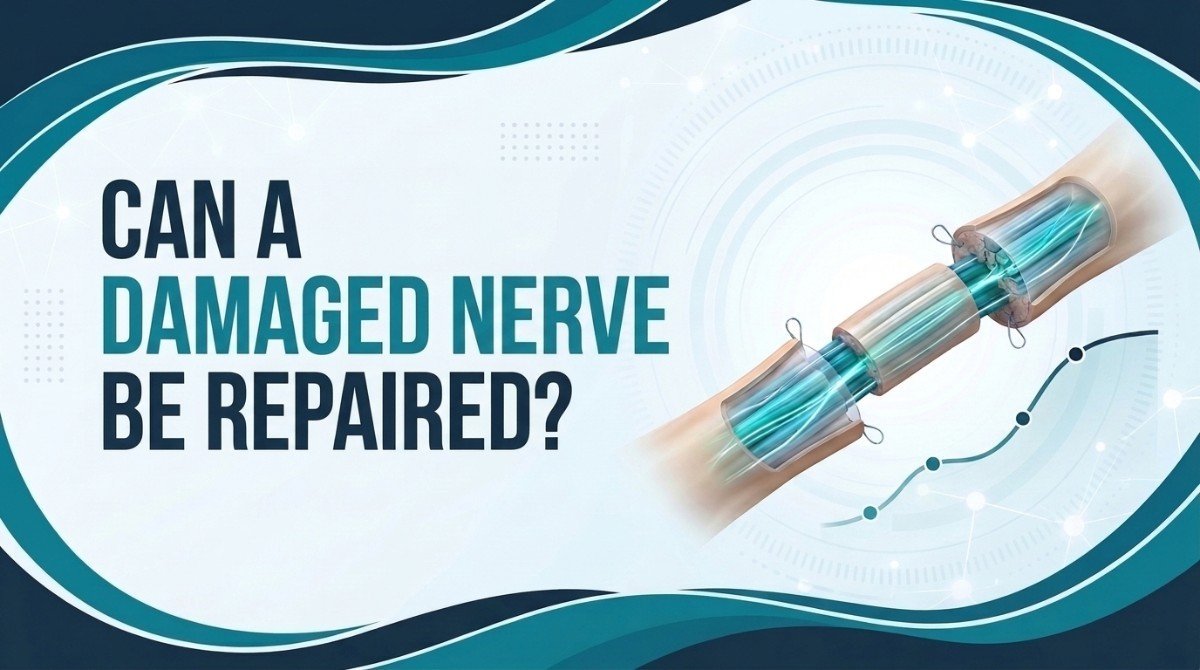
Can a Damaged Nerve Be Repaired? 7 Important Treatment Facts
Can a Damaged Nerve Be Repaired? Yes, many damaged nerves can be treated through appropriate medical care, and some injuries may require specialised nerve repair surgery. The possibility of restoring nerve function depends on the type of injury, its severity, the location of the damage, and how much time has passed since the injury occurred. Peripheral nerves carry signals between the brain, spinal cord, muscles and skin. When these nerves are injured, a person may experience numbness, tingling, pain, muscle weakness or loss of movement. Early assessment by a specialist can help determine whether the nerve may recover naturally or requires surgical treatment.
Understanding Nerve Damage
Nerve damage occurs when a peripheral nerve is compressed, stretched, cut, crushed or otherwise injured. These injuries can affect the transmission of sensory and motor signals between the nervous system and different parts of the body.
Depending on the severity, nerve injuries may cause temporary changes in sensation or more significant functional problems.
Common symptoms include:
Numbness or reduced sensation in the affected area
Tingling or pins-and-needles sensations
Burning, shooting or electric-shock-like pain
Muscle weakness
Difficulty moving the affected limb or body part
Reduced coordination or grip strength
Muscle wasting in prolonged cases of nerve dysfunction
The symptoms and their severity depend on which nerve is affected and the extent of the injury.
Can a Damaged Nerve Be Repaired Completely?
Whether a damaged nerve can be repaired completely depends on the nature of the injury. Some nerves recover without surgery, while others may need microsurgical intervention to restore continuity or improve the possibility of functional recovery.
Mild nerve injuries involving temporary compression or stretching may improve as the nerve recovers. More severe injuries, particularly those involving a complete nerve cut or disruption, may require surgical repair.
However, repairing the physical structure of a nerve does not always mean that normal sensation and movement will return completely. Nerve regeneration is a gradual process, and the final outcome depends on several factors, including the distance the nerve must regenerate, the condition of the surrounding tissues and the availability of appropriate rehabilitation.
Types of Nerve Injuries and Their Treatment
Understanding the type of nerve injury helps determine the most appropriate treatment approach.
1. Nerve Compression
Nerve compression occurs when surrounding tissues, swelling, scar tissue or other structures place pressure on a nerve. This may interfere with normal nerve signalling.
Symptoms can include numbness, tingling, pain and weakness. Depending on the cause and severity, treatment may involve activity modification, medication, physiotherapy, splinting or surgery to relieve pressure on the affected nerve.
2. Nerve Stretching Injury
A nerve may become overstretched following an accident, fall, sports injury or sudden pulling force. Mild stretching injuries may recover gradually, while more severe injuries can damage the internal nerve structures.
Treatment depends on the extent of the damage and whether the nerve retains its continuity.
3. Partial Nerve Tear
A partial nerve injury occurs when some nerve fibres are damaged while part of the nerve structure remains intact. Recovery varies according to the severity of the injury.
Some patients may benefit from observation and rehabilitation, whereas others may require surgical evaluation.
4. Complete Nerve Injury
A complete nerve injury occurs when the nerve is completely divided or severely disrupted. In these situations, the nerve may not reconnect naturally in a way that restores useful function.
Surgical procedures such as direct nerve repair or nerve grafting may be considered depending on the location and extent of the injury.
How Can a Damaged Nerve Be Repaired?
Several treatment approaches are available for peripheral nerve injuries. The appropriate method is selected after assessing the injury, nerve continuity, functional loss and overall clinical condition.
1. Natural Nerve Recovery
Some nerve injuries improve without surgery. When the nerve remains structurally intact but has experienced temporary compression or stretching, the damaged nerve fibres may recover over time.
Treatment may include:
Avoiding activities that worsen nerve compression
Managing pain and associated symptoms
Physiotherapy to maintain joint movement
Occupational therapy to improve daily function
Regular clinical monitoring
The recovery period varies depending on the severity and location of the injury.
2. Direct Nerve Repair Surgery
Direct nerve repair may be considered when a nerve has been completely divided but the damaged ends can be brought together without excessive tension.
During the procedure, the surgeon carefully identifies the nerve ends and reconnects them using specialised microsurgical techniques and fine sutures.
The purpose is to provide a pathway for regenerating nerve fibres to grow across the repaired area.
Direct repair is not suitable for every nerve injury. The gap between the nerve ends, tissue condition and possibility of tension-free reconnection influence the surgical decision.
3. Nerve Grafting Surgery
When a damaged nerve has a gap that cannot be closed safely through direct repair, nerve grafting may be considered.
In this procedure, a segment of donor nerve is used to bridge the gap between the injured nerve ends. The graft provides a pathway that supports nerve regeneration.
Nerve grafting may be considered in selected traumatic nerve injuries, including certain peripheral nerve and brachial plexus injuries.
The choice of graft and surgical approach depends on the injury pattern and the functional requirements of the affected nerve.
4. Nerve Transfer Surgery
Nerve transfer surgery is another option for selected severe nerve injuries, particularly when the original nerve cannot provide adequate recovery.
In this procedure, a functioning donor nerve or a branch of a nerve is redirected to a damaged nerve or its target to restore a particular function.
Nerve transfers may be considered in certain brachial plexus injuries and other complex peripheral nerve conditions.
The timing of surgery, availability of suitable donor nerves and condition of the target muscles are important considerations.
5. Nerve Decompression Surgery
When a nerve is compressed by surrounding structures, surgery may be recommended to release the pressure.
The procedure involves identifying the compressed nerve and relieving the structures responsible for restricting it. The aim is to reduce ongoing nerve irritation and provide an opportunity for functional improvement.
The expected outcome depends on how long the nerve has been compressed and whether permanent nerve damage has occurred.
When Is Nerve Repair Surgery Needed?
Not every nerve injury requires an operation. However, surgical evaluation may be important when there is evidence of significant structural damage or persistent functional loss.
Nerve repair surgery may be considered in situations such as:
A completely divided peripheral nerve
Severe nerve injuries following accidents or trauma
Persistent weakness associated with significant nerve damage
Loss of movement due to interruption of motor nerve signals
Selected brachial plexus injuries
Nerve injuries that are unlikely to recover adequately without intervention
The decision to operate should be based on clinical examination, injury history and appropriate investigations. Delaying assessment of a severe nerve injury may reduce the available treatment options in some cases.
How Is a Damaged Nerve Diagnosed?
A proper diagnosis is essential before deciding whether natural recovery, surgical repair or another treatment approach is appropriate.
A specialist may recommend the following assessments:
Clinical Examination
The examination includes evaluating muscle strength, sensation, reflexes, movement and functional limitations. The specialist may also assess the location and pattern of the injury.
Nerve Conduction Studies
Nerve conduction studies measure how electrical signals travel through peripheral nerves. These tests can help identify abnormalities in nerve function and provide information about the location and severity of certain injuries.
Electromyography (EMG)
EMG evaluates the electrical activity of muscles and helps identify signs of nerve-related muscle dysfunction.
Imaging Investigations
Ultrasound or MRI may be recommended to examine nerve continuity, surrounding structures and associated soft-tissue injuries. Additional imaging may be required depending on the suspected injury.
No single investigation is sufficient for every nerve injury. Findings are interpreted alongside the clinical examination and injury history.
Factors That Influence Nerve Repair Recovery
Nerve recovery is different for every patient. Even when a surgical procedure successfully reconnects a nerve, functional improvement may take several months or longer.
Important factors include:
Type of injury: Compression, stretching, partial tears and complete nerve divisions have different recovery patterns.
Location of damage: Nerves located farther from their target muscles may require longer regeneration distances.
Time since injury: Early identification and appropriate treatment are important in selected nerve injuries.
Age and general health: Individual health factors may influence healing and rehabilitation.
Muscle condition: Prolonged loss of nerve supply can affect the muscles and influence functional recovery.
Rehabilitation: Appropriate physiotherapy and occupational therapy may help maintain movement and improve functional use during recovery.
It is important to understand that nerve repair surgery cannot guarantee complete restoration of normal nerve function.
What Happens After Nerve Repair Surgery?
Postoperative care plays an important role in the overall treatment process. The recovery plan depends on the type of surgery, the nerve involved and the extent of the original injury.
Patients may require:
Wound care and follow-up examinations
Temporary splinting or protection of the repaired area
Physiotherapy to maintain joint flexibility
Occupational therapy for functional activities
Sensory re-education when appropriate
Regular monitoring of muscle strength and sensation
Nerve regeneration occurs gradually. Patients should follow the specialist’s instructions and attend scheduled reviews to monitor progress.
Can Nerve Function Return After a Long-Standing Injury?
Recovery after a long-standing nerve injury can be more challenging, but the possibility of treatment depends on the individual condition.
When a nerve has remained damaged for an extended period, the muscles supplied by that nerve may undergo changes due to prolonged loss of nerve signals. This can influence the potential for functional recovery.
A specialist may assess whether nerve repair, nerve grafting, nerve transfer or other reconstructive options are appropriate.
The treatment plan should consider the duration of the injury, the condition of the affected muscles, the availability of functioning donor nerves and the patient’s functional requirements.
Consultation With Dr. Pradeep Kumar in Thrissur
Patients experiencing persistent numbness, muscle weakness, loss of movement or other symptoms following a nerve injury may benefit from an appropriate specialist evaluation.
Dr. Pradeep Kumar, a Plastic and Reconstructive Surgeon specialising in peripheral nerve surgery, evaluates selected nerve injuries and considers suitable treatment approaches based on the clinical findings.
Consultation may help patients understand the nature of their nerve injury, the available treatment options and the expected recovery considerations. The recommended approach depends on the individual diagnosis and functional requirements.
Understanding the Possibilities of Nerve Repair
A damaged nerve may recover naturally or require specialised surgical treatment, depending on the type and severity of the injury. Direct nerve repair, nerve grafting, nerve transfer and nerve decompression are among the approaches considered in selected cases.
Early assessment is important when nerve damage causes persistent weakness, loss of sensation or impaired movement. A detailed evaluation can help determine the most appropriate treatment approach and provide a realistic understanding of the possibilities and limitations of nerve recovery.
- Brachial Plexus Surgery in Kerala
- What Is Nerve Repair Surgery?
- What Is Nerve Graft Surgery?
- Nerve Repair vs Nerve Graft
- When Is Nerve Grafting Needed?
- Recovery After Nerve Graft Surgery
- Can a Damaged Nerve Be Repaired?
- How Long Does Nerve Repair Take to Heal?
- Brachial Plexus Injury Specialist in Kerala
- Brachial Plexus Surgery Specialist in Kerala
- Brachial Plexus Reconstruction in Kerala

Dr. Pradeep Kumar
Plastic & Reconstructive Surgeon – Brachial Plexus & Nerve Surgery Specialist
Dr. Pradeep Kumar is an experienced plastic and reconstructive surgeon known for his expertise in brachial plexus and peripheral nerve surgery. With extensive microsurgical experience, he focuses on restoring movement and function for patients with complex nerve injuries.
Sushrutha Institute of Plastic Surgery, Elite Mission Hospital, Thrissur
Frequently Asked Questions
Yes. Many damaged nerves can be treated through natural recovery or specialised surgical procedures. Depending on the injury, treatment may involve direct nerve repair, nerve grafting, nerve transfer or nerve decompression. The appropriate option depends on the severity, location and duration of the injury.
Common signs include numbness, tingling, burning pain, reduced sensation, muscle weakness and difficulty moving the affected area. Symptoms vary according to the nerve involved and the extent of the injury.
No. Some nerve injuries improve naturally with appropriate care and monitoring. Surgery may be considered when there is significant structural damage, persistent functional loss or a complete nerve division that is unlikely to recover adequately without intervention.
Depending on the injury, surgical options may include direct nerve repair, nerve grafting, nerve transfer and nerve decompression. The surgeon selects the procedure after evaluating nerve continuity, injury location and functional requirements.
Nerve recovery may take several weeks, months or longer, depending on the type and severity of the injury. Surgically repaired nerves also require time for regeneration. The recovery timeline varies between individuals.
A completely divided nerve generally cannot reconnect in a predictable way to restore useful function without appropriate intervention. Surgical evaluation is important to determine whether direct nerve repair or nerve grafting may be suitable.
Functional improvement may occur after nerve repair surgery as regenerating nerve fibres reach their target tissues. However, the extent of recovery depends on the injury, timing of treatment, distance to the target muscles and rehabilitation. Complete recovery cannot be guaranteed.
Consult a specialist if you experience persistent numbness, tingling, muscle weakness, loss of sensation or difficulty moving a limb following an injury. Early evaluation can help identify the extent of nerve damage and determine suitable treatment options.