7 Vital Nerve Transfer vs Nerve Grafting for Brachial Plexus
Understanding nerve transfer vs nerve grafting for brachial plexus injuries can help patients and families understand why different surgical approaches may be recommended after a serious nerve injury. A brachial plexus injury can affect movement, sensation, and strength in the shoulder, arm, forearm, or hand. In Thrissur, patients seeking treatment may be advised to consider several factors before deciding which reconstruction method is appropriate.
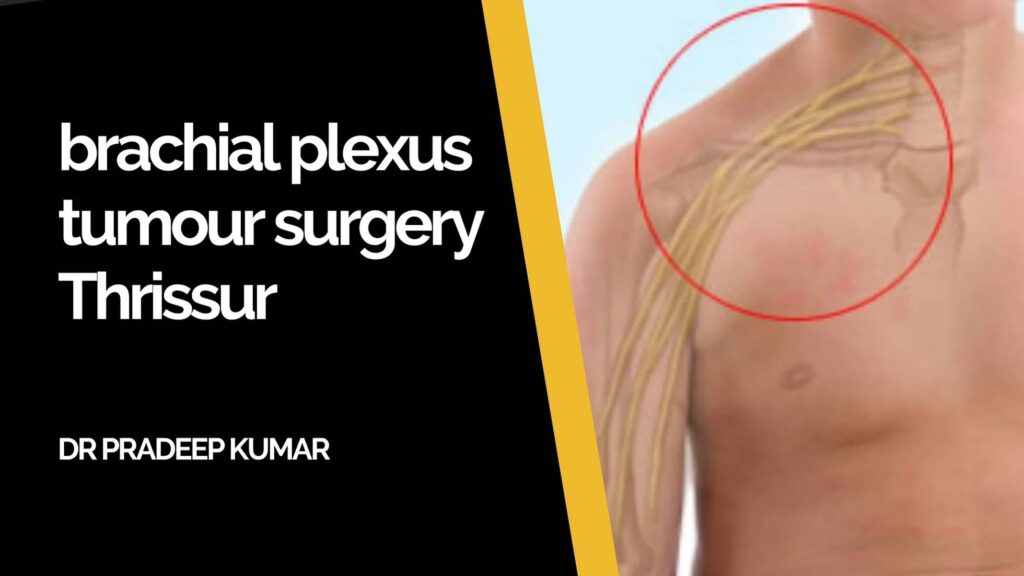
The brachial plexus is a network of nerves extending from the spinal cord through the neck and into the upper limb. When these nerves are stretched, compressed, partially torn, or completely disrupted, normal nerve signals may not reach the muscles and skin properly.
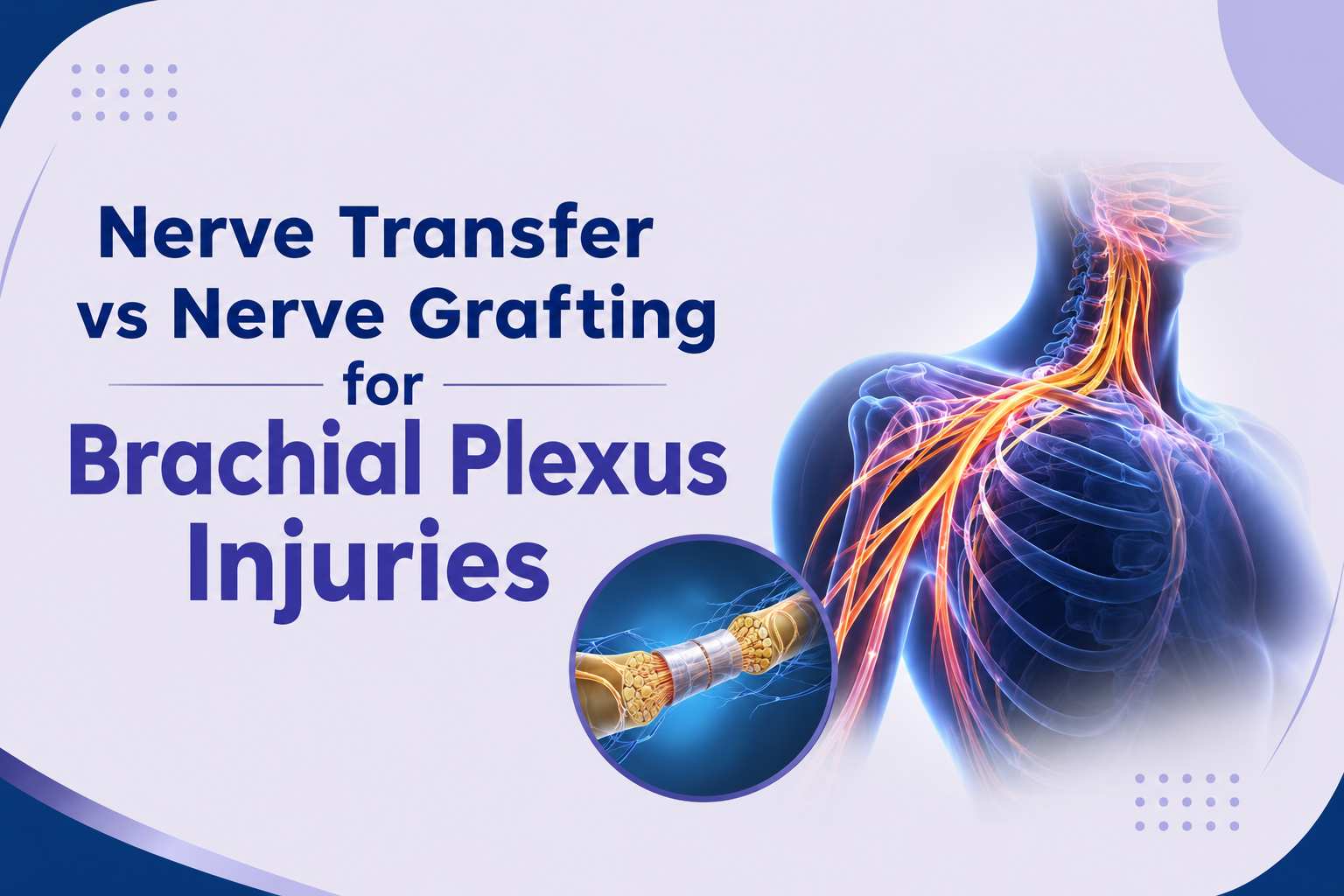
Two important reconstructive procedures are nerve grafting and nerve transfer. Although both aim to restore useful nerve function, they work in different ways. Nerve transfer vs nerve grafting for brachial plexus injuries is therefore not simply a choice between two identical procedures. The appropriate technique depends on the location and severity of the injury, the condition of the damaged nerve, the time since injury, and the muscles that need reinnervation.
What Is a Brachial Plexus Injury
A brachial plexus injury occurs when one or more nerves within the brachial plexus are damaged. These nerves control many functions of the upper limb.
The injury may involve:
- Nerve stretching
- Partial nerve tearing
- Complete nerve rupture
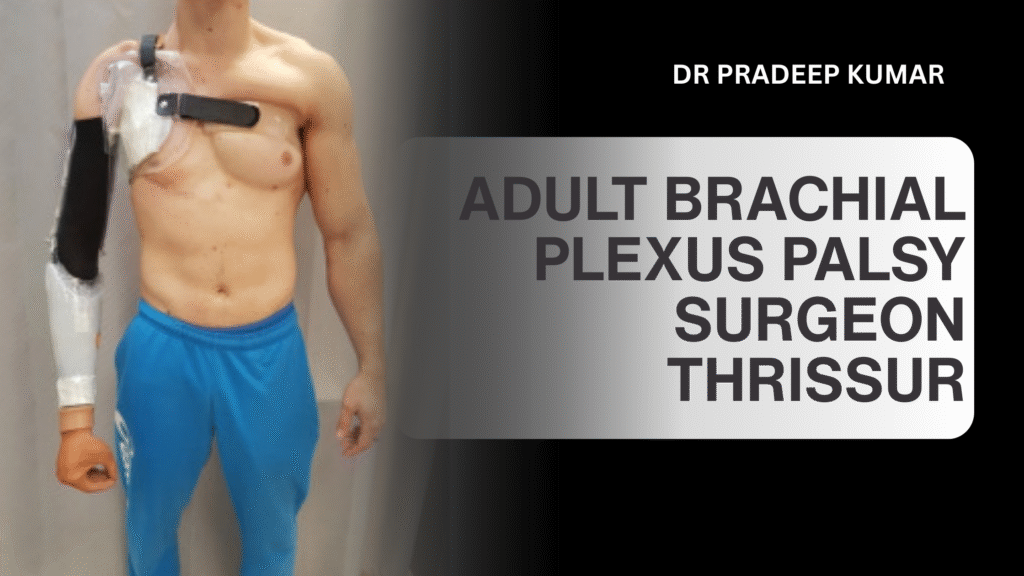
- Nerve root avulsion from the spinal cord
- Compression or scarring around the nerves
Some injuries recover naturally, while more severe injuries may require surgical reconstruction.
The location and severity of nerve damage are especially important when evaluating nerve transfer vs nerve grafting for brachial plexus injuries.
What Causes Brachial Plexus Injuries
Brachial plexus injuries can occur because of trauma or, less commonly, other medical conditions.
Common Causes
Major causes include:
- Motorcycle and road traffic accidents
- Falls from significant heights
- Contact or collision sports
- Severe shoulder trauma
- Penetrating injuries
- Birth-related nerve injuries
- Tumors or masses affecting the nerves
- Radiation-related nerve damage
High-energy trauma can stretch or tear several nerves at once. In severe cases, the nerve may become disconnected from the spinal cord, making conventional nerve repair or grafting unsuitable.
The cause of the injury does not by itself determine whether nerve transfer or nerve grafting will be used. The surgeon must examine the actual condition of the nerves.
What Are the Main Types of Brachial Plexus Injuries
Brachial plexus injuries can be categorized according to the level and severity of nerve damage.
Neuropraxia
Neuropraxia is a temporary interruption of nerve function without complete disruption of the nerve structure. Many mild injuries can improve naturally.
Axonotmesis
In this type of injury, the internal nerve fibers are damaged while some surrounding structures remain intact. Recovery may occur over time, although it can be slow.
Neurotmesis
Neurotmesis involves complete disruption of a nerve. Spontaneous recovery is unlikely without appropriate treatment.
Nerve Root Avulsion
A nerve root avulsion occurs when the nerve root is pulled away from the spinal cord. This is one of the most severe forms of brachial plexus injury and often requires reconstructive strategies such as nerve transfers.
The injury type is a major factor in nerve transfer vs nerve grafting for brachial plexus injuries.
What Symptoms Can a Brachial Plexus Injury Cause
Symptoms depend on which nerves are affected and how severely they are damaged.
Possible symptoms include:
- Shoulder weakness
- Reduced arm strength
- Difficulty bending the elbow
- Loss of hand or finger movement
- Numbness
- Tingling or abnormal sensations
- Burning or electric-shock-like pain
- Reduced grip strength
- Loss of sensation in parts of the arm
- Muscle wasting
- Reduced coordination
Some patients may have difficulty performing everyday activities such as dressing, lifting objects, writing, eating, or reaching overhead.
Persistent weakness or loss of movement following significant trauma should be evaluated promptly because the timing of reconstruction can influence treatment options.
What Is Nerve Grafting
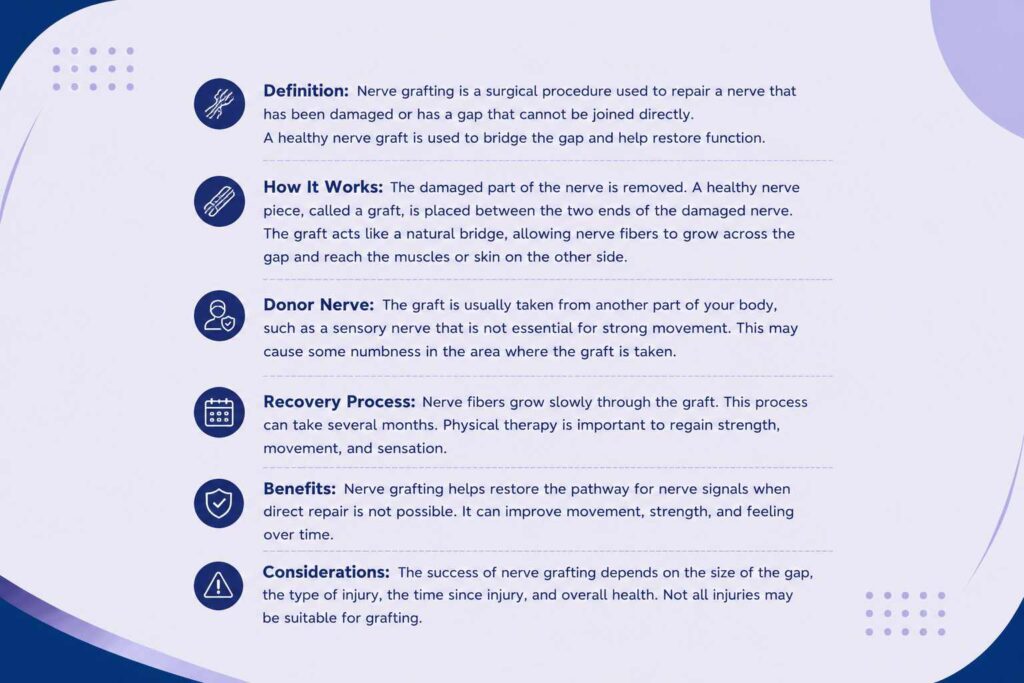
Nerve grafting is a reconstructive technique used when a damaged section of a nerve needs to be replaced with healthy nerve tissue.
During the procedure, the damaged nerve segment may be removed or bypassed. A donor nerve graft is then positioned between the healthy ends of the injured nerve.
The graft acts as a biological pathway through which regenerating nerve fibers can grow toward the target muscles or sensory areas.
Common Features of Nerve Grafting
Nerve grafting may be considered when:
- The proximal nerve end remains connected to a healthy nerve source.
- The damaged section can be removed.
- There is a repairable gap between healthy nerve ends.
- The target muscles still have potential for reinnervation.
- The injury has been identified early enough for meaningful recovery.
Nerve grafting generally depends on the ability of nerve fibers to regenerate across the graft. This regeneration is gradual and may take months.
What Is a Nerve Transfer
A nerve transfer involves redirecting a functioning, less critical nerve or part of a nerve to a damaged nerve or its target.
Instead of waiting for nerve fibers to regenerate across a long damaged segment, the surgeon connects a functioning donor nerve closer to the muscles that need restoration.
This can shorten the distance that regenerating nerve fibers need to travel.
Why Are Nerve Transfers Used?
A nerve transfer may be useful when:
- The original nerve cannot be repaired effectively.
- The injury is close to the spinal cord.
- A nerve root has been avulsed.
- The distance to the target muscle is too long for effective regeneration.
- A suitable donor nerve is available.
The specific transfer depends on which movement has been lost.
For example, certain nerve transfers may be designed to restore elbow flexion, shoulder movement, or other important upper-limb functions.
Nerve Transfer vs Nerve Grafting for Brachial Plexus Injuries: Key Differences
The central difference between nerve transfer vs nerve grafting for brachial plexus injuries is how the damaged nerve pathway is reconstructed.
| Feature | Nerve Grafting | Nerve Transfer |
|---|---|---|
| Basic approach | Bridges a damaged nerve gap | Redirects a functioning donor nerve |
| Donor tissue | Usually requires a healthy sensory nerve graft | Uses a functioning nearby nerve |
| Regeneration distance | May be longer | Often shorter |
| Suitable for | Certain repairable nerve injuries | Severe or proximal injuries |
| Root avulsion | Usually not suitable | Often considered |
| Main objective | Restore the original nerve pathway | Establish an alternative pathway |
| Recovery | Gradual nerve regeneration | Gradual regeneration and motor retraining |
| Donor site | May cause sensory changes | Donor nerve function must be considered |
The decision between nerve transfer vs nerve grafting for brachial plexus injuries should therefore be individualized rather than based on one procedure being universally better.
What Are the Benefits of Nerve Grafting
When appropriate, nerve grafting can offer several potential benefits.
Restores the Original Nerve Route
The procedure attempts to reconnect the injured nerve pathway rather than creating an alternative route.
Uses Established Anatomy
The regenerating nerve fibers continue along the natural anatomical pathway toward the original target.
May Preserve Existing Nerve Function
When a suitable donor graft is used, the procedure can avoid sacrificing an important motor nerve.
Can Be Effective in Selected Injuries
Patients with repairable nerve injuries and suitable nerve ends may benefit from graft reconstruction.
However, the effectiveness of grafting depends on factors such as injury severity, gap length, timing, and muscle condition.
What Are the Benefits of Nerve Transfer
Nerve transfer has become an important option in complex brachial plexus reconstruction.
Potential benefits include:
- Shorter regeneration distance
- Access to functioning donor nerves
- Potential usefulness in severe proximal injuries
- Possible treatment of nerve root avulsion cases
- Ability to target specific lost movements
- Potentially earlier reinnervation of selected muscles
One important advantage of nerve transfer vs nerve grafting for brachial plexus injuries is that a transfer can sometimes place the regenerating nerve fibers much closer to the target muscle.
However, a nerve transfer also requires the brain and muscles to adapt to a new nerve pathway. Rehabilitation and motor retraining are therefore important parts of recovery.
How Is the Treatment Decision Made
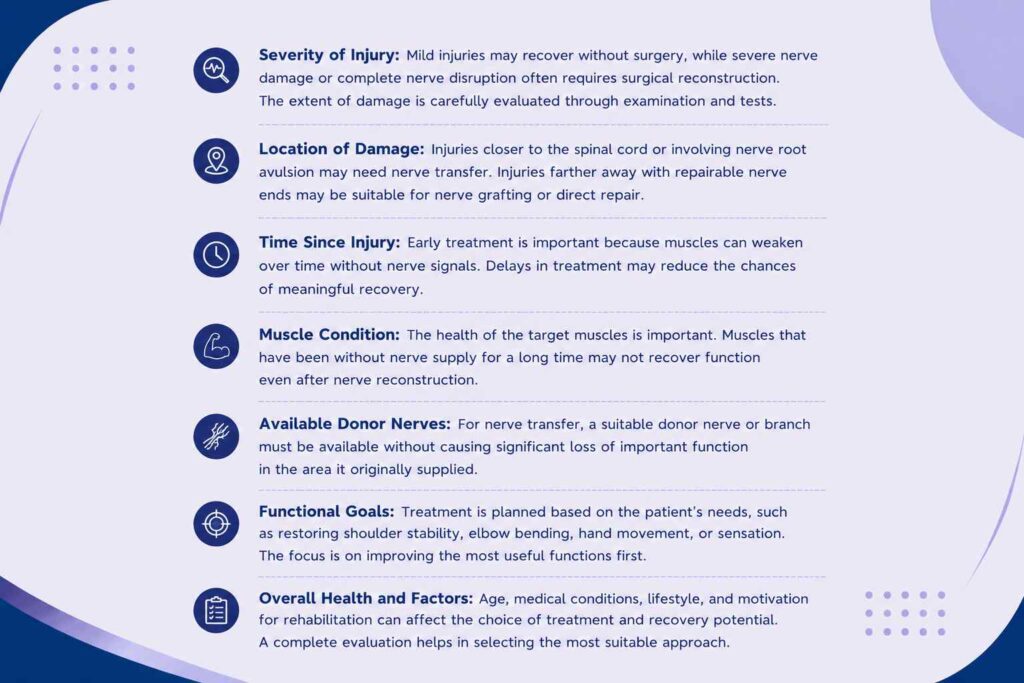
Choosing between nerve transfer vs nerve grafting for brachial plexus injuries requires a detailed assessment.
Severity of Injury
A mild injury that is expected to recover naturally may not require reconstruction. Severe disruption may require surgery.
Location of Damage
Injuries farther away from the spinal cord may sometimes be suitable for grafting. More proximal injuries may favor nerve transfer.
Nerve Root Avulsion
When the nerve root has been pulled from the spinal cord, conventional grafting may not be possible.
Time Since Injury
Nerve reconstruction is generally time-sensitive because muscles can lose their ability to respond effectively after prolonged denervation.
Muscle Condition
The condition of the target muscles is important. Severely atrophied muscles may have limited potential for recovery.
Available Donor Nerves
A nerve transfer requires a suitable donor nerve that can be redirected without causing unacceptable loss of its original function.
Functional Goals
Treatment planning may focus on restoring the movements that matter most to the individual, such as elbow flexion, shoulder stability, or hand function.
How Is a Brachial Plexus Injury Diagnosed
Diagnosis usually combines medical history, physical examination, and appropriate investigations.
Physical Examination
The clinician may assess:
- Muscle strength
- Sensory function
- Reflexes
- Joint movement
- Muscle wasting
- Pain patterns
- Functional limitations
Imaging
Depending on the injury, imaging may include:
- MRI
- CT or CT myelography
- Ultrasound in selected situations
- X-rays to evaluate associated injuries
Electrodiagnostic Testing
Electromyography and nerve conduction studies may help assess nerve and muscle function.
These findings help determine whether the injury is recovering and whether reconstruction should be considered.
What Does Recovery Involve
Recovery following either procedure is gradual.
Nerves regenerate slowly, and useful movement may take many months to develop. The exact timeline differs according to the injury, surgical technique, age, muscle condition, and rehabilitation.
Rehabilitation May Include
- Physiotherapy
- Range-of-motion exercises
- Muscle strengthening when appropriate
- Sensory re-education
- Motor retraining after nerve transfer
- Splinting when necessary
- Functional activity training
Following nerve transfer vs nerve grafting for brachial plexus injuries, patients may need patience because nerve regeneration is not immediate.
What Are the Possible Risks
As with other reconstructive procedures, nerve surgery carries potential risks.
These may include:
- Infection
- Bleeding
- Scarring
- Pain
- Incomplete nerve recovery
- Persistent weakness
- Donor nerve dysfunction
- Sensory changes
- Limited functional improvement
- Need for additional procedures
The risks differ depending on the procedure and the patient’s individual condition.
A detailed discussion with a qualified peripheral nerve or brachial plexus specialist is important before surgery.
Tips for Supporting Recovery
Recovery after brachial plexus reconstruction requires active participation.
Follow the Rehabilitation Plan
Physiotherapy and prescribed exercises should be performed consistently.
Protect the Affected Limb
Patients may need to avoid excessive strain while nerves and repaired tissues are healing.
Attend Follow-Up Appointments
Regular monitoring helps the treatment team assess nerve regeneration and muscle function.
Maintain Joint Mobility
Appropriate movement can help prevent stiffness and preserve joint flexibility.
Be Patient With Nerve Recovery
Nerve regeneration takes time. Early lack of movement does not necessarily mean that treatment has failed.
Report New Problems
Increasing pain, swelling, wound problems, or unexpected changes in function should be discussed with the medical team.
Is Nerve Transfer Better Than Nerve Grafting
There is no universal answer to nerve transfer vs nerve grafting for brachial plexus injuries.
A nerve transfer may be preferable when the original nerve pathway is severely damaged, when the injury is very proximal, or when a nerve root has been avulsed.
Nerve grafting may be more appropriate when the damaged nerve can be repaired and there is a reasonable pathway between healthy nerve ends.
In some complex cases, surgeons may use more than one reconstructive technique. The objective is not simply to choose the newer or more technically advanced procedure. The objective is to select the approach with the best potential to restore useful function.
Conclusion
The comparison of nerve transfer vs nerve grafting for brachial plexus injuries is important because these procedures use different strategies to restore damaged nerve function. Nerve grafting attempts to bridge a damaged nerve gap, while nerve transfer creates an alternative pathway using a functioning donor nerve.
Neither approach is appropriate for every patient. The injury pattern, severity, location, timing, muscle condition, available donor nerves, and desired functional outcomes all influence the treatment plan. Early specialist evaluation can help identify the extent of nerve damage and determine whether observation, nerve grafting, nerve transfer, or another reconstructive procedure is appropriate.
With appropriate treatment and structured rehabilitation, some patients can achieve meaningful improvements in strength, movement, sensation, and daily function. For patients considering nerve transfer vs nerve grafting for brachial plexus injuries in Thrissur, an individualized assessment by an experienced specialist is essential for understanding the available options. For additional information on brachial plexus injuries, diagnosis, and treatment options, visit the Mayo Clinic’s overview of brachial plexus injuries.
Frequently Asked Questions
What is the main difference between nerve transfer and nerve grafting?
Is nerve transfer always better than nerve grafting?
Can nerve grafting treat a completely torn brachial plexus nerve?
When is a nerve transfer considered for a brachial plexus injury?
How long does nerve regeneration take after surgery?
Can nerve transfer restore hand movement?
Does nerve grafting require a donor nerve?
Does a nerve transfer sacrifice another nerve?
Is physiotherapy necessary after nerve reconstruction?
Does timing matter when choosing nerve transfer or nerve grafting?

Dr. Pradeep Kumar
Plastic & Reconstructive Surgeon – Brachial Plexus & Nerve Surgery Specialist
Dr. Pradeep Kumar is an experienced plastic and reconstructive surgeon known for his expertise in brachial plexus and peripheral nerve surgery. With extensive microsurgical experience, he focuses on restoring movement and function for patients with complex nerve injuries.
Sushrutha Institute of Plastic Surgery, Elite Mission Hospital, Thrissur