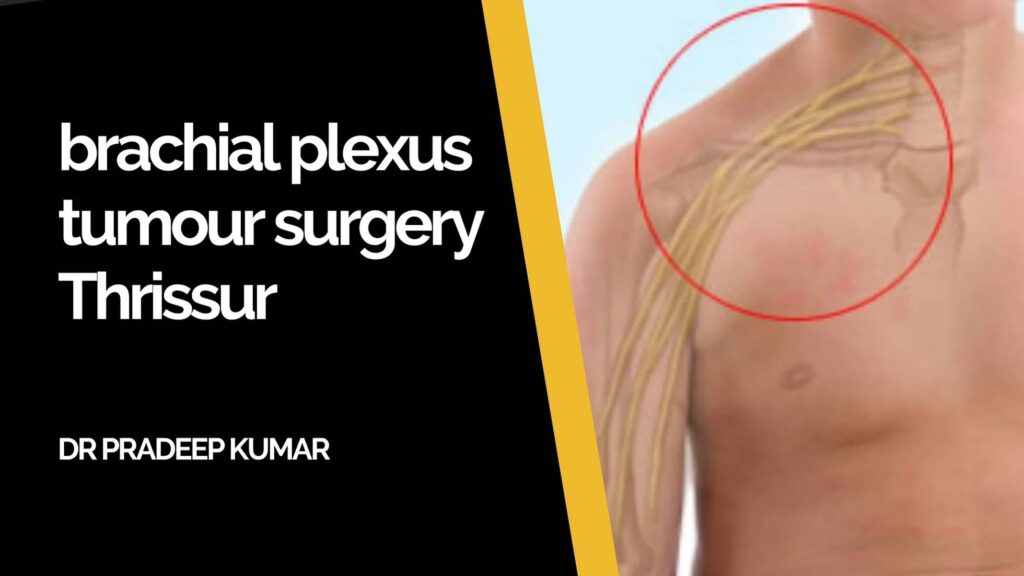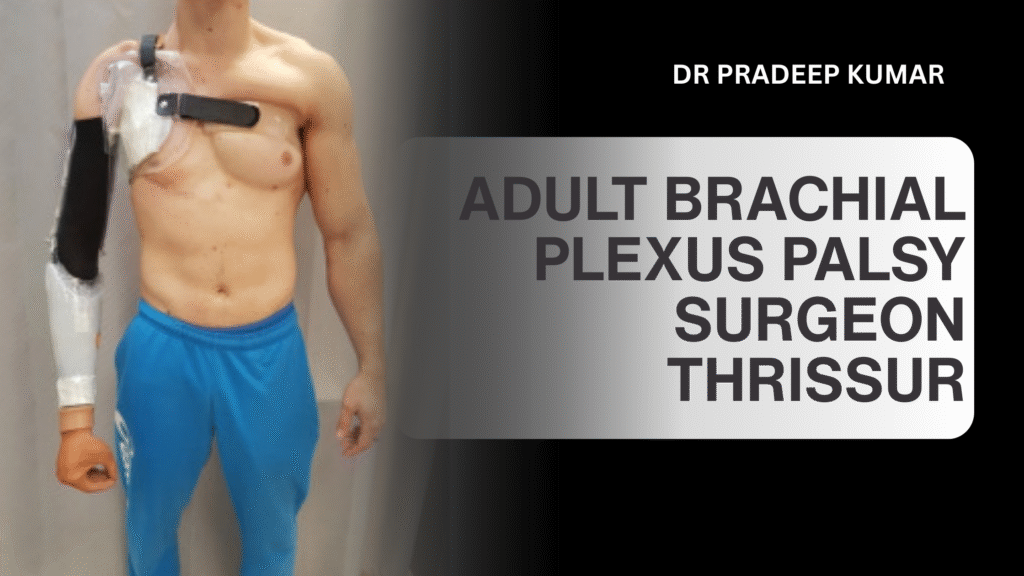
A brachial plexus injury can affect the nerves responsible for movement and sensation in the shoulder, arm, and hand. If you have experienced an accident, severe shoulder trauma, or persistent weakness after an injury, you may naturally ask, HOW DO I KNOW IF I NEED BRACHIAL PLEXUS SURGERY? The answer depends on the type of nerve damage, the severity of your symptoms, test results, and whether the nerves are showing signs of recovery.
Not every brachial plexus injury requires an operation. Some nerve injuries improve with observation, physiotherapy, pain management, and rehabilitation. However, more serious injuries, including nerve ruptures and avulsions, may require nerve reconstruction or other surgical procedures.
Understanding the Brachial Plexus
The brachial plexus is a network of nerves that begins near the spinal cord in the neck and travels through the shoulder before extending into the arm and hand. These nerves help control muscle movement and sensation in the upper limb.A brachial plexus injury occurs when these nerves become stretched, compressed, torn, or separated from the spinal cord. The severity can vary considerably.A mild injury may recover naturally, while severe nerve damage may interfere with arm movement, grip strength, sensation, and everyday activities.This is why asking HOW DO I KNOW IF I NEED BRACHIAL PLEXUS SURGERY? cannot be answered by symptoms alone. A specialist needs to assess the injury pattern and determine whether spontaneous nerve recovery is occurring.
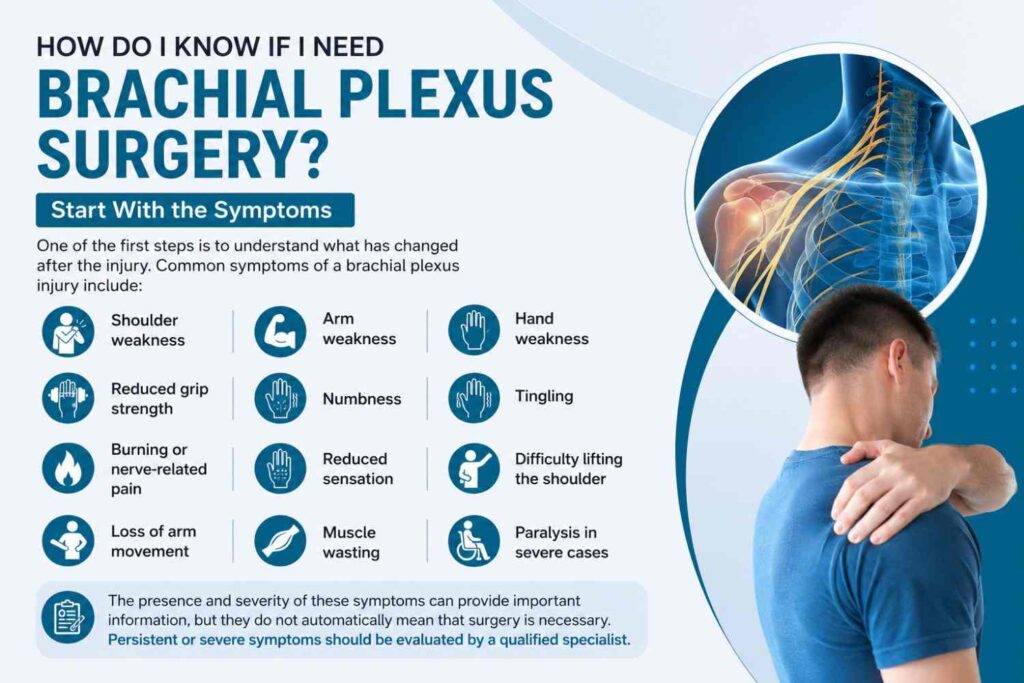
HOW DO I KNOW IF I NEED BRACHIAL PLEXUS SURGERY? Start With the Symptoms
One of the first steps is to understand what has changed after the injury.Common symptoms of a brachial plexus injury include:
- Shoulder weakness
- Arm weakness
- Hand weakness
- Reduced grip strength
- Numbness
- Tingling
- Burning or nerve-related pain
- Reduced sensation
- Difficulty lifting the shoulder
- Loss of arm movement
- Muscle wasting
- Paralysis in severe cases
The presence and severity of these symptoms can provide important information, but they do not automatically mean that surgery is necessary. Persistent or severe symptoms should be evaluated by a qualified specialist.
7 Important Signs That Surgery May Be Considered
If you are wondering HOW DO I KNOW IF I NEED BRACHIAL PLEXUS SURGERY?, several clinical findings can make surgical treatment more likely.
1. Severe or Complete Arm Weakness
Significant weakness after an injury can indicate substantial nerve damage. If the shoulder, arm, or hand remains very weak, further evaluation may be required.
2. Persistent Loss of Movement
When useful movement does not return over time, a specialist may investigate whether the affected nerves have been severely damaged.
3. Nerve Roots Are Avulsed
Avulsion is among the most severe forms of brachial plexus injury. In this situation, the nerve root is pulled away from the spinal cord. Such injuries may require complex reconstructive procedures.
4. The Nerve Is Completely Torn
A ruptured nerve may not recover normally without reconstruction. Depending on the injury pattern, nerve grafting or nerve transfer may be considered.
5. No Meaningful Improvement
If weakness continues and there is little evidence of recovery over the expected observation period, surgery may become part of the treatment discussion.
6. Progressive Muscle Loss
Muscle wasting can occur when the nerves supplying particular muscles are not functioning properly. Persistent muscle loss is an important reason for specialist assessment.
7. Functional Recovery Is Unlikely Without Reconstruction
When examination and diagnostic testing indicate that natural recovery is unlikely, a surgeon may recommend a reconstructive procedure to improve the possibility of functional recovery.The supporting material identifies complete nerve tears, nerve-root avulsion, persistent weakness, lack of improvement, severe muscle loss, and poor expected functional recovery as situations in which surgery may be recommended.
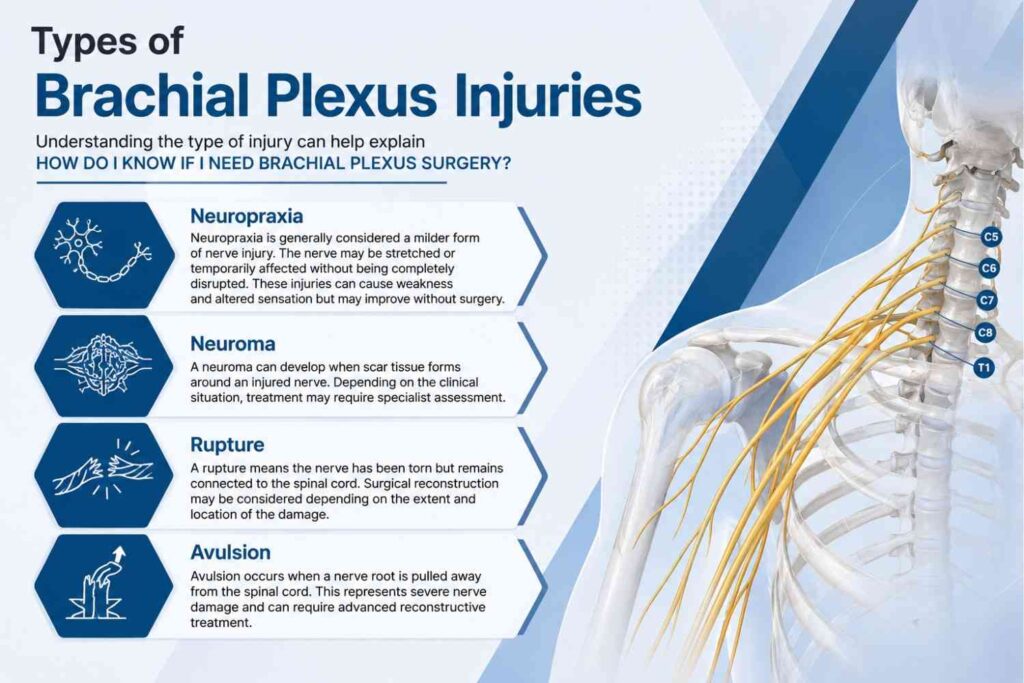
Types of Brachial Plexus Injuries
Understanding the type of injury can help explain HOW DO I KNOW IF I NEED BRACHIAL PLEXUS SURGERY?
Neuropraxia
Neuropraxia is generally considered a milder form of nerve injury. The nerve may be stretched or temporarily affected without being completely disrupted.These injuries can cause weakness and altered sensation but may improve without surgery.
Neuroma
A neuroma can develop when scar tissue forms around an injured nerve. Depending on the clinical situation, treatment may require specialist assessment.
Rupture
A rupture means the nerve has been torn but remains connected to the spinal cord. Surgical reconstruction may be considered depending on the extent and location of the damage.
Avulsion
Avulsion occurs when a nerve root is pulled away from the spinal cord. This represents severe nerve damage and can require advanced reconstructive treatment.
Common Causes of Brachial Plexus Injuries
Knowing how an injury happened is another important part of understanding HOW DO I KNOW IF I NEED BRACHIAL PLEXUS SURGERY?
Road Traffic Accidents
Motorcycle and automobile accidents can produce strong traction forces around the neck and shoulder, potentially damaging the brachial plexus.
Sports Injuries
High-impact sports can cause sudden stretching or traction of the nerve network.
Falls
Falls, particularly from significant heights, can cause injuries involving the shoulder, neck, and upper limb.
Workplace Accidents
Heavy machinery and other industrial trauma can cause serious nerve injuries.
Birth-Related Injuries
Certain difficult deliveries can result in brachial plexus injuries in newborns.
Penetrating Trauma
Direct injury to the nerve network can also occur through penetrating trauma.
When Surgery May Not Be Necessary
If you are asking HOW DO I KNOW IF I NEED BRACHIAL PLEXUS SURGERY?, it is equally important to understand that surgery is not automatically required.Some milder injuries can improve through structured conservative treatment.
Non-surgical care may include:
- Physiotherapy
- Occupational therapy
- Pain management
- Splinting
- Muscle-strengthening exercises
- Electrical stimulation
- Joint mobility exercises
- Home rehabilitation
The goal is to protect function, maintain joint mobility, manage symptoms, and support recovery while the nerves are being monitored.
Benefits of Appropriate Brachial Plexus Surgery
The potential benefits depend on the individual’s injury and the procedure performed. Surgical reconstruction may aim to improve:
- Arm function
- Shoulder stability
- Grip strength
- Muscle control
- Sensation
- Daily activities
- Independence
- Overall quality of life
Pain reduction may also occur in some patients, although outcomes vary according to the nature and severity of the nerve injury.It is important to understand that surgery does not guarantee complete restoration of normal function. Nerves regenerate slowly, and recovery can differ considerably between patients.
Why Specialist Experience Matters
Brachial plexus surgery is a highly specialized field involving peripheral nerve reconstruction and microsurgical techniques.
A specialist evaluation can help with:
- Accurate diagnosis
- Identification of the injury pattern
- Selection of appropriate treatment
- Surgical planning
- Microsurgical reconstruction
- Rehabilitation guidance
- Long-term follow-up
The supporting pillar page emphasizes that individualized treatment planning and advanced microsurgical expertise are important when managing complex brachial plexus injuries.
Conclusion
Understanding HOW DO I KNOW IF I NEED BRACHIAL PLEXUS SURGERY? begins with recognizing that every nerve injury is different. Persistent weakness, loss of movement, severe nerve damage, muscle wasting, nerve-root avulsion, and limited natural recovery can indicate the need for surgical evaluation. However, surgery is not automatically required for every patient.A detailed physical examination, appropriate imaging, EMG, nerve conduction studies, and other diagnostic tests can help determine the extent of injury and guide treatment decisions. Depending on the findings, treatment may involve observation and rehabilitation or procedures such as nerve grafting, nerve transfer, tendon transfer, or muscle transfer.If you are still asking HOW DO I KNOW IF I NEED BRACHIAL PLEXUS SURGERY?, the most appropriate next step is a specialist assessment rather than relying on symptoms alone. Early evaluation can help identify the injury pattern and establish an appropriate treatment and rehabilitation plan. The provided pillar content identifies Dr. Pradeep Kumar as a plastic and reconstructive surgeon specializing in brachial plexus and peripheral nerve surgery, with microsurgical experience in complex nerve injuries.Learn more about brachial plexus injuries, including symptoms, diagnosis, and treatment, from the Cleveland Clinic .

Dr. Pradeep Kumar
Plastic & Reconstructive Surgeon – Brachial Plexus & Nerve Surgery Specialist
Dr. Pradeep Kumar is an experienced plastic and reconstructive surgeon known for his expertise in brachial plexus and peripheral nerve surgery. With extensive microsurgical experience, he focuses on restoring movement and function for patients with complex nerve injuries.
Sushrutha Institute of Plastic Surgery, Elite Mission Hospital, Thrissur