Brachial Plexus Surgery Recovery: 7 Essential Patient Advice
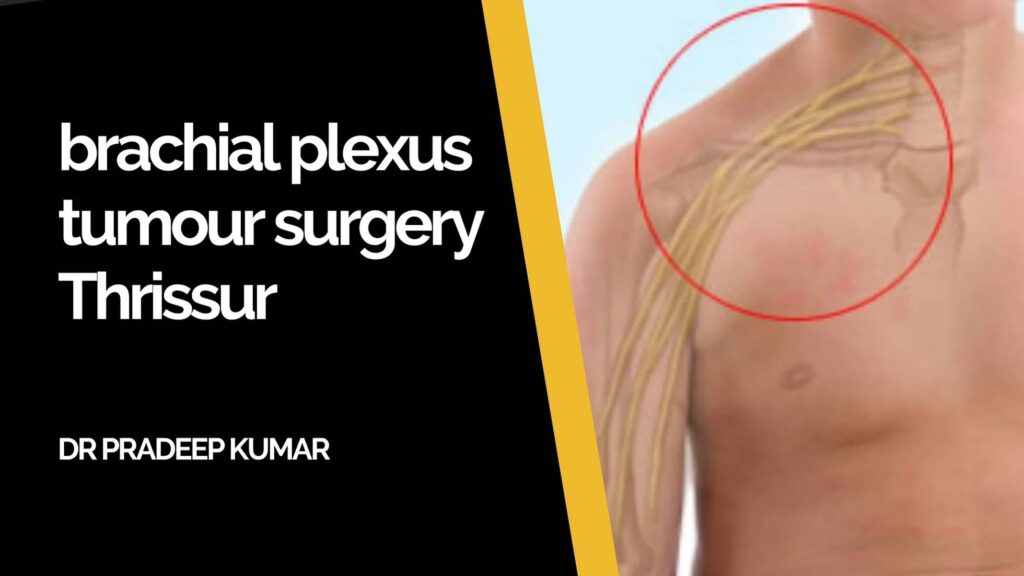
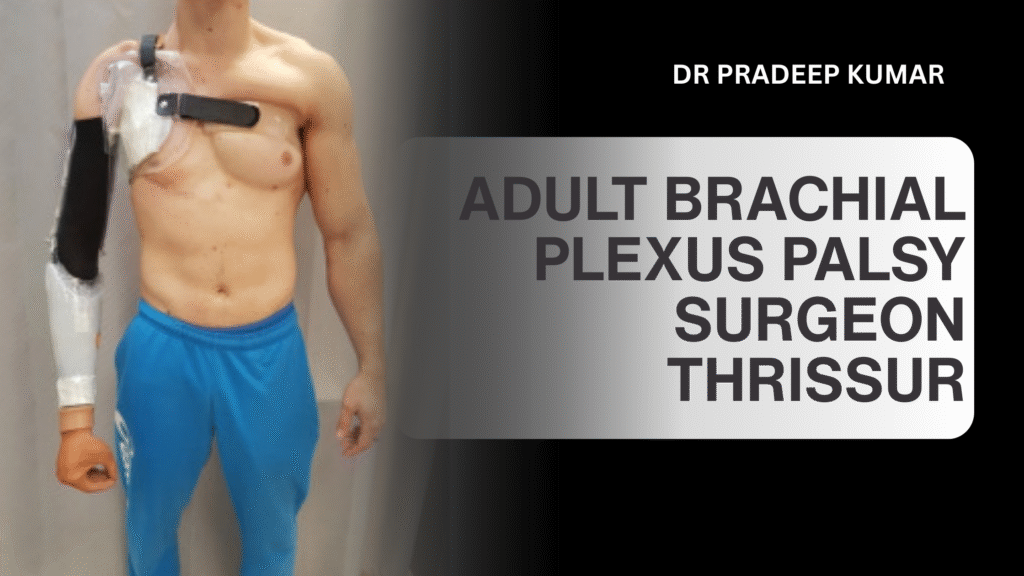
Brachial plexus surgery recovery is a gradual process that requires patience, rehabilitation, and careful follow-up. The brachial plexus is a network of nerves that carries movement and sensory signals between the spinal cord and the shoulder, arm, and hand. When these nerves are severely stretched, torn, compressed, or pulled away from the spinal cord, surgery may be needed to improve function and manage symptoms. For patients seeking specialized guidance in Thrissur, understanding what happens after surgery can make the recovery process easier to manage.
Recovery is different for every patient. The type and severity of the nerve injury, the surgical procedure performed, the patient’s overall health, and the timing of treatment can all influence the outcome. Nerve tissue also heals slowly, so improvements may continue for months or even years after surgery.
What Is Brachial Plexus Surgery Recovery
Brachial plexus surgery recovery refers to the period after surgery during which the body heals and the repaired or reconstructed nerves gradually regain function.
Unlike recovery from some other surgical procedures, nerve recovery is not simply a matter of allowing an incision to heal. The skin and soft tissues may heal relatively quickly, but nerves regenerate slowly. As a result, a patient may have healed surgical wounds while still waiting for meaningful changes in strength, sensation, or movement.
The recovery process may involve:
- Wound and incision care
- Temporary immobilization with a sling or splint
- Pain management
- Physical therapy
- Occupational therapy when required
- Range-of-motion exercises
- Muscle strengthening at the appropriate stage
- Regular clinical assessments
- Long-term monitoring of nerve and muscle function
The exact rehabilitation plan should always be individualized according to the procedure and the patient’s condition.
Why Does Brachial Plexus Surgery Recovery Take Time
Brachial plexus surgery recovery can take considerably longer than recovery from many routine orthopedic procedures because nerves regenerate slowly.
When a nerve has been repaired, grafted, or transferred, new nerve growth must occur before the repaired pathway can effectively communicate with the muscles and sensory areas it supplies. This means that improvement may not be immediate.
For some patients, early recovery focuses mainly on protecting the surgical repair and maintaining healthy joints. Later, rehabilitation becomes more focused on movement, muscle activation, coordination, and functional activities.
The final outcome can depend on factors such as:
- Location of the nerve injury
- Severity of nerve damage
- Type of reconstruction
- Time between injury and surgery
- Age and general health
- Condition of the muscles
- Adherence to rehabilitation
- Presence of additional injuries
What Types of Injuries May Require Surgery
Understanding the original injury helps explain why brachial plexus surgery recovery varies from one patient to another.
Nerve Stretching
A mildly stretched nerve may sometimes recover without surgery. However, more severe stretching can damage nerve fibers and cause persistent weakness, numbness, or pain.
Nerve Rupture
A ruptured nerve may be separated into damaged segments. Depending on the location and extent of the injury, nerve repair or nerve grafting may be considered.
Nerve Root Avulsion
An avulsion occurs when a nerve root is pulled away from the spinal cord. Because the nerve is no longer connected normally at its origin, nerve transfer or other reconstructive procedures may be required.
Nerve Compression and Scar Tissue
Compression or scar tissue around a nerve can interfere with nerve function. In selected cases, decompression or neurolysis may be used to free the nerve.
What Are the Common Symptoms Before Surgery
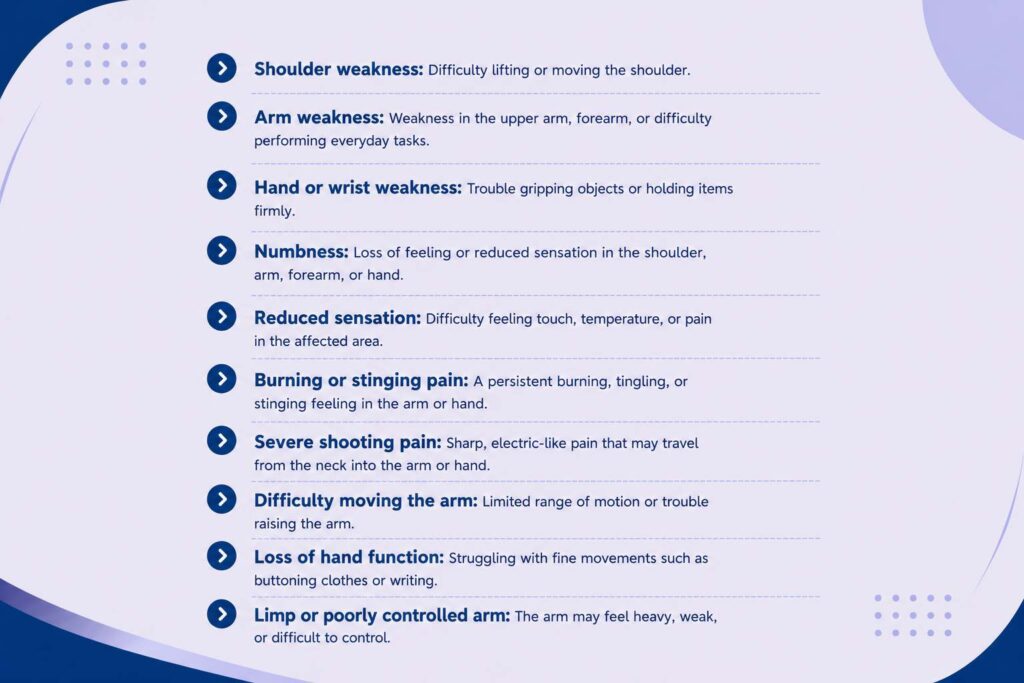
Symptoms of brachial plexus injury depend on which nerves are affected and how severe the damage is.
Common symptoms include:
- Shoulder weakness
- Arm weakness
- Hand or wrist weakness
- Numbness
- Reduced sensation
- Burning or stinging pain
- Severe shooting pain
- Difficulty moving the arm
- Loss of hand function
- A limp or poorly controlled arm
These symptoms can affect everyday activities such as dressing, eating, writing, lifting objects, and using tools.
Understanding these symptoms is important because the purpose of surgery and subsequent rehabilitation is not simply to heal the surgical site. The broader goal is to improve useful function, sensation, movement, and quality of life where possible.
What Surgical Procedures Can Affect Recovery
The type of procedure has a major influence on brachial plexus surgery recovery.
Nerve Repair
Nerve repair reconnects damaged nerve ends when direct repair is appropriate. Microsurgical techniques are commonly used because the structures involved are extremely small.
Nerve Grafting
A nerve graft uses a suitable nerve segment to bridge a damaged section. The graft creates a pathway through which new nerve growth can occur.
Nerve Transfer
A functioning nerve may be connected to a damaged nerve to provide a new pathway for nerve signals. Nerve transfers are frequently considered for serious injuries where direct repair is not possible.
Tendon Transfer
A functioning tendon may be redirected to help restore a movement that has been lost because of nerve damage.
Functional Muscle Transfer
In selected complex injuries, a functioning muscle can be transferred to help restore movement when conventional nerve reconstruction is no longer suitable.
Because these procedures are different, the expected rehabilitation timeline and restrictions can also be different.
What Happens Immediately After Surgery
The early phase of brachial plexus surgery recovery is mainly about protecting the surgical reconstruction and allowing the tissues to heal.
Depending on the procedure, the arm may need to remain in a sling or splint for a specific period. Johns Hopkins notes that some nerve repairs, grafts, and transfers may require a sling for around two weeks, while tendon transfers or functional muscle transplantation may require longer immobilization.
During this period, patients may experience:
- Surgical discomfort
- Swelling
- Limited arm movement
- Temporary dependence on others for daily activities
- Fatigue
- Changes in sensation
- Anxiety about the pace of recovery
Patients should follow their surgical team’s instructions rather than trying to move the affected arm more quickly than recommended.
How Does Physiotherapy Help During Recovery
Physiotherapy is an important part of brachial plexus surgery recovery. Its timing and intensity depend on the procedure and the condition of the nerves, muscles, and joints.
Early rehabilitation may focus on maintaining joint flexibility and preventing stiffness. Later, therapy may progress toward strengthening, coordination, motor retraining, and functional activities.
A rehabilitation program may include:
- Passive range-of-motion exercises
- Active-assisted movements
- Joint mobility exercises
- Muscle activation exercises
- Strengthening exercises
- Sensory retraining
- Functional movement training
- Occupational therapy
- Home exercise programs
After nerve transfer surgery, rehabilitation may also involve retraining the brain to use the newly connected nerve pathway for a different movement. This process requires repetition and patience. Patients should not add exercises independently without guidance, particularly during the early healing period.
What Can Patients Expect During the Different Recovery Stages
Brachial plexus surgery recovery does not follow exactly the same timeline for everyone, but it can generally be understood in stages.
Early Stage
The first stage concentrates on wound healing, pain control, protection of the repair, and maintaining appropriate joint positioning.
Rehabilitation Stage
As the surgical team allows movement, physiotherapy becomes increasingly important. Exercises may be introduced gradually to preserve flexibility and prevent muscle and joint problems.
Nerve Regeneration Stage
For nerve repair, grafting, and transfer procedures, the nerves need time to regenerate. During this period, visible functional improvement may be gradual.
Functional Training Stage
As nerve signals reach the muscles and strength begins to improve, therapy can become more focused on practical movements and everyday activities.
Some patients notice small changes before major functional improvement becomes obvious. Recovery therefore needs to be evaluated over time rather than judged from day-to-day changes.
What Are the Benefits of Following a Structured Recovery Plan
A structured rehabilitation plan can support the best possible functional recovery after surgery.
Important potential benefits include:
- Maintaining joint flexibility
- Reducing stiffness
- Protecting repaired structures
- Supporting muscle health
- Improving movement patterns
- Developing better coordination
- Supporting independence in daily activities
- Helping patients understand realistic recovery milestones
Following instructions consistently is particularly important because excessive activity too early can interfere with healing, while insufficient movement later may contribute to stiffness and weakness.
The goal is not to recover as quickly as possible at any cost. The goal is to progress safely while giving nerves, muscles, and other tissues adequate time to heal.
What Tips Can Support Brachial Plexus Surgery Recovery
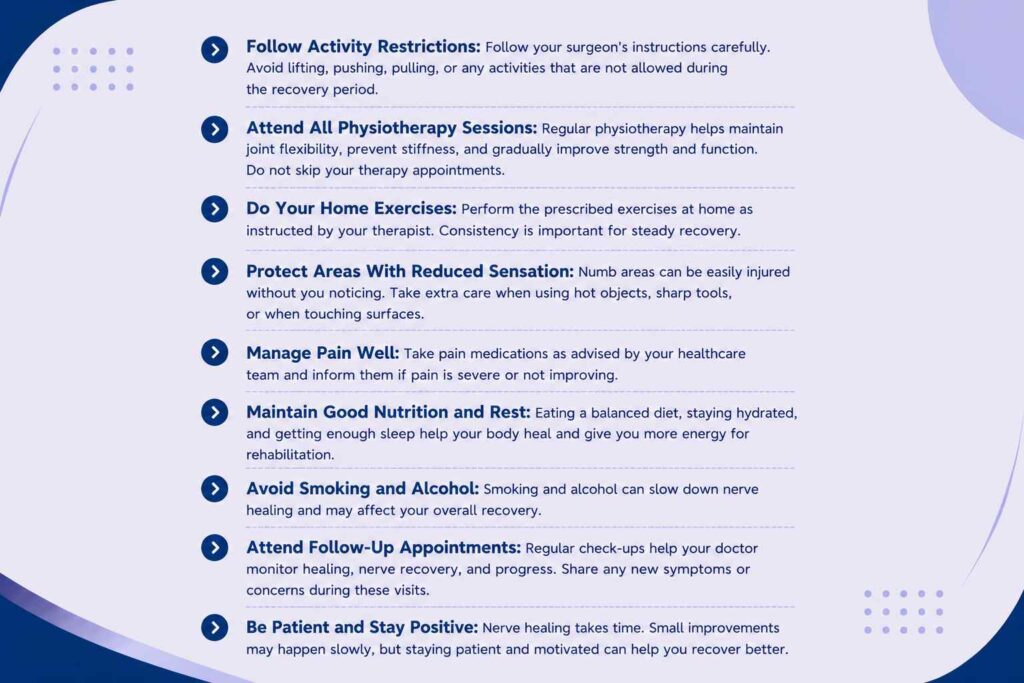
Patients can take several practical steps to support their rehabilitation.
Follow Activity Restrictions
Avoid lifting, pushing, pulling, or other movements that have not been cleared by the surgical team.
Attend Rehabilitation Sessions
Regular physiotherapy can help maintain movement and gradually develop useful function.
Complete Prescribed Home Exercises
Consistency is important. Exercises should be performed exactly as recommended.
Protect Areas With Reduced Sensation
Numbness can make it difficult to recognize heat, pressure, cuts, or other injuries. Extra care may therefore be needed when handling hot objects or sharp tools.
Maintain Healthy Habits
Adequate nutrition, sleep, hydration, and avoidance of smoking can support general healing and recovery.
Attend Follow-Up Appointments
Regular assessments allow the healthcare team to monitor nerve function, muscle activity, movement, and rehabilitation progress.
How Can Pain Be Managed During Recovery
Pain may change throughout brachial plexus surgery recovery. Some patients experience postoperative soreness, while others may continue to have nerve-related pain.
Brachial plexus injuries can produce burning, shooting, stinging, or severe pain. Pain management should therefore be individualized.
Depending on the situation, the healthcare team may recommend:
- Prescribed pain medicines
- Physical therapy
- Positioning strategies
- Activity modification
- Other treatments for neuropathic pain
Patients should report persistent, worsening, or unusually severe pain rather than attempting to manage it independently.
When Should Patients Contact Their Healthcare Team
Certain changes should be discussed promptly with the treating healthcare team.
Contact the team if there is:
- Increasing wound redness
- Significant swelling
- Drainage from the incision
- Fever
- Sudden worsening pain
- New or worsening weakness
- A new change in sensation
- Problems with the sling or splint
- Unexpected changes in the hand or arm
Urgent medical assessment may be necessary for severe or sudden symptoms. Patients should follow the specific postoperative instructions provided by their surgical team.
What Factors Influence the Long-Term Outcome
Brachial plexus surgery recovery depends on several variables, so no single recovery timeline applies to every patient.
Important factors include:
- Severity of the original nerve damage
- Type of nerve injury
- Surgical technique
- Timing of surgery
- Patient age
- Muscle condition
- Associated bone or shoulder injuries
- Rehabilitation participation
- General health
Early evaluation can be particularly important in severe injuries because treatment options may become more limited as time passes. Johns Hopkins and Mayo Clinic both emphasize the importance of timely assessment and treatment for significant brachial plexus injuries. It is also important to understand that surgery cannot guarantee complete restoration of normal function. The objective is to achieve the best realistic improvement based on the individual injury.
How Can Patients Prepare for Long-Term Recovery
Long-term brachial plexus surgery recovery requires realistic expectations.
Patients should understand that nerve healing can be slow and that progress may occur in small steps. A temporary lack of visible improvement does not necessarily mean that treatment has failed.
Keeping track of changes can be useful. Patients may record:
- Range of movement
- Ability to perform daily activities
- Changes in sensation
- Muscle activation
- Pain levels
- Therapy milestones
These observations can help patients and healthcare professionals discuss progress during follow-up appointments.
Emotional adjustment is also important. Recovery from a serious nerve injury can affect work, hobbies, independence, and everyday routines. Support from family members, caregivers, therapists, and the medical team can make the rehabilitation process easier to manage.
Conclusion
Brachial plexus surgery recovery is a gradual process that combines surgical healing, nerve regeneration, rehabilitation, and functional retraining. Patients should understand that nerves recover much more slowly than skin and soft tissues, so meaningful improvement may take months or longer.
Following activity restrictions, attending physiotherapy, completing prescribed exercises, protecting areas with reduced sensation, managing pain appropriately, and maintaining regular follow-up can all support recovery. The exact outcome depends on the original injury, surgical procedure, timing of treatment, and individual response to rehabilitation.
With appropriate medical care and a structured rehabilitation plan, brachial plexus surgery recovery can focus on maximizing useful movement, sensation, independence, and quality of life. Patients in Thrissur should discuss their individual recovery expectations, restrictions, and rehabilitation plan with their treating healthcare team. You can learn more about brachial plexus injuries, treatment options, and recovery from the Mayo Clinic: Mayo Clinic – Brachial Plexus Injury.
Frequently Asked Questions
How long does brachial plexus surgery recovery take?
Is pain normal during brachial plexus surgery recovery?
When can physiotherapy begin after brachial plexus surgery?
Can nerves grow back after brachial plexus surgery?
Will arm strength return completely after surgery?
Can sensation improve during brachial plexus surgery recovery?
Why is physiotherapy important after brachial plexus surgery?
Can I exercise normally during brachial plexus surgery recovery?
What factors affect brachial plexus surgery recovery?
When should I contact my healthcare team during recovery?
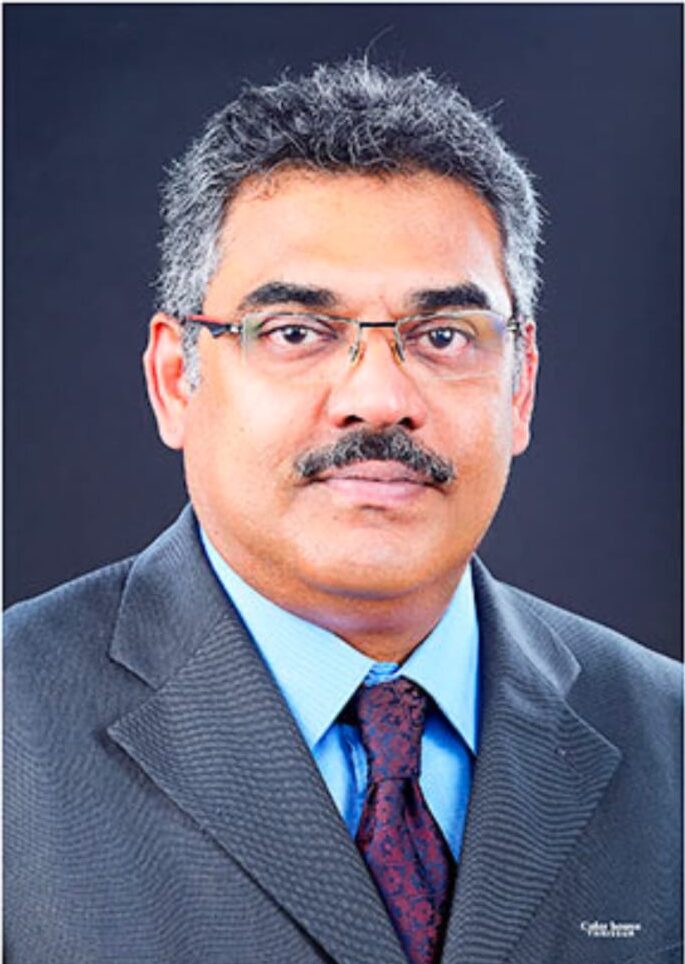
Dr. Pradeep Kumar
Plastic & Reconstructive Surgeon – Brachial Plexus & Nerve Surgery Specialist
Dr. Pradeep Kumar is an experienced plastic and reconstructive surgeon known for his expertise in brachial plexus and peripheral nerve surgery. With extensive microsurgical experience, he focuses on restoring movement and function for patients with complex nerve injuries.
Sushrutha Institute of Plastic Surgery, Elite Mission Hospital, Thrissur