Why Choose an Experienced Brachial Plexus Surgeon?
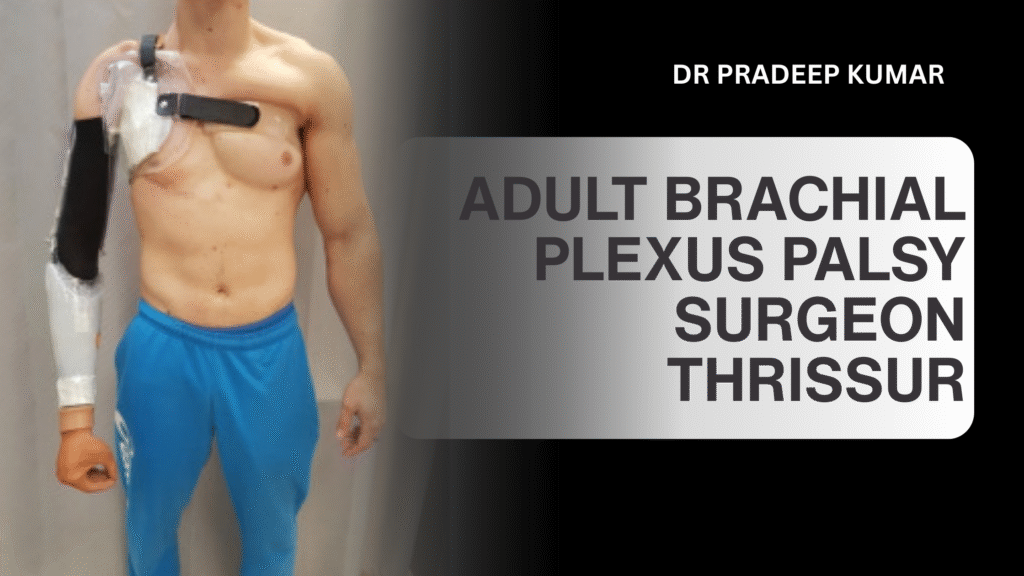
A brachial plexus injury can affect the nerves responsible for movement and sensation in the shoulder, arm, and hand. Depending on the severity, the injury may cause weakness, numbness, severe pain, reduced grip, or even paralysis. While some mild injuries can recover without surgery, serious nerve damage may require complex reconstruction.
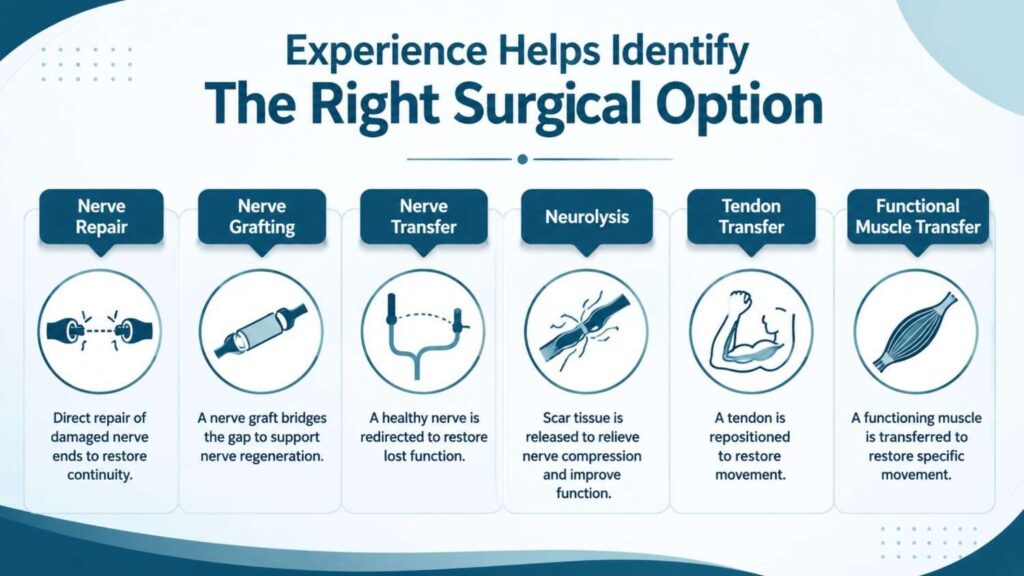
So, why choose an experienced brachial plexus surgeon? The answer lies in the complexity of these injuries. Brachial plexus surgery is not a single procedure. Treatment may involve nerve repair, nerve grafting, nerve transfer, neurolysis, tendon transfer, or muscle transfer, depending on the location and severity of the damage. For a broader understanding of diagnosis, treatment options, surgical procedures, and recovery, explore our guide to a Brachial Plexus Surgery Doctor in Kerala.
What Makes Brachial Plexus Surgery Different?
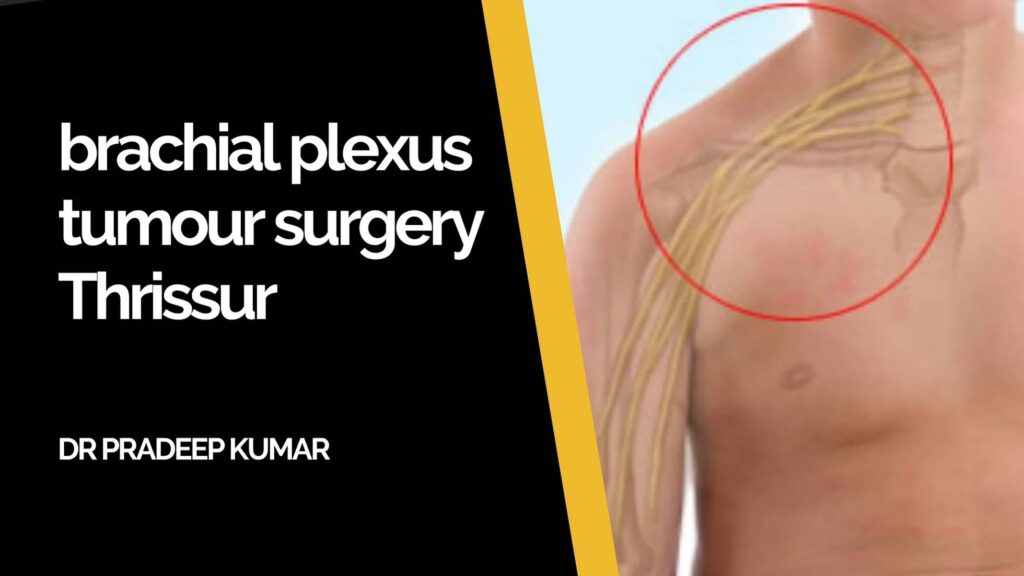
The brachial plexus is a network of nerves that begins near the neck and extends toward the shoulder, arm, and hand. Different parts of this network control different movements and sensations.
An injury can involve:
- A single nerve
- Multiple nerves
- Nerve roots
- The upper brachial plexus
- The lower brachial plexus
- The entire brachial plexus
The type of damage can also vary.
Common Types of Nerve Damage
- Stretch injury: The nerve is stretched but may remain structurally intact.
- Rupture: The nerve is torn and may require reconstruction.
- Avulsion: The nerve root is pulled away from the spinal cord.
- Compression: Pressure on the nerve interferes with normal function.
- Scar-related injury: Scar tissue can restrict or affect nerve function.
Mild stretch injuries may improve naturally, while severe ruptures and avulsions may require surgical treatment.
This variation explains why why choose an experienced brachial plexus surgeon? is an important question for patients facing a serious nerve injury. The treatment cannot be selected correctly without understanding exactly what has happened to the nerves.
Accurate Diagnosis Comes Before Surgery
One of the biggest advantages of specialized experience is the ability to evaluate the injury thoroughly before recommending an operation.
A proper assessment may include:
- Detailed medical history
- Neurological examination
- Muscle strength testing
- Sensory testing
- Reflex assessment
- Electromyography
- Nerve conduction studies
- MRI
- X-rays when associated injuries are suspected
- Other imaging when required
EMG and nerve conduction studies can provide information about nerve and muscle function, while MRI can help visualize affected structures.
Why This Matters
The same symptom can have different causes.
For example, arm weakness could result from:
- Temporary nerve stretching
- A nerve rupture
- Nerve root avulsion
- Compression
- Another neurological condition
An experienced surgeon looks beyond the symptom and works to identify the underlying injury pattern.
That distinction can determine whether the patient needs:
- Observation
- Physiotherapy
- Further testing
- Nerve repair
- Nerve grafting
- Nerve transfer
- Another reconstructive procedure
Timing Can Influence the Treatment Strategy
Nerves regenerate slowly. Because of this, the timing of assessment and treatment can be important.
For some injuries, doctors may initially monitor the patient to determine whether spontaneous recovery is occurring. For severe injuries, however, unnecessary delay may reduce the available reconstructive options.
Early Evaluation Can Help Determine:
- Whether the nerve is recovering
- Whether surgery is necessary
- Which procedure may be appropriate
- Whether nerve transfer is feasible
- Whether the affected muscles remain suitable for reconstruction
- What rehabilitation may be required
This does not mean that every patient should undergo immediate surgery.
Instead, it highlights the importance of early specialist evaluation.
Why Surgical Timing Is Not the Same for Every Patient
A common mistake is assuming that there is one fixed deadline for every brachial plexus injury.
Treatment timing depends on:
- Type of injury
- Severity of nerve damage
- Location of the injury
- Patient’s age
- Muscle condition
- Evidence of nerve regeneration
- Results of EMG and imaging
- Time since trauma
- Functional goals
For example, a mild stretch injury may be monitored because spontaneous recovery is possible, whereas a severe nerve rupture may require earlier reconstruction.
This individualized decision-making is a major factor in why choose an experienced brachial plexus surgeon?
Complex Injuries May Require More Than One Procedure
Some patients have extensive injuries affecting multiple nerves.
In these situations, restoring one function may not automatically restore another.
A treatment plan may therefore prioritize specific movements.
Functional Priorities May Include:
- Shoulder stability
- Shoulder elevation
- Elbow flexion
- Elbow extension
- Forearm rotation
- Wrist movement
- Finger movement
- Grip function
- Sensory recovery
An experienced surgeon evaluates which functions are most important and which reconstructive pathways offer a realistic opportunity to improve them.
This functional approach is particularly important because the objective of surgery is not simply to repair an anatomical structure. The broader goal is to restore useful movement and independence wherever possible.
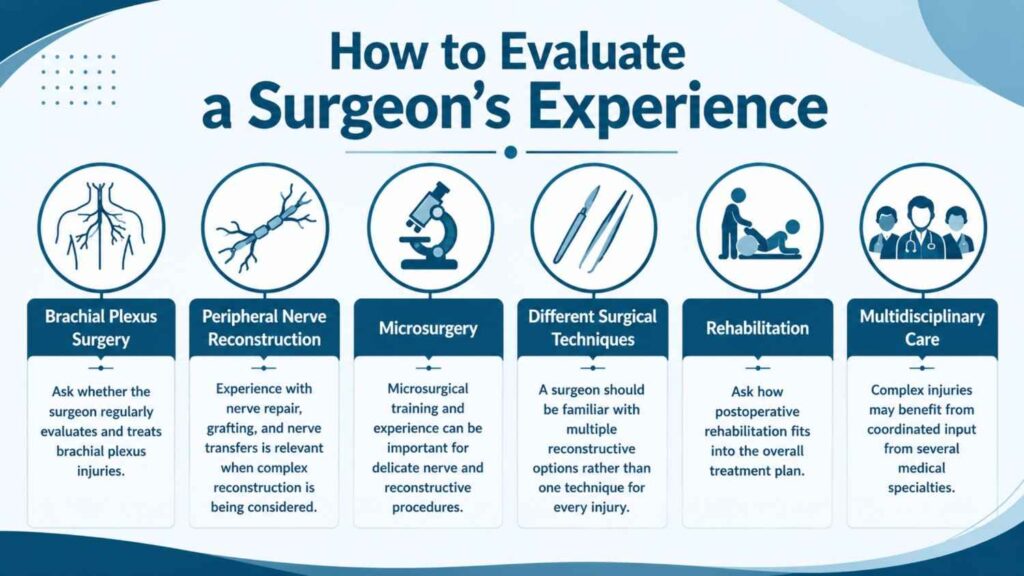
Specialized Experience Matters in Microsurgery
Brachial plexus reconstruction involves delicate nerve structures.
Microsurgical techniques may be required to:
- Identify small nerve structures
- Prepare damaged nerve ends
- Perform precise nerve connections
- Place nerve grafts
- Connect donor and recipient nerves
- Reconnect tiny blood vessels during selected muscle transfers
The level of precision required makes specialized experience particularly valuable.
However, patients should also understand that technical expertise does not guarantee complete recovery. Nerve regeneration is slow, and the final outcome depends on many factors beyond the operation itself.
Experience Helps With Difficult or Unusual Cases
Not every brachial plexus injury follows a straightforward pattern.
A patient may have:
- Multiple nerve injuries
- Previous surgery
- Significant scar tissue
- Longstanding paralysis
- Muscle wasting
- Associated fractures
- Vascular injuries
- Severe trauma involving other body regions
Traumatic brachial plexus injuries can occur alongside fractures, blood vessel injuries, spinal injuries, and other serious trauma.
In these situations, treatment may require coordination between different specialists.
Multidisciplinary brachial plexus care can involve professionals from areas such as:
- Neurology
- Neurosurgery
- Plastic and reconstructive surgery
- Orthopaedics
- Hand surgery
- Physical rehabilitation
- Occupational therapy
Specialized centers commonly use multidisciplinary assessment for complex brachial plexus injuries.
Longstanding Injuries Need Careful Planning
Some patients seek treatment months or years after their original injury.
By this stage, the condition may have changed considerably.
Possible Long-Term Changes Include:
- Muscle wasting
- Joint stiffness
- Loss of movement
- Reduced muscle responsiveness
- Persistent pain
- Changes in limb position
- Reduced ability to perform daily activities
This does not automatically mean that treatment is impossible.
Depending on the patient’s anatomy and remaining function, options may include:
- Nerve reconstruction in selected cases
- Tendon transfer
- Functional muscle transfer
- Rehabilitation-focused treatment
This is another important point when considering why choose an experienced brachial plexus surgeon? The surgeon needs to recognize not only what can be done, but also what may no longer be realistic.
Experience Can Help Set Realistic Expectations
A good surgical consultation should not focus only on the benefits of an operation.
Patients should also understand:
- What movement may realistically improve
- How long recovery could take
- Whether sensation may return
- Whether additional procedures could be required
- What rehabilitation will involve
- What limitations may remain
- What complications are possible
Brachial plexus surgery does not guarantee that the arm will return to its pre-injury condition. Cleveland Clinic notes that outcomes depend on factors such as the type and severity of injury, affected nerves, associated injuries, timing of treatment, and rehabilitation.
Clear expectations allow patients and families to make better-informed decisions.
Rehabilitation Is a Major Part of Recovery
Surgery is only one stage of treatment.
Following reconstruction, rehabilitation may involve:
- Physiotherapy
- Occupational therapy
- Range-of-motion exercises
- Muscle activation exercises
- Splinting
- Joint protection
- Functional training
- Sensory re-education
- Home exercises
Physical therapy is particularly important for maintaining flexibility and supporting functional recovery after surgery.
Why Long-Term Follow-Up Matters
Nerve recovery can take months or longer.
Patients may therefore need:
- Regular clinical examinations
- Repeat functional assessments
- Rehabilitation adjustments
- Monitoring of muscle recovery
- Evaluation of movement progression
The recovery process requires patience because nerve tissue grows slowly.
Questions to Ask During Your Consultation
Before deciding on treatment, consider asking:
- What type of brachial plexus injury do I have?
- Which nerves are affected?
- Is the injury likely to recover naturally?
- Do my tests show nerve regeneration?
- Is there a rupture or avulsion?
- Do I need surgery now?
- Which procedure would you recommend?
- Why is that procedure appropriate for my injury?
- What movement is the surgery intended to restore?
- What are the possible risks?
- How long could recovery take?
- What rehabilitation will I need?
- Could additional surgery become necessary?
A surgeon who explains the reasoning behind the treatment plan can help patients understand their options more clearly.
The Importance of a Patient-Specific Treatment Plan
Brachial plexus surgery should not be approached as a standardized procedure.
A personalized plan considers:
- Injury pattern
- Nerve damage
- Functional limitations
- Patient age
- Time since injury
- Muscle condition
- Imaging findings
- EMG results
- Previous treatment
- Rehabilitation potential
- Patient’s functional priorities
This individualized approach is one of the clearest answers to why choose an experienced brachial plexus surgeon?
The surgeon’s role is not simply to select an operation. It is to determine whether surgery is appropriate, choose the most suitable reconstruction, explain the likely benefits and limitations, and coordinate the recovery process.
Experience Does Not Mean Surgery Is Always Necessary
An important point often overlooked is that an experienced surgeon should also know when not to operate.
Mild brachial plexus injuries may recover naturally. Treatment can involve observation, physiotherapy, pain management, and protection of the affected limb while recovery is monitored.
Surgery may become appropriate when:
- The nerve fails to recover
- Significant weakness persists
- There is nerve rupture
- There is nerve avulsion
- Major functional loss remains
- The injury is unlikely to heal naturally
The goal should always be appropriate treatment, not surgery for its own sake.
What Patients Should Expect From the Recovery Process
Recovery following brachial plexus reconstruction is usually gradual.
Early Stage
The initial period may focus on:
- Protecting the repair
- Managing pain
- Controlling swelling
- Maintaining appropriate positioning
- Following surgical precautions
Rehabilitation Stage
As healing progresses, rehabilitation may focus on:
- Maintaining joint flexibility
- Activating recovering muscles
- Improving movement
- Building functional strength
- Retraining movement patterns
Long-Term Stage
Later recovery may involve:
- Functional exercises
- Occupational therapy
- Sensory training
- Strength development
- Returning to daily activities
The timeline varies considerably between patients and procedures.
Final Thoughts
So, why choose an experienced brachial plexus surgeon? Because treating a complex nerve injury requires much more than performing a surgical procedure. The right specialist needs to understand the injury pattern, interpret diagnostic findings, consider the timing of reconstruction, select an appropriate technique, and establish realistic functional goals. Depending on the injury, treatment may involve nerve repair, nerve grafting, nerve transfer, neurolysis, tendon transfer, or muscle transfer.
Experience can be particularly valuable when the injury is severe, longstanding, or involves multiple nerves. At the same time, specialized care should include honest discussion about whether surgery is actually necessary and what recovery can realistically achieve. If you or a family member has experienced persistent weakness, numbness, loss of movement, or severe pain following a brachial plexus injury, a timely evaluation can help clarify the available treatment options and the next appropriate step. For additional information about choosing an experienced brachial plexus surgeon, you can refer to Johns Hopkins Medicine’s approach to brachial plexus surgery, which explains specialist assessment, individualized treatment planning, surgical expertise, and multidisciplinary care.
Frequently Asked Questions
What qualifications should a brachial plexus surgeon have?
How can I verify a surgeon's experience?
Should I get a second opinion before brachial plexus surgery?
Does hospital infrastructure matter for brachial plexus surgery?
Can an experienced surgeon treat both adult and childhood injuries?
How important is the surgeon's experience with nerve transfers?
Should previous surgery affect the choice of surgeon?
What should I bring to a brachial plexus consultation?
Can an experienced surgeon tell me whether surgery will work?
How important is follow-up after brachial plexus surgery?
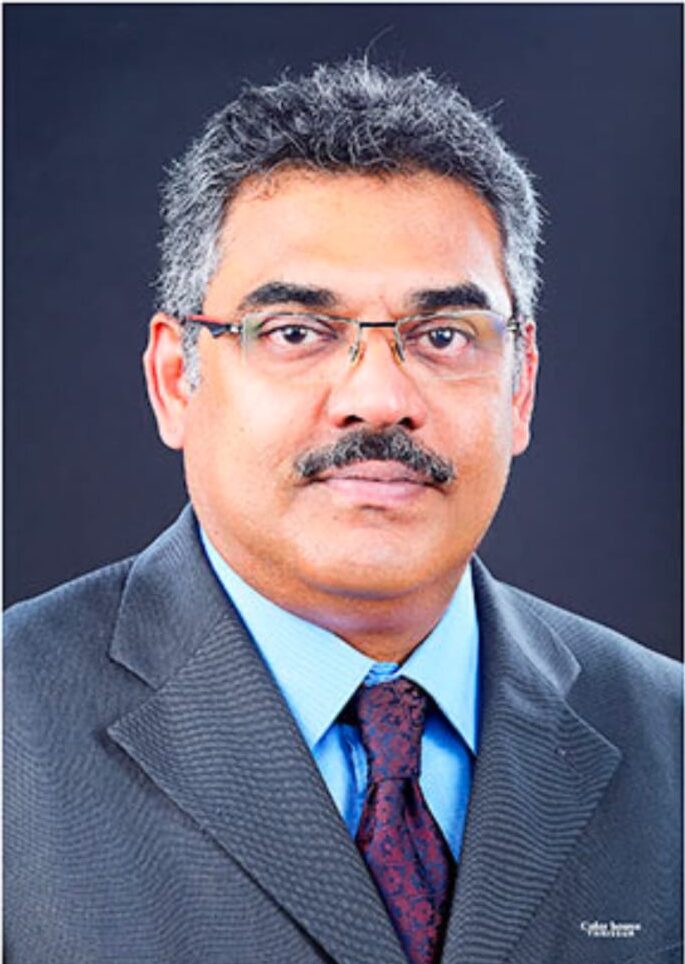
Dr. Pradeep Kumar
Plastic & Reconstructive Surgeon – Brachial Plexus & Nerve Surgery Specialist
Dr. Pradeep Kumar is an experienced plastic and reconstructive surgeon known for his expertise in brachial plexus and peripheral nerve surgery. With extensive microsurgical experience, he focuses on restoring movement and function for patients with complex nerve injuries.
Sushrutha Institute of Plastic Surgery, Elite Mission Hospital, Thrissur