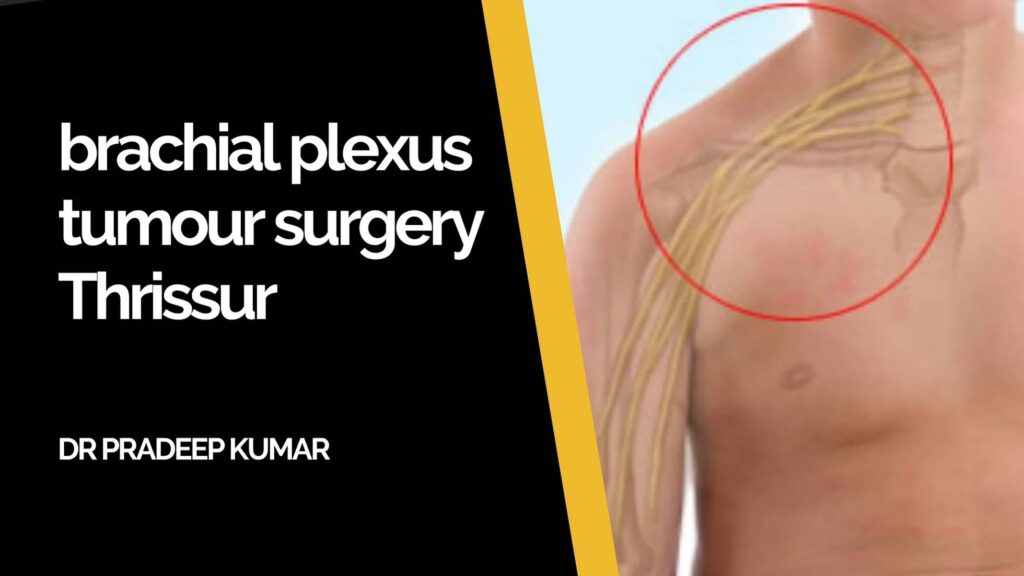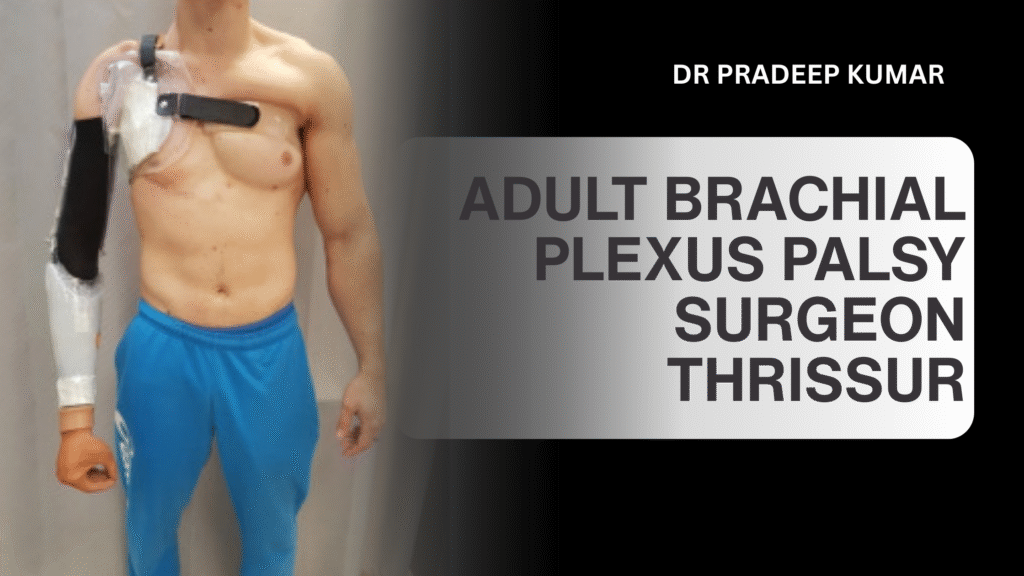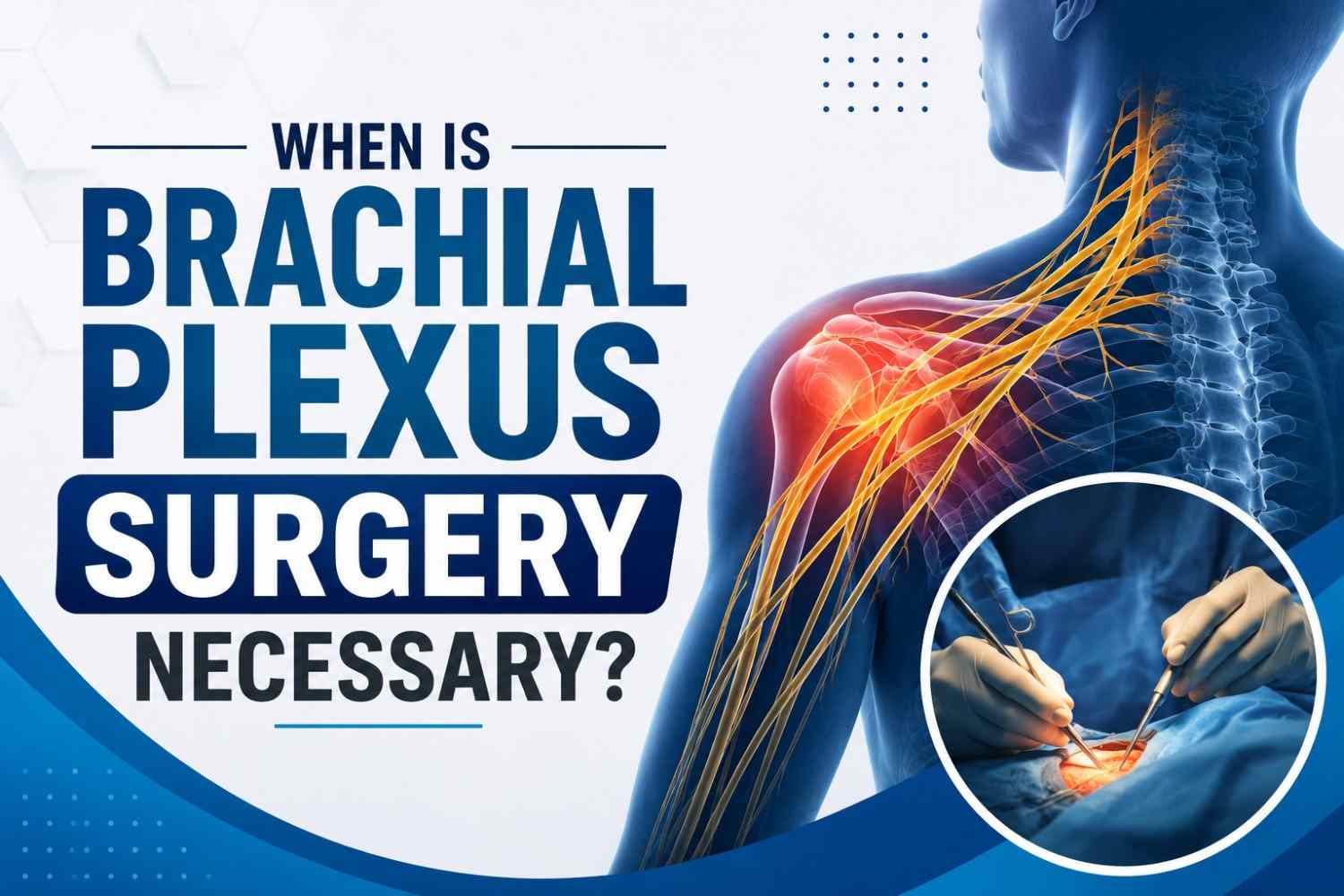
A brachial plexus injury can affect the nerves that control movement and sensation in the shoulder, arm, and hand. Depending on the severity of the injury, some patients recover with observation and rehabilitation, while others may require specialized nerve surgery. One of the most common questions after a significant nerve injury is: when is brachial plexus surgery necessary?
The answer depends on several factors, including the type of nerve damage, the severity of weakness, whether sensation has been affected, evidence of nerve recovery, and the findings from diagnostic tests. Surgery is not automatically required for every brachial plexus injury. Mild nerve injuries may improve naturally, while complete nerve tears, nerve-root avulsions, persistent weakness, and significant muscle loss may require reconstruction.
What is a brachial plexus injury?
The brachial plexus is a network of nerves that begins near the spinal cord in the neck and travels through the shoulder into the arm and hand. These nerves play an important role in controlling upper-limb movement and sensation.
An injury can occur when these nerves are stretched, compressed, torn, or separated from their connection to the spinal cord. The damage can range from temporary nerve dysfunction to severe structural disruption.
This difference in severity is one of the main reasons why treatment varies from one patient to another.
When is brachial plexus surgery necessary?
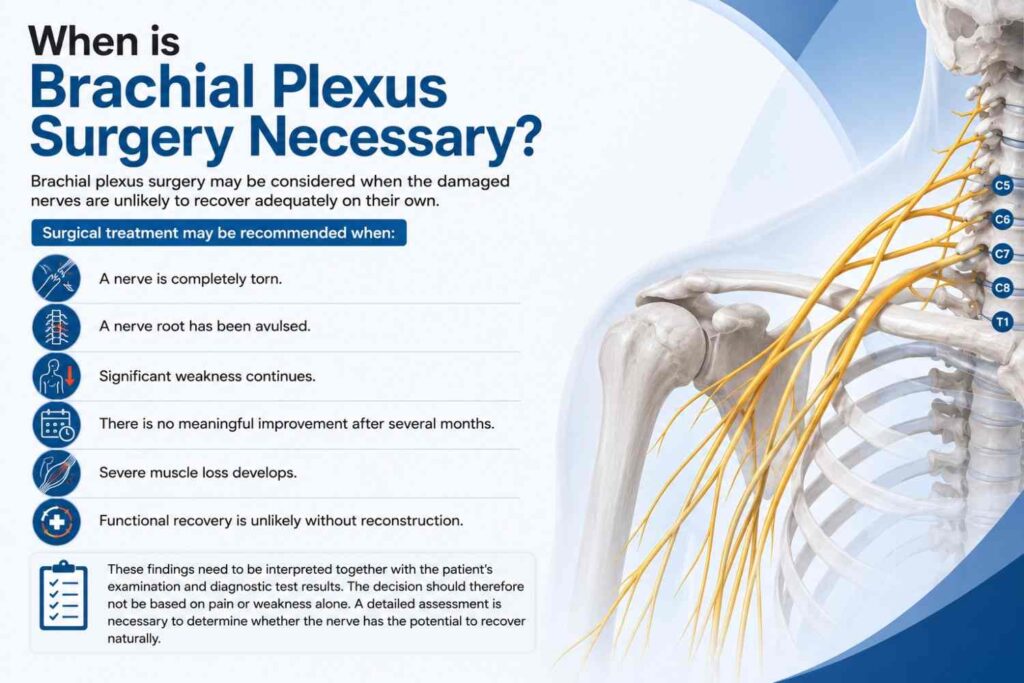
Brachial plexus surgery may be considered when the damaged nerves are unlikely to recover adequately on their own.
According to the provided pillar content, surgical treatment may be recommended when:
- A nerve is completely torn.
- A nerve root has been avulsed.
- Significant weakness continues.
- There is no meaningful improvement after several months.
- Severe muscle loss develops.
- Functional recovery is unlikely without reconstruction.
These findings need to be interpreted together with the patient’s examination and diagnostic test results.The decision should therefore not be based on pain or weakness alone. A detailed assessment is necessary to determine whether the nerve has the potential to recover naturally.
Complete nerve tears may require surgery
A complete nerve tear is one of the situations in which reconstructive surgery may become necessary.When a nerve is completely disrupted, normal nerve signals cannot travel effectively across the damaged section. Depending on the injury, a surgeon may consider nerve grafting or another reconstructive technique.The purpose is to create a pathway through which nerve signals can potentially reach the muscles and support functional recovery.
Nerve-root avulsion is a serious injury
A nerve-root avulsion is among the most severe forms of brachial plexus injury. It occurs when the nerve root is pulled away from the spinal cord.Unlike a mild stretch injury, an avulsion represents major structural damage. The provided pillar material identifies avulsion as the most severe injury type and notes that advanced diagnostic assessment is required before treatment is planned.Patients with suspected avulsion require specialist evaluation because treatment planning can be complex.
Persistent weakness can be a warning sign
One of the most important factors in deciding when is brachial plexus surgery necessary is whether useful muscle function returns over time.Persistent weakness in the:
- Shoulder
- Upper arm
- Forearm
- Hand
- Fingers
may indicate that the affected nerves are not recovering adequately.Weakness should be considered alongside other findings such as sensation, muscle wasting, reflexes, and diagnostic test results.
Lack of improvement may change the treatment plan
Some brachial plexus injuries initially receive observation and rehabilitation because certain nerve injuries can recover naturally.However, if meaningful improvement does not occur over the expected period, a specialist may reconsider the treatment strategy.The provided source specifically identifies no improvement after several months as one of the circumstances in which surgery may be recommended.This is why regular follow-up is important. Monitoring changes in strength, movement, sensation, and muscle function can help determine whether recovery is progressing.
Severe muscle loss may indicate significant nerve damage
Muscles depend on healthy nerve signals to function properly. When nerve supply is significantly impaired for an extended period, muscle wasting may develop.Visible or progressive muscle loss can therefore be an important finding during evaluation.The source material identifies severe muscle loss as another factor that may support consideration of surgical reconstruction.Early specialist assessment can help determine the extent of nerve damage before prolonged loss of muscle function makes recovery more difficult.
What symptoms may indicate a severe brachial plexus injury?
Symptoms vary according to the location and severity of nerve damage.
Possible symptoms include:
- Shoulder weakness
- Arm weakness
- Hand weakness
- Reduced grip strength
- Numbness
- Tingling
- Burning nerve pain
- Loss of sensation
- Difficulty lifting the shoulder
- Arm paralysis
- Muscle wasting
- Persistent nerve pain
The presence of these symptoms does not automatically mean surgery is required. However, persistent or severe symptoms following trauma should be evaluated by an appropriate specialist.

Sudden paralysis requires prompt assessment
Sudden inability to move the arm following significant trauma is an important warning sign.
Other concerning findings include:
- Severe weakness
- Loss of sensation
- Persistent numbness
- Increasing nerve pain
- Muscle wasting
- Difficulty using the hand
- Loss of arm movement
- Significant neck or shoulder trauma
The supplied pillar content recommends medical attention when these symptoms occur.Prompt assessment does not necessarily mean that surgery will be required. It means the injury should be properly evaluated before the opportunity for appropriate treatment is missed.
Not every brachial plexus injury requires surgery
An important part of understanding when is brachial plexus surgery necessary is knowing when surgery may not be needed.Mild injuries may improve through conservative management and structured rehabilitation.
Non-surgical treatment can include:
- Physiotherapy
- Occupational therapy
- Pain medication
- Splinting
- Muscle-strengthening exercises
- Electrical stimulation
- Joint mobility exercises
- Home rehabilitation
The provided source notes that many mild injuries can improve with structured rehabilitation.The treatment approach should be individualized according to the patient’s injury pattern and recovery progress.
Preparing for brachial plexus surgery
If surgery is recommended, preparation may involve:
- Medical evaluation
- Blood investigations
- Imaging studies
- Medication review
- Physical conditioning
- Nutritional optimization
- Smoking cessation
- Discussion of rehabilitation requirements
Understanding the expected rehabilitation process before surgery can help patients prepare for the longer recovery journey.
Conclusion
So, when is brachial plexus surgery necessary? It may be considered when the nerve has been completely torn, a nerve root has been avulsed, significant weakness continues, meaningful recovery does not occur, severe muscle wasting develops, or useful function is unlikely to return without reconstruction.At the same time, surgery is not required for every brachial plexus injury. Some milder injuries can improve with observation, physiotherapy, occupational therapy, pain management, and structured rehabilitation.The key is timely and accurate assessment. Physical examination, MRI, EMG, nerve conduction studies, CT myelography, and other investigations can help determine the injury pattern and guide treatment. When surgery is appropriate, procedures such as nerve grafting, nerve transfer, tendon transfer, muscle transfer, or free functional muscle transfer may be considered depending on the individual injury.Understanding when is brachial plexus surgery necessary can help patients seek specialist evaluation at the right time instead of waiting with persistent weakness or loss of function.Learn more about brachial plexus injuries, including symptoms, diagnosis, and treatment, from the Cleveland Clinic .
FREQUENTLY ASKED QUESTIONS

Dr. Pradeep Kumar
Plastic & Reconstructive Surgeon – Brachial Plexus & Nerve Surgery Specialist
Dr. Pradeep Kumar is an experienced plastic and reconstructive surgeon known for his expertise in brachial plexus and peripheral nerve surgery. With extensive microsurgical experience, he focuses on restoring movement and function for patients with complex nerve injuries.
Sushrutha Institute of Plastic Surgery, Elite Mission Hospital, Thrissur