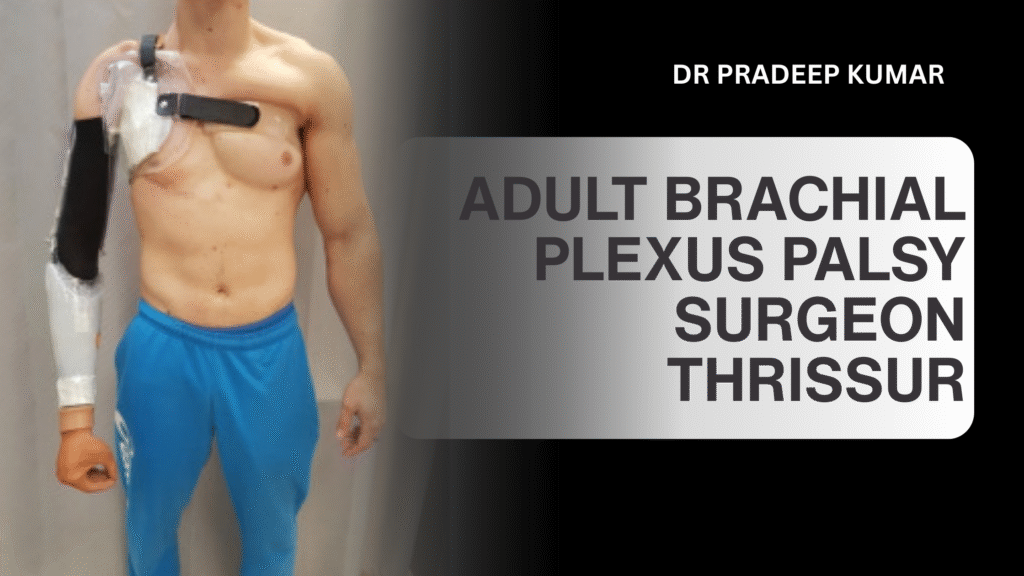
Top 7 What Are the Common Causes of Brachial Plexus Injuries
What are the common causes of brachial plexus injuries? The brachial plexus is a network of nerves that connects the spinal cord to the shoulder, arm, and hand. Damage to these nerves can affect movement, sensation, strength, and coordination in the upper limb. Understanding the causes can help people recognize possible nerve damage early and seek appropriate medical evaluation. In Thrissur, awareness of traumatic and non-traumatic nerve injuries can help patients understand when specialist assessment may be necessary.
Brachial plexus injuries can range from mild stretching of the nerves to severe injuries involving tearing or complete separation. The severity and location of the injury often determine the symptoms and treatment approach.
What Is the Brachial Plexus
The brachial plexus is a complex group of nerves located between the neck and shoulder. These nerves originate from the lower cervical and upper thoracic spinal nerves and travel toward the shoulder, arm, forearm, and hand.
The brachial plexus controls many important functions, including:
- Shoulder movement
- Elbow bending and straightening
- Wrist movement
- Finger movement
- Sensation in parts of the arm and hand
- Muscle strength and coordination
When these nerves become compressed, stretched, bruised, or torn, a person may develop a brachial plexus injury.
Understanding what are the common causes of brachial plexus injuries is important because some injuries happen suddenly, while others develop gradually because of pressure or underlying conditions.
What Are the Common Causes of Brachial Plexus Injuries
There are several possible causes of brachial plexus injuries. Some are associated with major trauma, while others may occur because of medical conditions, repetitive stress, or complications around the shoulder and neck.
The most common causes include:
- Motor vehicle accidents
- Motorcycle and bicycle accidents
- Falls
- Sports injuries
- Shoulder trauma
- Birth-related injuries
- Penetrating injuries
- Tumors or abnormal growths
- Radiation-related nerve damage
- Severe traction or stretching of the neck and shoulder
The mechanism of injury is important because it can indicate which nerves may have been affected and how severe the damage could be.
1. Motor Vehicle Accidents
Motor vehicle accidents are one of the significant causes of brachial plexus injuries. A sudden impact can force the head and neck in one direction while the shoulder moves in another.
This force can stretch the nerves of the brachial plexus. In severe accidents, the nerves may be torn or pulled away from the spinal cord.
Symptoms after an accident may include:
- Sudden arm weakness
- Loss of sensation
- Severe shoulder or arm pain
- Numbness or tingling
- Difficulty moving the fingers
- Reduced grip strength
Anyone experiencing new arm weakness or significant sensory changes after major trauma should receive prompt medical assessment.
2. Motorcycle and Bicycle Accidents
Motorcycle and bicycle accidents can cause substantial traction injuries because riders may be thrown from the vehicle and land heavily on the shoulder.
The shoulder may be forced downward while the neck moves upward, placing considerable stress on the brachial plexus.
This is an important reason why what are the common causes of brachial plexus injuries often includes high-impact road accidents.
The injury may be mild, involving temporary nerve dysfunction, or severe enough to cause structural damage to one or more nerves.
3. Falls and Shoulder Trauma
A hard fall onto the shoulder can stretch or compress the nerves running through the brachial plexus.
Falls from:
- Stairs
- Ladders
- Heights
- Slippery surfaces
- Recreational equipment
may result in upper-limb nerve injuries.
The risk can be higher when the shoulder is forced into an unusual position during the fall.
A person may initially notice pain but later develop weakness, numbness, or difficulty using the affected arm.
4. Sports Injuries
Contact sports and high-impact activities can also cause brachial plexus injuries.
Football, rugby, wrestling, hockey, and other collision-based sports may place sudden pressure on the neck and shoulder.
A temporary injury sometimes called a “stinger” or “burner” can occur when the brachial plexus is compressed or stretched. It may cause burning pain, tingling, or temporary weakness extending into the arm.
Repeated episodes should not simply be ignored, particularly when symptoms last longer than expected or become more frequent.
What Are the Common Causes of Brachial Plexus Injuries in Adults
In adults, traumatic events are among the most frequently recognized causes. However, not every brachial plexus problem results from an accident.
Other possible causes include tumors, inflammation, radiation treatment, and prolonged nerve compression.
5. Penetrating Injuries
Sharp or penetrating trauma can directly damage the nerves of the brachial plexus.
These injuries can occur when an object enters the neck, shoulder, or upper chest area and affects the nerve structures.
Because direct nerve damage can be serious, prompt assessment is important.
6. Tumors and Abnormal Growths
Masses located near the brachial plexus may place pressure on the nerves.
A tumor does not necessarily have to originate from the nerves themselves to cause symptoms. Growth in nearby tissues can compress the nerve structures and interfere with normal nerve signaling.
Symptoms may develop gradually and can include:
- Persistent pain
- Progressive weakness
- Numbness
- Tingling
- Reduced hand function
When symptoms appear without an obvious injury, a healthcare professional may investigate non-traumatic causes.
Other Risk Factors for Brachial Plexus Injuries
Understanding what are the common causes of brachial plexus injuries also involves recognizing factors that may increase the risk of nerve damage.
Potential risk factors include:
- High-impact physical activity
- Previous shoulder or neck trauma
- Repeated contact-sport injuries
- Occupations involving heavy physical work
- Certain surgical procedures
- Radiation exposure involving the chest or neck
- Conditions that cause abnormal tissue growth
- Difficult childbirth
Having a risk factor does not mean an injury will definitely occur. However, recognizing risk can help people respond more quickly when symptoms appear.
Types of Brachial Plexus Injuries
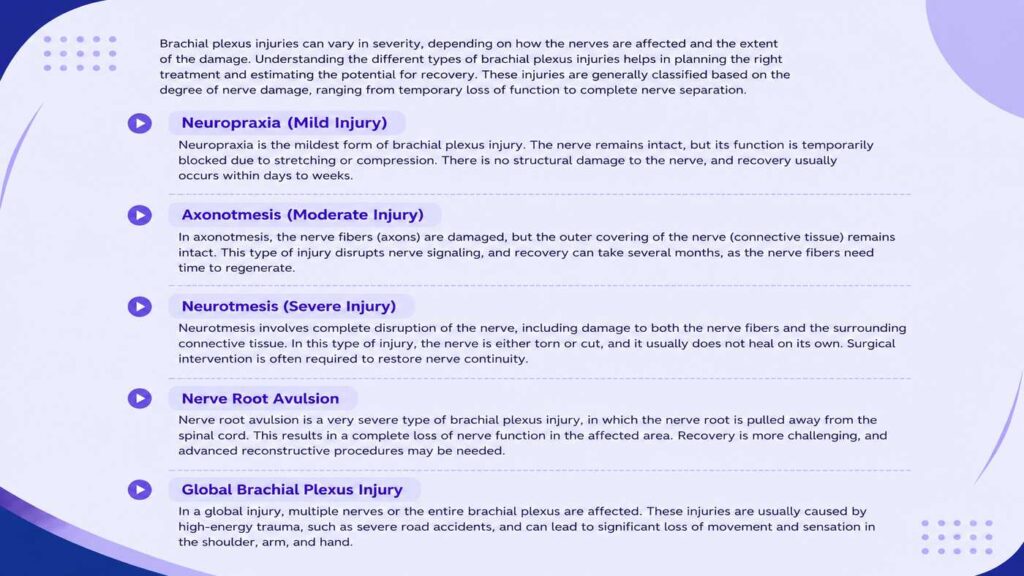
Brachial plexus injuries can be classified according to how the nerves are damaged.
Neuropraxia
Neuropraxia is generally considered a milder type of nerve injury. The nerve remains structurally intact but does not function normally for a period of time.
Symptoms may include temporary weakness, tingling, numbness, or burning pain.
Many mild injuries improve with appropriate management and time.
Nerve Rupture
A nerve rupture occurs when a nerve is partially or completely torn.
This type of injury is more serious and may require specialized treatment depending on the location and extent of damage.
Nerve Root Avulsion
A nerve root avulsion is a severe injury in which the nerve root is pulled away from the spinal cord.
This can result in significant weakness, loss of sensation, and functional impairment. Management may require complex nerve reconstruction strategies.
Symptoms of Brachial Plexus Injuries
The symptoms depend on which nerves are affected and how severely they are damaged.
Common symptoms include:
- Shoulder pain
- Arm pain
- Burning sensations
- Tingling
- Numbness
- Muscle weakness
- Loss of movement
- Reduced grip strength
- Difficulty lifting the arm
- Poor coordination
- Loss of sensation in part of the hand
Some people experience symptoms immediately after trauma, while others notice progressive problems over time.
When Should You Seek Medical Attention
Prompt evaluation is especially important when symptoms develop after significant trauma.
Seek medical attention if you experience:
- Sudden weakness in the arm
- Persistent numbness
- Severe or unexplained arm pain
- Inability to move part of the arm or hand
- Significant loss of grip
- Symptoms that continue after a sports injury
- Progressive weakness without an obvious injury
Early assessment can help identify the underlying problem and guide further testing.
How Are Brachial Plexus Injuries Diagnosed
Diagnosis usually begins with a detailed medical history and physical examination.
A healthcare professional may assess:
- Muscle strength
- Reflexes
- Sensation
- Range of motion
- Grip strength
- Shoulder function
- Coordination
Additional tests may be recommended depending on the suspected cause.
Imaging Tests
Imaging can help identify structural problems affecting the nerves and surrounding tissues.
Depending on the injury, investigations may include MRI, CT scans, or other specialized imaging.
Electrodiagnostic Testing
Electromyography and nerve conduction studies may help evaluate how well the nerves and muscles are functioning.
These tests can provide useful information about the location and severity of nerve dysfunction.
Treatment Options for Brachial Plexus Injuries
Treatment depends on the type, severity, location, and cause of the injury.
Observation and Monitoring
Some mild nerve injuries improve naturally as the nerve recovers.
Regular clinical assessment may be used to monitor strength, sensation, and movement.
Physiotherapy
Physiotherapy can play an important role in maintaining joint mobility and muscle function.
A rehabilitation program may include:
- Range-of-motion exercises
- Strengthening exercises
- Muscle activation techniques
- Functional training
- Joint mobility work
- Prevention of stiffness
The specific program should be tailored to the individual’s injury and recovery stage.
Pain Management
Pain associated with nerve injuries can sometimes be persistent or difficult to manage.
Treatment may involve appropriate medications, rehabilitation strategies, and other pain-management approaches depending on the individual situation.
Nerve Surgery
Severe injuries may require surgical treatment.
Depending on the injury, procedures may include:
- Nerve repair
- Nerve grafting
- Nerve transfer
- Neurolysis
- Reconstruction procedures
The purpose of surgery is to restore or improve nerve signals and maximize useful movement and function when appropriate.
Benefits of Early Assessment
Understanding what are the common causes of brachial plexus injuries can encourage people to seek evaluation sooner rather than waiting for symptoms to become severe.
Early assessment may help with:
- Identifying the type of nerve injury
- Establishing the extent of nerve damage
- Planning rehabilitation
- Determining whether surgery may be appropriate
- Protecting joint movement
- Managing pain
- Monitoring nerve recovery
The best treatment approach varies from person to person, so a proper evaluation is essential.
Tips for Protecting the Brachial Plexus
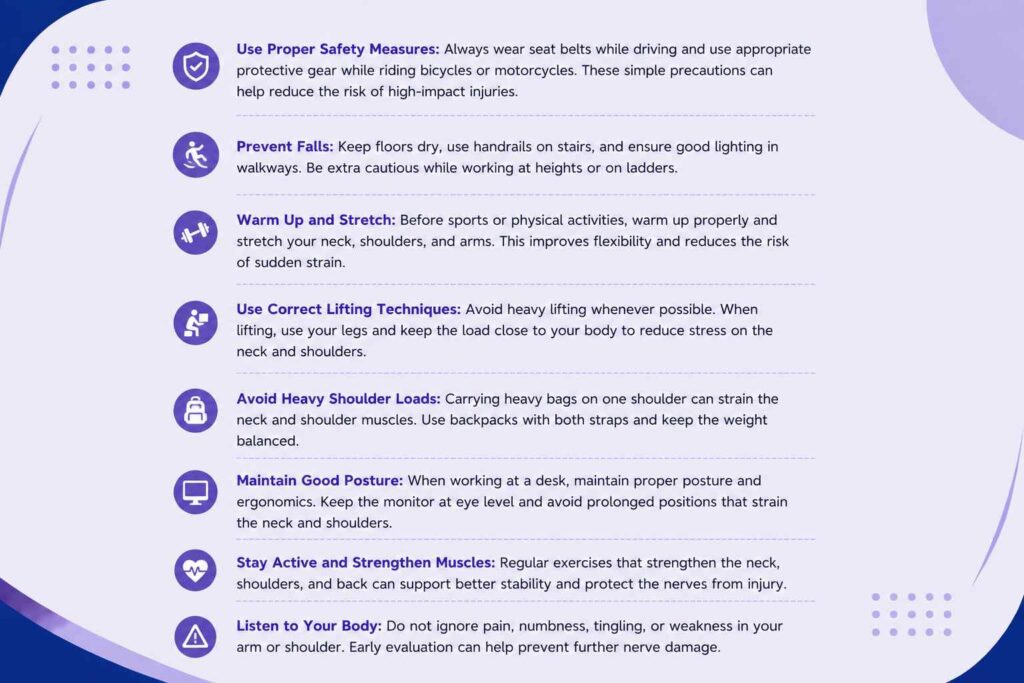
Although not every injury can be prevented, several practical steps may reduce the risk.
During Sports
Use appropriate protective equipment and follow safe techniques. Athletes should also report recurring neck, shoulder, or arm symptoms rather than continuing to play through them.
During Travel
Using appropriate vehicle safety measures can reduce the risk of serious trauma during accidents.
During Physical Activities
Use proper lifting techniques and avoid placing excessive stress on the neck and shoulder.
After an Injury
Do not ignore persistent weakness, numbness, or loss of movement. Symptoms that continue or worsen should be evaluated.
Why Understanding the Causes Matters
Knowing what are the common causes of brachial plexus injuries makes it easier to recognize potential risk situations.
Traumatic injuries often have an obvious cause, such as a road accident or sports collision. Non-traumatic injuries may be more difficult to identify because symptoms can develop slowly.
Recognizing the difference can help people communicate useful information during a medical evaluation.
For example, telling a healthcare professional about a recent accident, repetitive activity, previous surgery, or gradual onset of weakness can provide important clues about the underlying problem.
Conclusion
Knowing what are the common causes of brachial plexus injuries is an important first step toward recognizing potential nerve damage. Road accidents, falls, sports injuries, birth-related trauma, penetrating injuries, tumors, and other forms of nerve compression can affect the brachial plexus in different ways.
Symptoms such as persistent weakness, numbness, tingling, pain, or difficulty moving the arm should not be ignored, particularly after significant trauma. Early assessment can help determine the nature of the injury and identify appropriate treatment and rehabilitation options. If you are experiencing symptoms or have sustained a significant injury, seek appropriate medical evaluation in Thrissur without unnecessary delay. For additional information about brachial plexus injuries, visit the Mayo Clinic overview of brachial plexus injuries for trusted medical guidance.
Frequently Asked Questions
What are the common causes of brachial plexus injuries?
Can a motor vehicle accident cause a brachial plexus injury?
Can a fall cause brachial plexus nerve damage?
Can sports injuries damage the brachial plexus?
Can childbirth cause a brachial plexus injury?
Can tumors cause brachial plexus injuries?
What are the main symptoms of a brachial plexus injury?
How are brachial plexus injuries diagnosed?
Can a brachial plexus injury heal without surgery?
Does physiotherapy help after a brachial plexus injury?

Dr. Pradeep Kumar
Plastic & Reconstructive Surgeon – Brachial Plexus & Nerve Surgery Specialist
Dr. Pradeep Kumar is an experienced plastic and reconstructive surgeon known for his expertise in brachial plexus and peripheral nerve surgery. With extensive microsurgical experience, he focuses on restoring movement and function for patients with complex nerve injuries.
Sushrutha Institute of Plastic Surgery, Elite Mission Hospital, Thrissur