7 Powerful Ways How Nerve Transfer Surgery Helps Restore Arm Movement
When a serious nerve injury affects the arm, even simple daily activities can become difficult. Understanding How Nerve Transfer Surgery Helps Restore Arm Movement is important for patients seeking effective treatment options after nerve damage. This advanced surgical procedure offers hope by reconnecting healthy nerves to damaged ones, helping restore lost movement and function. Patients in Thrissur exploring treatment for severe nerve injuries often benefit from learning about this innovative approach and how it supports long-term recovery.
What Is Nerve Transfer Surgery
Nerve transfer surgery is a specialized procedure used to restore movement and sensation when nerves controlling muscles have been severely damaged. During the operation, surgeons redirect a healthy, functioning nerve or a branch of a nerve to replace the function of an injured nerve.
The goal is to create a new pathway that allows signals from the brain to reach muscles that have lost their nerve supply.
This procedure is commonly used when:
- Nerves have been severely injured
- Recovery from natural healing is unlikely
- Traditional nerve repair is not possible
- Muscle function is at risk of permanent loss
How Nerve Transfer Surgery Helps Restore Arm Movement
Understanding How Nerve Transfer Surgery Helps Restore Arm Movement begins with recognizing how nerves control muscles.
The brain sends electrical signals through nerves to activate muscles. When these nerves are damaged, the muscles cannot receive instructions, leading to weakness or paralysis.
Nerve transfer surgery restores function by:
- Redirecting healthy nerve fibers
- Reconnecting communication pathways
- Stimulating affected muscles
- Encouraging muscle recovery
- Improving voluntary movement
Over time, the transferred nerve learns to control the new muscle target, helping restore arm function.
Common Causes of Arm Nerve Injuries
Several conditions can damage the nerves responsible for arm movement.
Traumatic Injuries
Severe accidents can stretch, tear, or sever nerves.
Examples include:
- Motorcycle accidents
- Car accidents
- Sports injuries
- Falls
Brachial Plexus Injuries
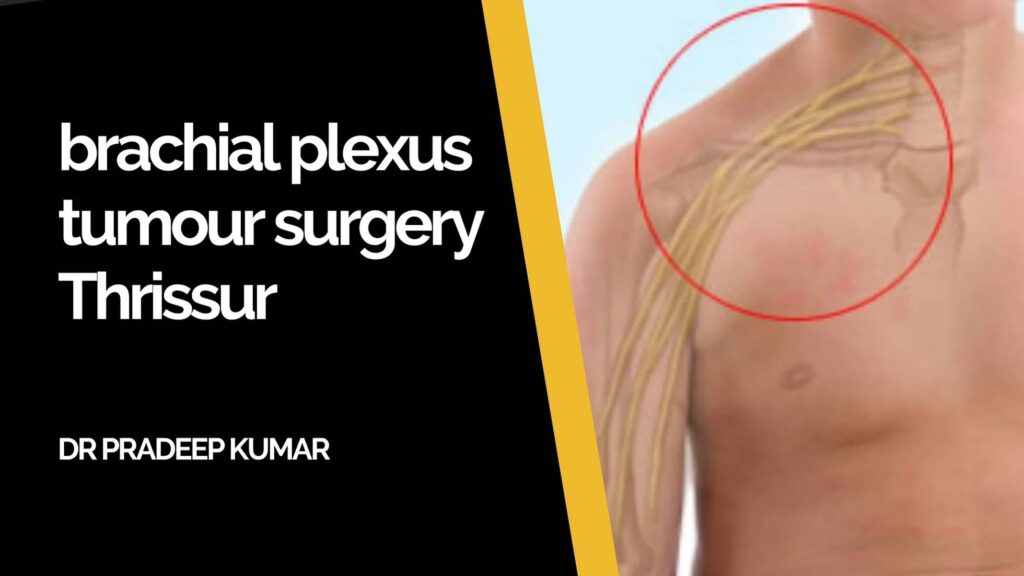
The brachial plexus is a network of nerves that controls the shoulder, arm, and hand.
Damage can occur due to:
- High-impact trauma
- Birth-related injuries
- Compression injuries
Penetrating Injuries
Sharp objects may directly cut nerves.
Common causes include:
- Glass injuries
- Knife wounds
- Industrial accidents
Tumors
Growths pressing on nerves may cause weakness and loss of function.
Surgical Complications
Although uncommon, certain surgeries can sometimes result in nerve damage.
Symptoms That May Require Nerve Transfer Surgery
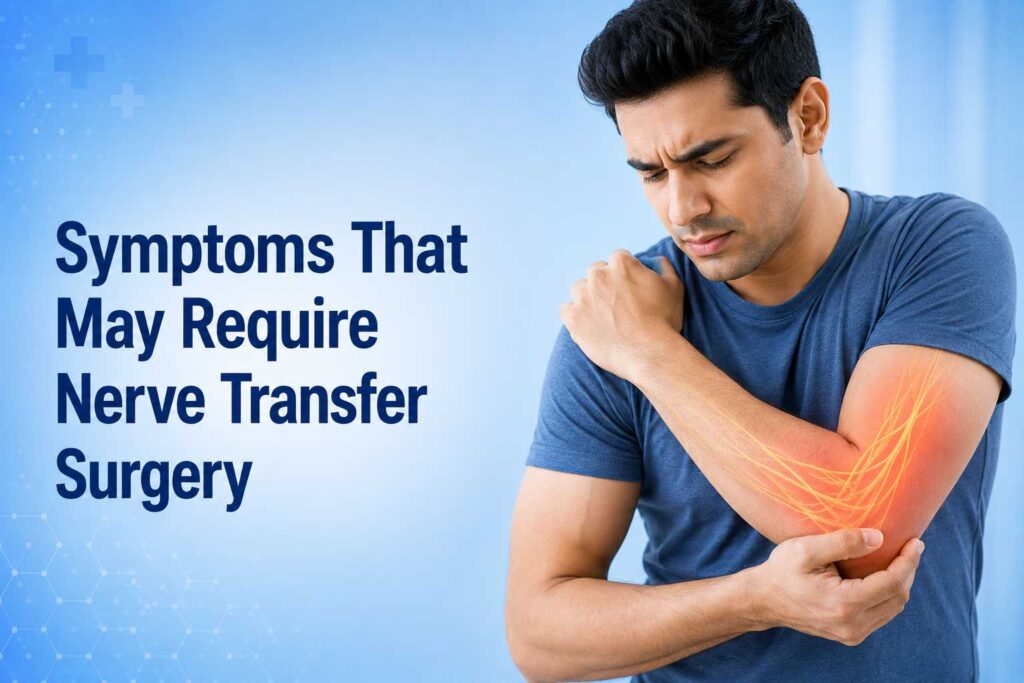
Patients experiencing severe nerve injuries may notice symptoms such as:
- Arm weakness
- Inability to lift the shoulder
- Loss of elbow bending
- Difficulty gripping objects
- Muscle wasting
- Numbness
- Reduced arm coordination
- Partial or complete paralysis
If symptoms persist despite conservative treatment, specialists may evaluate whether nerve transfer surgery is appropriate.
Types of Nerve Transfer Procedures
Different nerve transfer techniques are used depending on the location and severity of the injury.
Shoulder Function Restoration
Certain nerve transfers help restore shoulder stability and movement.
Benefits include:
- Improved shoulder lifting
- Better arm positioning
- Enhanced range of motion
Elbow Flexion Restoration
These procedures help patients regain the ability to bend the elbow.
This is often one of the highest priorities because elbow function is essential for daily activities.
Hand and Wrist Function Restoration
Some nerve transfers focus on restoring:
- Wrist extension
- Finger movement
- Grip strength
Combined Nerve Transfers
Complex injuries may require multiple nerve transfers to improve overall arm function.
7 Powerful Ways How Nerve Transfer Surgery Helps Restore Arm Movement
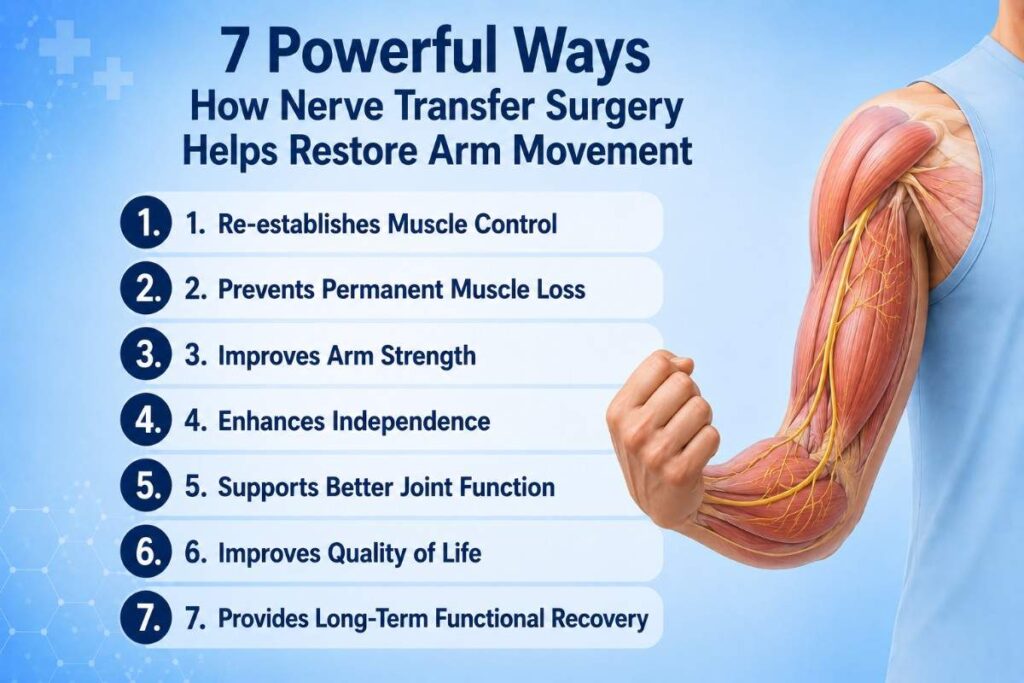
1. Re-establishes Muscle Control
One of the primary benefits of How Nerve Transfer Surgery Helps Restore Arm Movement is restoring communication between the brain and muscles.
Healthy nerves provide new pathways for muscle activation.
2. Prevents Permanent Muscle Loss
Muscles deprived of nerve signals can gradually waste away.
Early nerve transfer surgery may help preserve muscle health and improve recovery potential.
3. Improves Arm Strength
As nerve regeneration progresses, many patients experience increased muscle power and functional improvement.
4. Enhances Independence
Improved arm movement helps patients perform:
- Dressing
- Eating
- Personal hygiene
- Household activities
5. Supports Better Joint Function
Restored muscle activity helps stabilize joints and improve arm coordination.
6. Improves Quality of Life
Regaining movement often has a positive impact on confidence and emotional well-being.
7. Provides Long-Term Functional Recovery
One of the most important aspects of How Nerve Transfer Surgery Helps Restore Arm Movement is the potential for meaningful long-term improvement when combined with rehabilitation.
Who Is a Good Candidate for Nerve Transfer Surgery
Suitable candidates may include individuals who have:
- Severe nerve injuries
- Brachial plexus damage
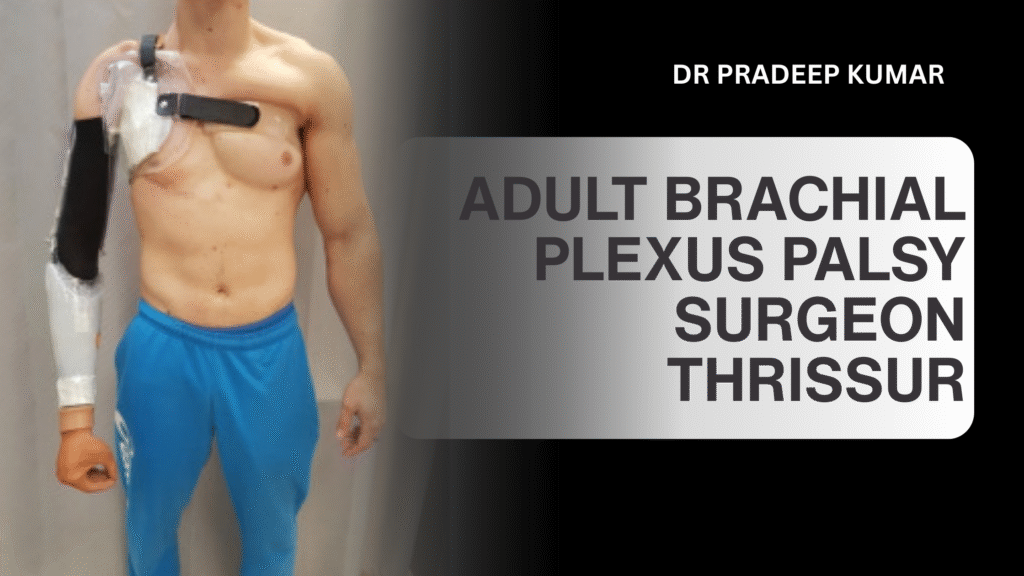
- Loss of arm movement
- Intact target muscles
- Limited recovery from other treatments
Evaluation typically includes:
- Physical examination
- Nerve conduction studies
- Electromyography (EMG)
- Imaging scans
A comprehensive assessment helps determine the best treatment approach.
How the Procedure Is Performed
The surgical process generally follows several steps.
Preoperative Planning
Surgeons identify:
- Damaged nerves
- Healthy donor nerves
- Target muscles
Surgical Transfer
A healthy nerve branch is connected to the injured nerve supplying the affected muscle.
Closure and Recovery
The incision is closed, and the patient begins postoperative recovery and rehabilitation.
The procedure is typically performed using microsurgical techniques for precision.
Recovery After Nerve Transfer Surgery
Recovery requires patience because nerve regeneration occurs gradually.
Early Recovery Phase
Patients may experience:
- Mild discomfort
- Temporary swelling
- Limited movement
Nerve Regeneration Phase
Nerves grow slowly, often around one millimeter per day.
Visible improvements may take several months.
Rehabilitation Phase
Physical therapy plays a crucial role in recovery.
Therapy helps patients:
- Retrain muscles
- Improve coordination
- Build strength
- Maximize functional outcomes
Benefits of Nerve Transfer Surgery
The advantages of nerve transfer surgery include:
- Restoration of arm movement
- Improved muscle strength
- Better functional independence
- Reduced disability
- Enhanced quality of life
- Preservation of muscle function
- Potential improvement in sensation
These benefits explain why many specialists recommend this approach for selected patients.
Risks and Limitations
Like any surgical procedure, nerve transfer surgery has potential risks.
These may include:
- Infection
- Bleeding
- Scarring
- Incomplete recovery
- Temporary discomfort
- Limited improvement in severe cases
However, careful patient selection and rehabilitation can help optimize outcomes.
Tips for Maximizing Recovery
Patients can support recovery by:
- Following medical advice
- Attending all therapy sessions
- Performing prescribed exercises
- Maintaining proper nutrition
- Avoiding smoking
- Staying patient during nerve regeneration
- Monitoring progress regularly
Consistent rehabilitation often plays a major role in achieving the best results.
Conclusion
Understanding How Nerve Transfer Surgery Helps Restore Arm Movement can help patients make informed decisions after serious nerve injuries. By creating new pathways for nerve signals, this advanced procedure offers an opportunity to regain strength, improve function, and restore independence. Combined with timely intervention and dedicated rehabilitation, nerve transfer surgery continues to provide meaningful recovery for many individuals seeking improved arm movement and a better quality of life in Thrissur. For this topic, you can use an authoritative external link from the Mayo Clinic Brachial Plexus Treatment .
Frequently Asked Questions
What is nerve transfer surger
Nerve transfer surgery is a procedure that redirects healthy nerves to restore function in muscles affected by nerve damage.
How does nerve transfer surgery help restore arm movement
It creates new nerve pathways that allow muscles to receive signals from the brain again.
Who may need nerve transfer surgery
Individuals with severe nerve injuries, brachial plexus injuries, or significant arm weakness may be candidates.
Is nerve transfer surgery successful
Success depends on factors such as injury severity, timing, and rehabilitation efforts.
How long does recovery take
Recovery may take several months to a few years as nerves regenerate gradually.
Can nerve transfer surgery restore full arm function
Results vary, but many patients achieve significant functional improvement.
Is physical therapy necessary after surgery
Yes, rehabilitation is essential for maximizing recovery and retraining muscles.
Are there risks associated with nerve transfer surgery
Potential risks include infection, bleeding, scarring, and incomplete recovery.
When should nerve transfer surgery be performed
Early evaluation is often recommended to improve recovery potential.
Can older adults undergo nerve transfer surgery
Eligibility depends on overall health, injury characteristics, and specialist assessment.

Dr. Pradeep Kumar
Plastic & Reconstructive Surgeon – Brachial Plexus & Nerve Surgery Specialist
Dr. Pradeep Kumar is an experienced plastic and reconstructive surgeon known for his expertise in brachial plexus and peripheral nerve surgery. With extensive microsurgical experience, he focuses on restoring movement and function for patients with complex nerve injuries.
Sushrutha Institute of Plastic Surgery, Elite Mission Hospital, Thrissur