7 Proven Brachial Plexus Injury Diagnosis in Thrissur Guide
A timely Brachial Plexus Injury Diagnosis in Thrissur can make a significant difference in identifying nerve damage, planning treatment, and improving recovery. Nerve injuries affecting the brachial plexus can interfere with movement, strength, and sensation in the shoulder, arm, and hand. Early diagnosis helps determine the severity of the injury and supports appropriate medical management before permanent complications develop.
Whether the injury occurs because of trauma, sports activities, accidents, or birth-related complications, understanding the diagnosis process helps patients and families make informed decisions.
Understanding the Brachial Plexus
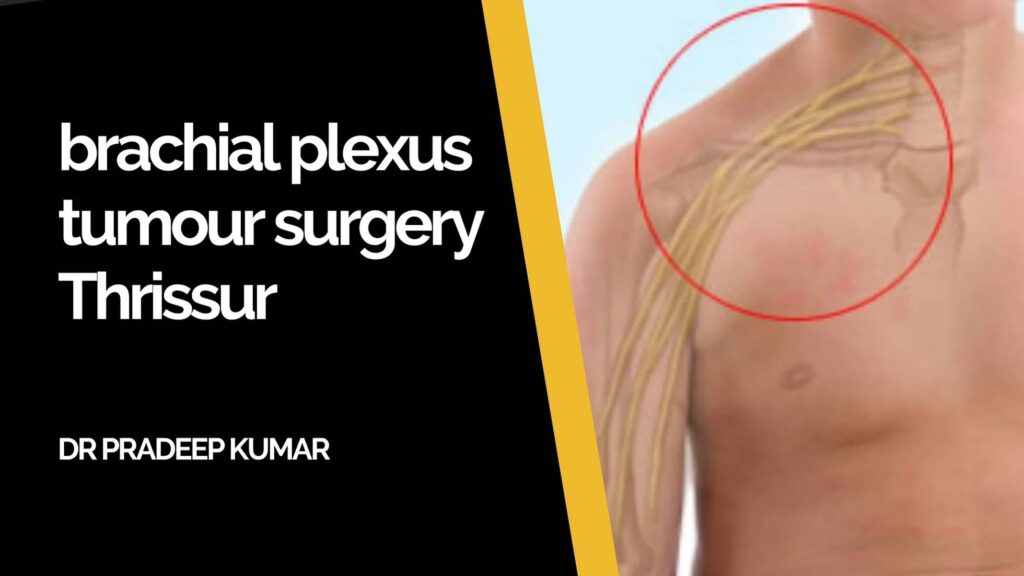
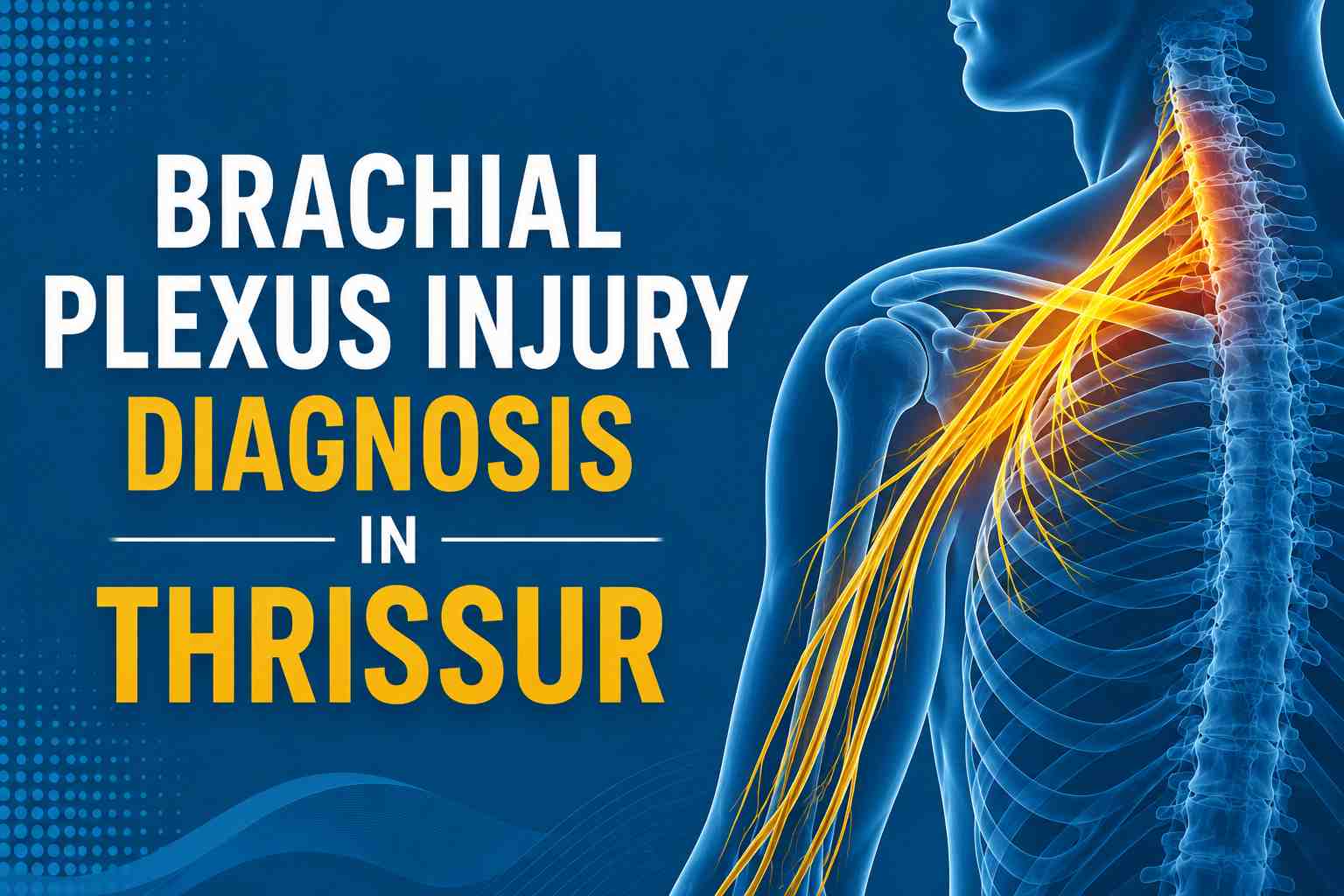
The brachial plexus is a complex network of nerves that originates from the spinal cord in the neck. These nerves control movement and sensation throughout the shoulder, arm, elbow, wrist, and hand.
When these nerves become stretched, compressed, or torn, communication between the brain and upper limb becomes disrupted.
The severity of damage may range from temporary nerve irritation to complete nerve rupture.
Why Early Brachial Plexus Injury Diagnosis Matters
Early diagnosis plays an essential role in determining:
- The exact location of nerve damage
- Severity of the injury
- Which nerves are affected
- Whether surgery is required
- Expected recovery timeline
- Rehabilitation planning
Prompt diagnosis also helps prevent muscle wasting and joint stiffness.
What Is a Brachial Plexus Injury
A brachial plexus injury occurs when the nerves responsible for upper limb function become damaged.
Depending on severity, the injury may involve:
- Mild stretching
- Compression
- Partial tear
- Complete tear
- Nerve root avulsion
Each type requires different treatment and recovery approaches.
Common Causes of Brachial Plexus Injuries
Several situations may damage the brachial plexus.
Road Traffic Accidents
High-speed collisions frequently produce severe nerve injuries.
Sports Injuries
Contact sports increase the risk of stretching the nerves.
Falls
Landing heavily on the shoulder may injure the nerve bundle.
Workplace Injuries
Heavy machinery accidents can cause significant trauma.
Birth Injuries
Some newborns experience brachial plexus injury during difficult deliveries.
Penetrating Trauma
Knife injuries or similar trauma may directly damage nerves.
Types of Brachial Plexus Injuries
Different injuries require different management.
Neuropraxia
The mildest form.
Features include:
- Temporary nerve interruption
- Usually heals naturally
- Good recovery
Axonotmesis
The nerve fibers are damaged but supporting structures remain intact.
Recovery is possible but slower.
Neurotmesis
A complete nerve disruption requiring surgical intervention.
Nerve Root Avulsion
The nerve root separates from the spinal cord.
This represents one of the most severe injuries.
Symptoms That Need Medical Evaluation
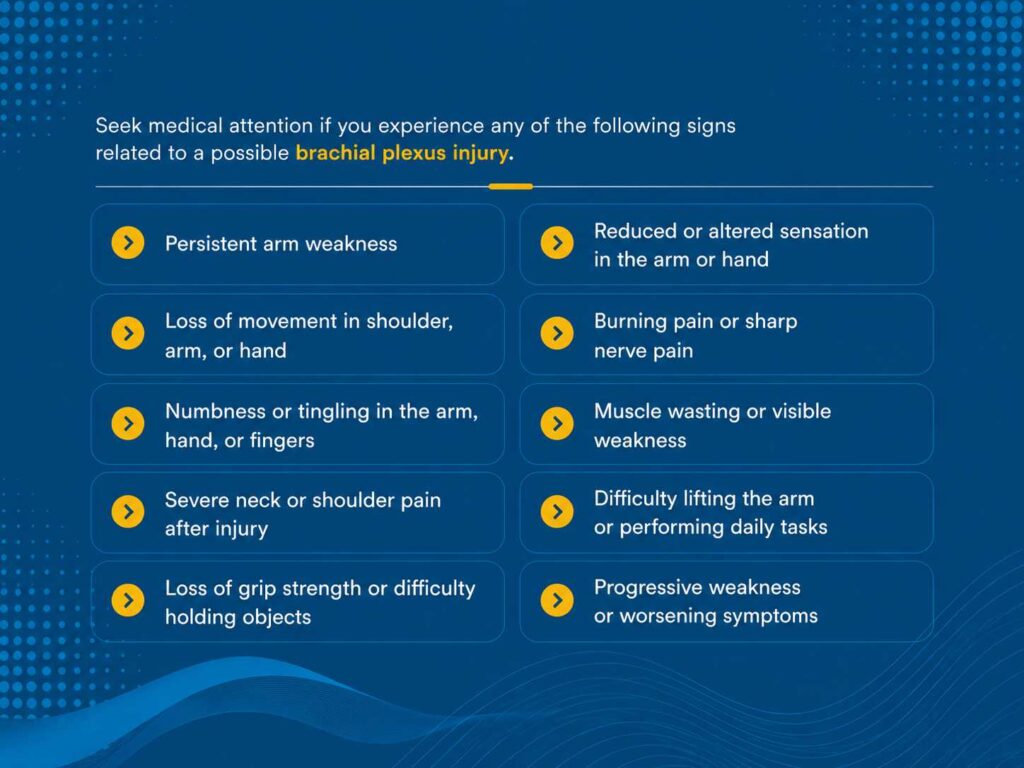
Symptoms depend on which nerves are affected.
Common symptoms include:
- Shoulder weakness
- Arm weakness
- Loss of grip strength
- Numbness
- Tingling
- Burning pain
- Loss of sensation
- Difficulty lifting objects
- Reduced arm movement
- Muscle wasting
- Paralysis in severe cases
Symptoms may appear immediately after trauma or gradually.
When Should You Seek Medical Attention
Medical evaluation is recommended if you experience:
- Persistent arm weakness
- Loss of movement
- Severe neck pain
- Shoulder pain after trauma
- Hand numbness
- Reduced sensation
- Difficulty using the arm
- Progressive muscle weakness
Early Brachial Plexus Injury Diagnosis in Thrissur improves treatment planning and long-term recovery.
Medical History During Diagnosis
Diagnosis begins with a detailed medical history.
Healthcare providers usually ask about:
- How the injury occurred
- Time of injury
- Pain severity
- Previous nerve injuries
- Existing medical conditions
- Occupational activities
- Sports participation
- Changes in movement
- Sensory symptoms
These details guide further evaluation.
Physical Examination
A comprehensive physical examination evaluates:
Muscle Strength
Each muscle group is tested individually.
Sensation
Touch sensation is checked across different areas.
Reflexes
Changes in reflexes may indicate nerve involvement.
Range of Motion
Shoulder, elbow, wrist, and finger movements are assessed.
Joint Stability
Joint injuries associated with nerve damage are identified.
Diagnostic Tests for Brachial Plexus Injury
Several investigations help confirm the diagnosis.
Electromyography (EMG)
EMG evaluates muscle activity.
It helps identify:
- Nerve damage
- Muscle denervation
- Recovery potential
Nerve Conduction Studies (NCS)
These tests measure:
- Nerve signal speed
- Signal strength
- Functional nerve integrity
MRI Scan
MRI provides detailed images of:
- Nerves
- Soft tissues
- Muscles
- Spinal cord
It can detect nerve tears and swelling.
CT Myelography
This specialized imaging helps identify nerve root avulsions.
It is particularly useful in severe trauma.
Ultrasound
High-resolution ultrasound evaluates:
- Nerve continuity
- Scar tissue
- Neuromas
X-rays
Although nerves are not visible on X-rays, they help detect:
- Bone fractures
- Shoulder dislocation
- Cervical spine injuries
How Doctors Determine Severity
The severity depends on:
- Number of nerves affected
- Type of nerve damage
- Muscle weakness
- Sensory loss
- Imaging findings
- Electrical study results
Accurate staging guides treatment.
Mild vs Severe Injury
Mild Injury
Features include:
- Temporary numbness
- Mild weakness
- Good recovery
- Conservative treatment
Severe Injury
May involve:
- Complete paralysis
- Intense pain
- Muscle wasting
- Surgical repair
Conditions That Can Mimic Brachial Plexus Injury
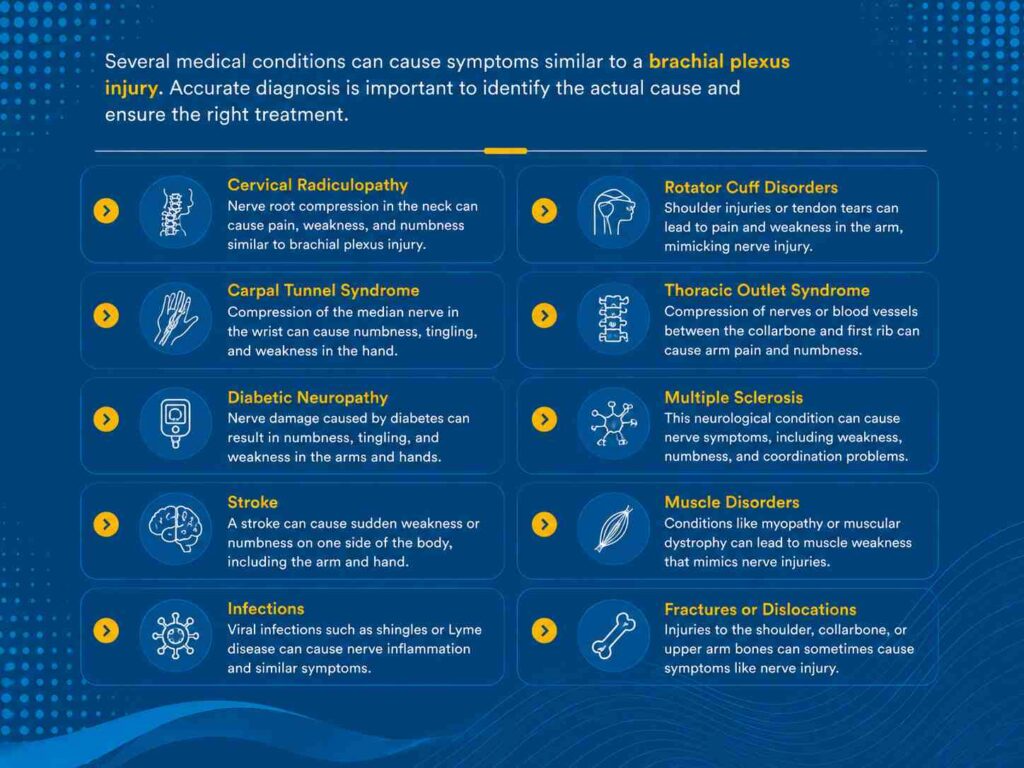
Several disorders have similar symptoms.
Examples include:
- Cervical disc disease
- Stroke
- Peripheral neuropathy
- Rotator cuff injury
- Shoulder arthritis
- Thoracic outlet syndrome
- Spinal cord injury
Proper diagnosis helps distinguish these conditions.
Treatment Options After Diagnosis
Treatment depends on injury severity.
Observation
Minor injuries may recover naturally.
Patients receive regular follow-up.
Medications
Doctors may recommend medications to control:
- Pain
- Inflammation
- Neuropathic pain
Physiotherapy
Rehabilitation focuses on:
- Maintaining flexibility
- Strengthening muscles
- Improving coordination
- Preventing stiffness
Occupational Therapy
Occupational therapists help patients regain independence in:
- Dressing
- Writing
- Eating
- Daily activities
Splinting
Splints help maintain proper limb positioning.
Surgical Treatment
Surgery may involve:
- Nerve grafting
- Nerve transfer
- Neurolysis
- Tendon transfer
- Muscle transfer
Early surgical intervention may improve outcomes in selected cases.
Rehabilitation After Diagnosis
Recovery usually involves structured rehabilitation.
Goals include:
- Pain reduction
- Muscle strengthening
- Joint mobility
- Functional improvement
- Independence
Consistency is essential.
Recovery Timeline
Recovery depends on:
- Injury type
- Age
- Overall health
- Time before treatment
- Rehabilitation participation
Some patients recover within months, while severe injuries may require years.
Lifestyle Tips During Recovery
Helpful recommendations include:
- Attend all follow-up appointments
- Perform prescribed exercises
- Maintain healthy nutrition
- Stay physically active
- Protect the affected arm
- Avoid heavy lifting
- Get adequate sleep
- Stay hydrated
- Follow rehabilitation advice
Possible Complications
Without timely treatment, complications may include:
- Permanent weakness
- Muscle wasting
- Joint stiffness
- Chronic pain
- Reduced arm function
- Loss of independence
Early diagnosis helps reduce these risks.
Can Children Develop Brachial Plexus Injuries
Yes.
Some newborns develop brachial plexus injuries during childbirth.
Early assessment supports better recovery planning.
Preventing Brachial Plexus Injuries
Although not all injuries are preventable, risk can be reduced by:
- Wearing seat belts
- Using sports safety equipment
- Practicing safe driving
- Following workplace safety guidelines
- Strengthening shoulder muscles
- Maintaining good posture
Importance of Follow-Up
Regular follow-up appointments help evaluate:
- Muscle recovery
- Nerve regeneration
- Functional improvement
- Rehabilitation progress
- Need for additional treatment
Emotional Impact of Nerve Injuries
Living with nerve injuries can affect emotional well-being.
Patients may experience:
- Anxiety
- Frustration
- Reduced confidence
- Lifestyle changes
Support from healthcare professionals, family, and rehabilitation teams can improve overall recovery.
Conclusion
Understanding Brachial Plexus Injury Diagnosis in Thrissur allows patients to recognize symptoms early and seek appropriate medical evaluation before complications develop. Modern diagnostic techniques, including physical examination, imaging, and nerve function studies, help identify the exact nature of the injury and guide personalized treatment plans. Early intervention, rehabilitation, and regular follow-up offer the best opportunity for restoring arm function, reducing pain, and improving quality of life. If persistent weakness, numbness, or arm dysfunction develops after trauma, timely assessment in Thrissur can support better long-term outcomes. For a detailed overview of brachial plexus injuries, including causes, symptoms, and treatment options, refer to the Cleveland Clinic’s comprehensive patient guide.
Frequently Asked Questions

Dr. Pradeep Kumar
Plastic & Reconstructive Surgeon – Brachial Plexus & Nerve Surgery Specialist
Dr. Pradeep Kumar is an experienced plastic and reconstructive surgeon known for his expertise in brachial plexus and peripheral nerve surgery. With extensive microsurgical experience, he focuses on restoring movement and function for patients with complex nerve injuries.
Sushrutha Institute of Plastic Surgery, Elite Mission Hospital, Thrissur