How Is Brachial Plexus Injury Diagnosed? 7 Essential Facts
Knowing how is brachial plexus injury diagnosed is important because these nerve injuries can affect movement, strength, sensation, and coordination in the shoulder, arm, and hand. A proper diagnosis helps determine which nerves are affected, how severe the injury is, and whether the nerves may recover naturally or require treatment. If you are looking for evaluation of a suspected nerve injury in Thrissur, understanding the diagnostic process can help you know what to expect.
The brachial plexus is a network of nerves that travels from the neck through the shoulder and into the arm. Injury to this network can range from temporary nerve stretching to more serious nerve tears. Since symptoms can sometimes resemble other shoulder, neck, or arm conditions, doctors use several examinations and diagnostic tests rather than relying on one test alon
How Is Brachial Plexus Injury Diagnosed
The answer to how is a brachial plexus injury diagnosed usually begins with a detailed medical history and physical examination. The healthcare professional will ask about how the injury happened, when symptoms began, and whether weakness or numbness has changed over time.
The examination may focus on:
- Muscle strength in the shoulder, arm, wrist, and hand
- Sensation and areas of numbness
- Reflexes
- Range of motion
- Pain and tenderness
- Muscle wasting
- Coordination
- Changes in skin temperature or color
- Ability to perform specific movements
The doctor may compare the affected arm with the unaffected arm. This comparison can provide useful information about nerve function.
A careful assessment is particularly important after road traffic accidents, sports injuries, falls, shoulder trauma, or other events that may stretch or damage the nerves.
Why Is a Physical Examination Important
A physical examination is one of the most important parts of determining how is a brachial plexus injury diagnosed. The brachial plexus contains several nerves, and each nerve contributes to different movements and sensations.
A doctor may ask the patient to:
- Raise or rotate the shoulder
- Bend or straighten the elbow
- Move the wrist
- Open and close the hand
- Move individual fingers
- Push or pull against resistance
These movements help identify which muscle groups may have reduced nerve supply.
Sensory Testing
Sensation may also be checked using gentle touch, pressure, or other simple techniques. Areas of reduced sensation can help identify the nerves involved.
Reflex Testing
Reflexes provide additional information about nerve pathways. Abnormal or absent reflexes may suggest nerve dysfunction, although reflex findings need to be interpreted along with other examination results.
What Medical History Helps With Diagnosis
Understanding the cause of the injury is another important part of how is a brachial plexus injury diagnosed. The doctor may ask detailed questions about the event that caused the symptoms.
Important information can include:
- Whether the neck or shoulder was suddenly stretched
- Whether there was a fall or collision
- Whether the arm was pulled forcefully
- Whether symptoms appeared immediately
- Whether weakness is getting better or worse
- Whether there is persistent numbness
- Whether severe pain is present
- Whether there has been previous surgery or trauma
The timing of symptoms can also provide valuable clues. Some nerve injuries produce immediate weakness, while others may develop noticeable symptoms later.
A detailed history helps distinguish a brachial plexus problem from conditions involving the spinal cord, cervical nerve roots, shoulder joint, or peripheral nerves.
Which Imaging Tests Are Used
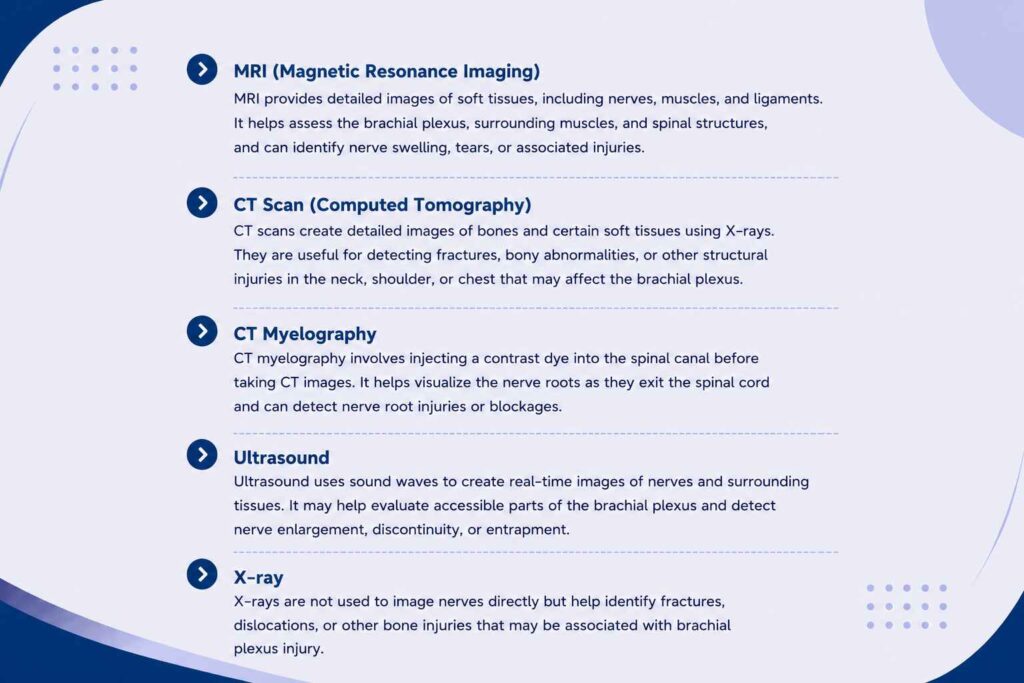
Imaging tests can provide information about the nerves and surrounding structures. When considering how is a brachial plexus injury diagnosed, imaging may be recommended depending on the suspected location and severity of the injury.
MRI
Magnetic resonance imaging, commonly called MRI, can provide detailed images of soft tissues and may help evaluate the brachial plexus, surrounding muscles, spinal structures, and other tissues.
MRI can be useful when doctors need more information about possible nerve damage or associated injuries.
CT Scan
Computed tomography, or CT, can provide detailed images of bones and certain structural abnormalities. It may be particularly useful when there is concern about fractures or traumatic injuries involving the shoulder, neck, or chest.
CT Myelography
In selected cases, CT myelography may be considered to evaluate the nerve roots as they leave the spinal cord. It involves imaging after contrast material is introduced around the spinal cord.
The choice of imaging depends on the injury mechanism, symptoms, examination findings, and clinical suspicion.
How Do Nerve Conduction Studies Help
Nerve conduction studies are an important part of understanding how is a brachial plexus injury diagnosed, especially when doctors need information about how electrical signals travel through nerves.
During the test, small electrical impulses are applied to selected nerves. Sensors measure how quickly and effectively the signals travel.
The results can help provide information about:
- Nerve signal strength
- Signal speed
- The location of possible nerve dysfunction
- Whether certain nerves are functioning normally
- The extent of nerve involvement
Nerve conduction studies are often performed together with electromyography.
What Is Electromyography
Electromyography, or EMG, evaluates electrical activity within muscles. It can help determine whether muscles are receiving normal nerve signals.
During an EMG, a very fine needle electrode may be placed into selected muscles. The electrical activity of the muscle is then measured at rest and during contraction.
EMG can help doctors understand:
- Whether a muscle has evidence of nerve-related dysfunction
- Which nerves may be affected
- Whether nerve signals are reaching particular muscles
- How severe the nerve dysfunction may be
Timing is important. Some electrical changes may not become detectable immediately after an injury. Therefore, the healthcare professional may recommend nerve testing at a suitable point after the injury and may repeat it when necessary.
Can Ultrasound Help Diagnose Nerve Injury
Ultrasound may sometimes be used to assess peripheral nerves and surrounding tissues. It can provide real-time images and does not use radiation.
When considering how is a brachial plexus injury diagnosed, ultrasound may have a role in selected situations, particularly when a clinician wants to examine accessible nerve structures or associated soft tissues.
However, ultrasound does not replace a complete clinical examination. Its usefulness depends on the location of the suspected injury, the equipment available, and the expertise of the person performing the examination.
The diagnostic approach is therefore usually individualized rather than based on one standard test.
How Do Doctors Determine the Type of Injury
Knowing how is a brachial plexus injury diagnosed also involves identifying the type and severity of nerve damage.
Brachial plexus injuries can vary significantly. Some involve temporary stretching of a nerve, while others may involve more serious structural damage.
Nerve Stretching
A nerve may be stretched without being completely torn. In some cases, nerve function can gradually improve as the nerve recovers.
Nerve Rupture
A more severe injury can cause a nerve to tear. Natural recovery may be limited when the nerve is no longer structurally continuous.
Nerve Root Avulsion
A nerve root can sometimes be pulled away from the spinal cord. This is a serious injury and may require specialized evaluation and treatment planning.
Doctors use the medical history, examination, imaging, and electrodiagnostic studies together to understand the likely injury pattern.
What Symptoms Can Support the Diagnosis
Symptoms provide important clues when determining how is a brachial plexus injury diagnosed. The symptoms can vary depending on which nerves are involved.
Common symptoms include:
- Shoulder or arm weakness
- Numbness
- Tingling
- Burning or electric-like pain
- Reduced grip strength
- Difficulty moving the arm
- Loss of sensation in parts of the hand
- Reduced muscle control
- Muscle wasting in more advanced cases
Some people experience severe pain, while others primarily notice weakness or numbness.
The location of symptoms can also help doctors identify which portion of the brachial plexus may be affected.
What Conditions Need to Be Ruled Out
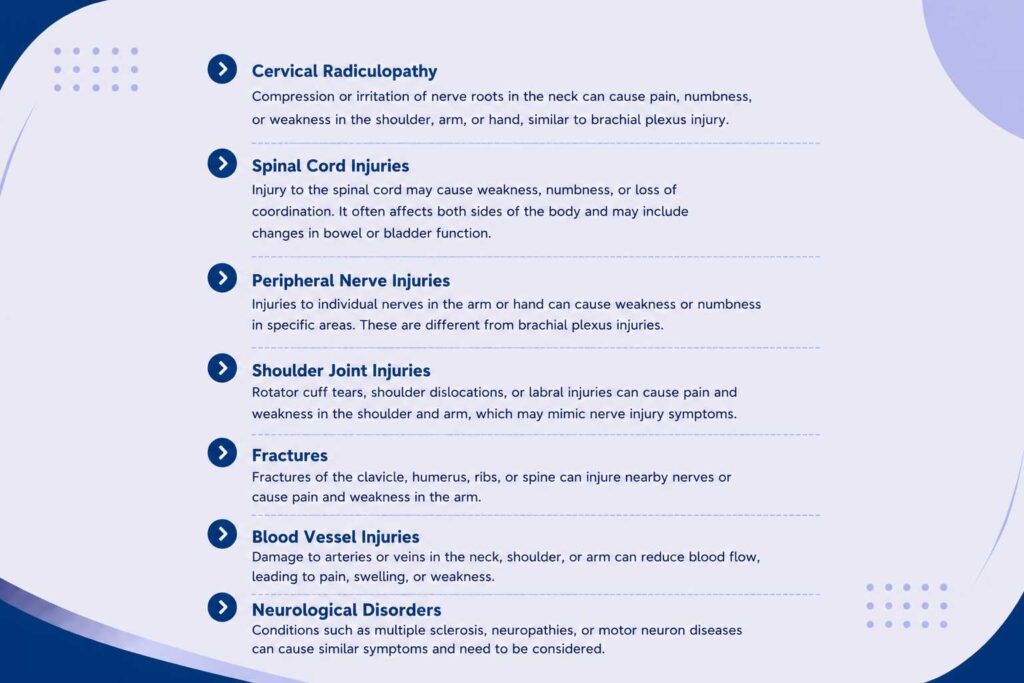
An important part of how is a brachial plexus injury diagnosed is distinguishing it from other conditions that can produce similar symptoms.
Possible conditions that may need consideration include:
- Cervical radiculopathy
- Spinal cord injuries
- Peripheral nerve injuries
- Shoulder injuries
- Rotator cuff problems
- Fractures
- Blood vessel injuries
- Certain neurological disorders
This is why self-diagnosis based only on symptoms can be unreliable. A person experiencing arm weakness or numbness may have several possible causes, and appropriate testing can help identify the underlying problem.
When Should You Seek Medical Evaluation
Understanding how is a brachial plexus injury diagnosed is especially important after significant trauma. Prompt medical evaluation is recommended when there is sudden or persistent weakness, numbness, severe pain, or difficulty moving the shoulder or arm after an injury.
Medical assessment is particularly important when symptoms occur following:
- A road traffic accident
- A serious fall
- Contact sports trauma
- Shoulder dislocation
- Fracture
- Significant stretching of the neck or shoulder
- Penetrating trauma
Early assessment allows clinicians to document the initial neurological condition and determine whether additional testing is needed.
What Happens After the Diagnosis
Once doctors understand how is a brachial plexus injury diagnosed, the next step is determining an appropriate management plan.
Treatment depends on factors such as:
- Type of nerve injury
- Severity of damage
- Location of the injury
- Symptoms
- Muscle weakness
- Sensory changes
- Evidence of nerve recovery
- Time since the injury
Some less severe nerve injuries may improve with observation, physical therapy, pain management, and rehabilitation.
More significant injuries may require specialist evaluation and, in selected cases, procedures such as nerve repair, nerve grafting, or nerve transfer.
The objective is to preserve or restore useful movement and function while managing pain and preventing secondary complications.
Can Physiotherapy Help After Diagnosis
Physiotherapy can play an important role following a brachial plexus injury diagnosis. The exact rehabilitation program depends on the patient’s condition and should be developed by an appropriate healthcare professional.
Rehabilitation may focus on:
- Maintaining joint flexibility
- Preventing stiffness
- Preserving muscle function
- Improving movement control
- Supporting functional recovery
- Gradually strengthening appropriate muscles
Exercises should not be performed aggressively without professional guidance, particularly when a nerve injury is suspected.
A structured rehabilitation program may change as nerve function improves.
What Factors Affect Recovery
The diagnostic findings can also help healthcare professionals estimate the potential for recovery. However, recovery from a brachial plexus injury varies significantly from person to person.
Important factors include:
- Severity of the nerve damage
- Type of injury
- Nerves involved
- Age and general health
- Time between injury and treatment
- Evidence of spontaneous nerve recovery
- Response to rehabilitation
- Whether surgical treatment is required
Nerves generally recover slowly. As a result, improvement may take months, and recovery may continue over an extended period.
Regular follow-up can help monitor changes in strength, sensation, and function.
Tips for Supporting the Diagnostic Process
Knowing how is a brachial plexus injury diagnosed can help patients prepare for their medical appointment.
Consider keeping a record of:
- When symptoms first appeared
- How the injury occurred
- Which movements are difficult
- Areas of numbness or tingling
- Changes in pain
- Changes in muscle strength
- Previous investigations
- Medications or treatments already received
It can also be helpful to explain whether symptoms are improving, staying the same, or becoming worse.
Patients should ask questions if they do not understand the purpose of a recommended test. Knowing what each examination is intended to evaluate can make the diagnostic process easier to understand.
Why an Accurate Diagnosis Matters
An accurate answer to how is a brachial plexus injury diagnosed is not simply about identifying the presence of nerve damage. It is also about understanding the location, severity, and functional impact of the injury.
A comprehensive diagnosis can help determine:
- Which nerves are affected
- How much function remains
- Whether the injury may recover naturally
- Whether additional monitoring is required
- Whether rehabilitation is appropriate
- Whether surgical consultation may be necessary
Because brachial plexus injuries vary considerably, the diagnostic process should be individualized.
Conclusion
Understanding how is a brachial plexus injury diagnosed starts with recognizing that diagnosis is usually based on several pieces of information rather than a single test. A detailed medical history and neurological examination help identify the pattern of weakness and sensory changes, while MRI, CT, nerve conduction studies, and EMG may provide additional information when required.
Early and accurate assessment can help determine the severity of the injury and guide decisions about observation, rehabilitation, or specialist treatment. If you have persistent symptoms after an injury, seeking appropriate medical evaluation in Thrissur can be an important step toward understanding the condition and planning the next stage of care. You can learn more about brachial plexus injuries, their symptoms, diagnosis, and treatment from the National Institute of Neurological Disorders and Stroke (NINDS).
Frequently Asked Questions
How is a brachial plexus injury diagnosed?
Can a physical examination detect a brachial plexus injury?
Is an MRI necessary to diagnose every brachial plexus injury?
What does an EMG show in a brachial plexus injury?
Are nerve conduction studies painful?
Can a brachial plexus injury heal on its own?
How long does it take to diagnose a brachial plexus injury?
Can symptoms alone confirm a brachial plexus injury?
Can a brachial plexus injury be diagnosed after a shoulder injury?
What happens if tests show severe brachial plexus nerve damage?

Dr. Pradeep Kumar
Plastic & Reconstructive Surgeon – Brachial Plexus & Nerve Surgery Specialist
Dr. Pradeep Kumar is an experienced plastic and reconstructive surgeon known for his expertise in brachial plexus and peripheral nerve surgery. With extensive microsurgical experience, he focuses on restoring movement and function for patients with complex nerve injuries.
Sushrutha Institute of Plastic Surgery, Elite Mission Hospital, Thrissur