7: When Should You See a Doctor for a Brachial Plexus Injury
Knowing when should you see a doctor for a brachial plexus injury can make an important difference in protecting nerve function and supporting recovery. The brachial plexus is a network of nerves that travels from the neck through the shoulder and into the arm and hand. An injury to this network can affect movement, sensation, strength, and coordination.
If you experience weakness, numbness, burning pain, loss of movement, or unusual sensations after an accident or injury, medical assessment should not be delayed. In Thrissur, people experiencing possible nerve injuries can benefit from timely evaluation to understand the severity and appropriate next steps.
The question of when should you see a doctor for a brachial plexus injury is particularly important because some nerve injuries may improve naturally, while others require specialist treatment. Early assessment helps determine the type and extent of nerve damage.
What Is a Brachial Plexus Injury
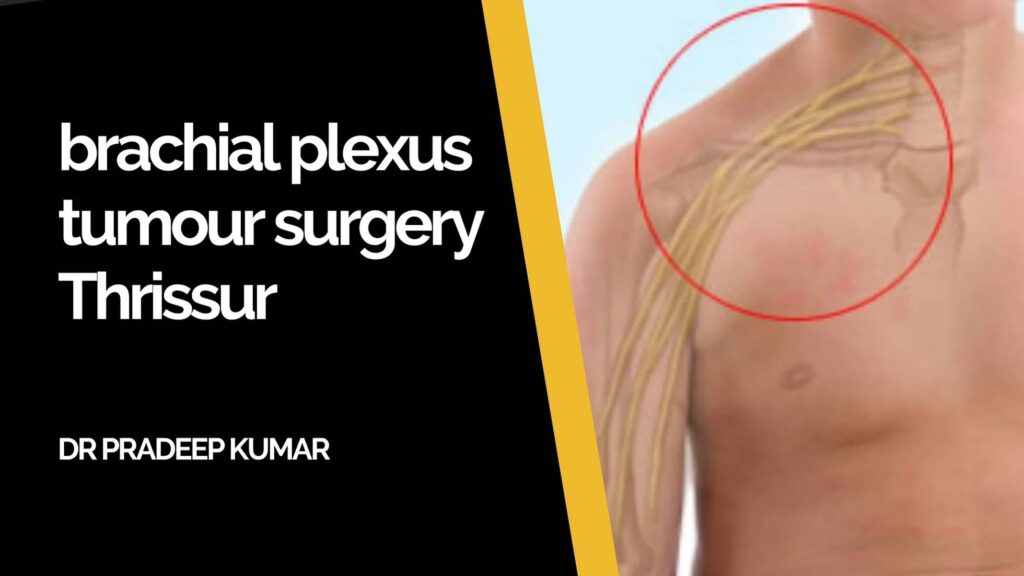
The brachial plexus is a group of nerves that connects the spinal cord in the neck with the shoulder, arm, forearm, and hand. These nerves carry signals responsible for movement and sensation.
A brachial plexus injury can happen when these nerves are stretched, compressed, bruised, or torn. The severity can range from a temporary nerve disturbance to significant nerve damage.
Understanding when should you see a doctor for a brachial plexus injury starts with recognizing that symptoms can vary considerably. Mild nerve irritation may cause temporary tingling, while a more serious injury can result in persistent weakness or paralysis.
Medical evaluation is especially important when symptoms do not quickly improve or when there is a clear traumatic event.
What Causes a Brachial Plexus Injury
Brachial plexus injuries can occur because of several different mechanisms. Trauma is one of the most common causes.
Possible causes include:
- Road traffic accidents
- Motorcycle or bicycle accidents
- Falls
- Sports injuries
- Shoulder trauma
- Heavy impact to the neck or shoulder
- Birth-related injuries in newborns
- Surgical or medical complications
- Tumours or other conditions that compress nerves
- Repetitive strain in some circumstances
A sudden force that pulls the neck and shoulder in opposite directions can stretch the brachial plexus. More severe trauma may damage or tear individual nerves.
After an injury, understanding when should you see a doctor for a brachial plexus injury becomes important because symptoms may not always appear at their full intensity immediately.
What Are the Main Types of Brachial Plexus Injuries
Brachial plexus injuries are generally classified according to the degree and location of nerve damage.
Nerve Stretching
A mild stretch may temporarily interfere with nerve signals. Symptoms can include tingling, numbness, or weakness. These injuries may improve as the nerve recovers.
Nerve Compression
Pressure on the nerve can interfere with normal function. Removing the source of pressure may allow symptoms to improve.
Nerve Rupture
A nerve may be partially or completely torn. This is a more serious injury and may require surgical reconstruction depending on the circumstances.
Nerve Root Avulsion
In severe trauma, a nerve root can become separated from the spinal cord. This type of injury generally requires specialist assessment and may have a more complicated recovery.
The type of injury is one reason when should you see a doctor for a brachial plexus injury should not be determined only by how severe the pain feels. A relatively painless injury can still involve significant nerve damage.
What Symptoms Should You Watch For
Symptoms depend on which nerves are affected and how severe the injury is.
Common symptoms include:
- Shoulder weakness
- Arm weakness
- Difficulty moving the elbow
- Reduced hand strength
- Numbness
- Tingling or pins-and-needles sensations
- Burning or electric-shock-like pain
- Loss of sensation
- Muscle wasting
- Reduced coordination
- Difficulty gripping objects
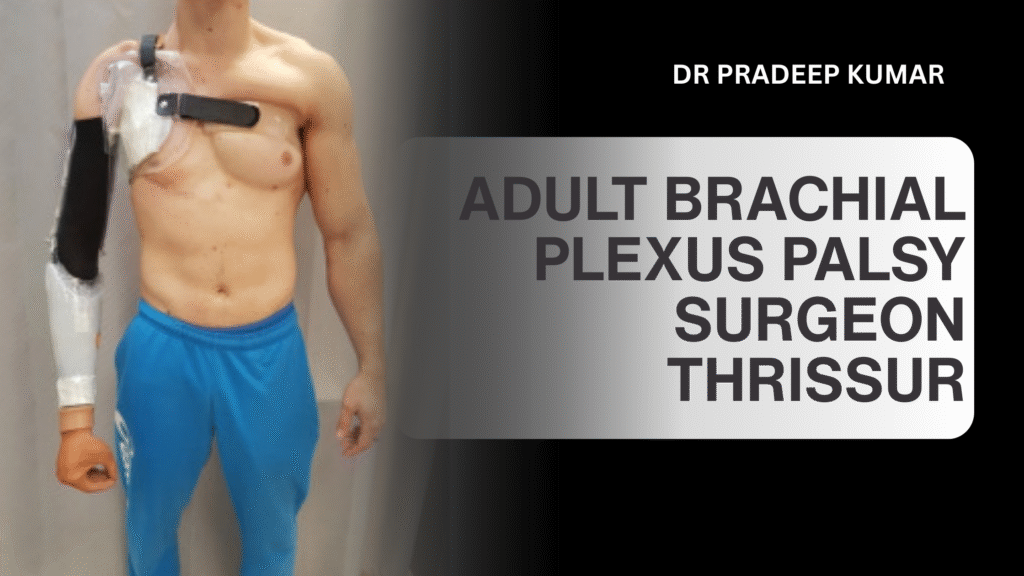
- Partial or complete loss of arm movement
Persistent symptoms should be evaluated by a healthcare professional.
A particularly important consideration in when should you see a doctor for a brachial plexus injury is whether symptoms are improving. If weakness, numbness, or loss of movement continues instead of gradually improving, professional assessment is appropriate.
When Should You See a Doctor for a Brachial Plexus Injury
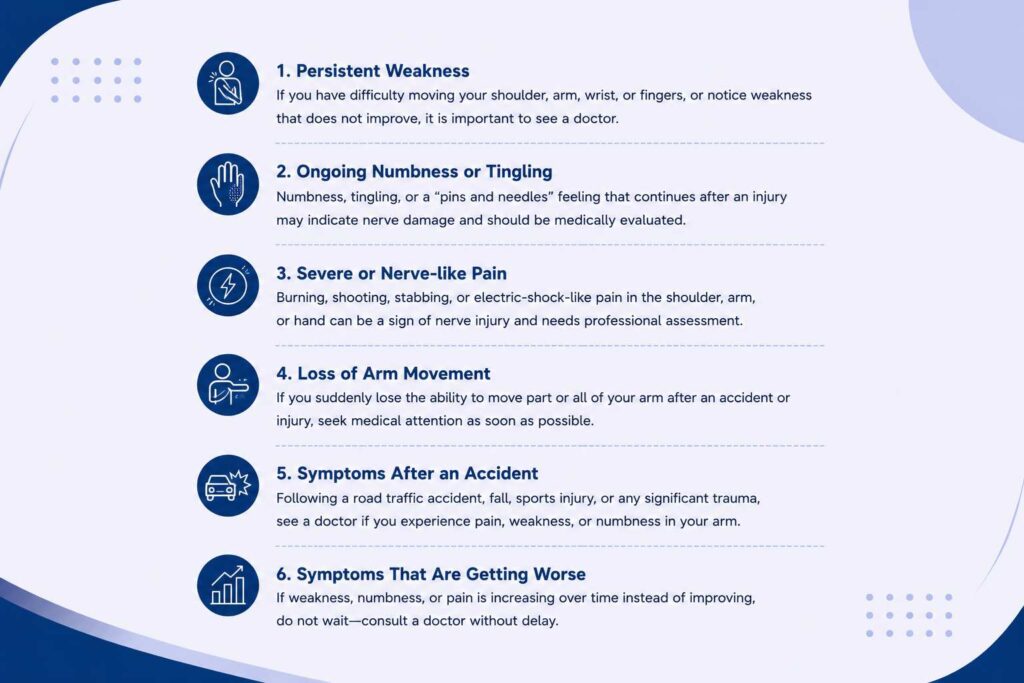
You should consider medical evaluation whenever symptoms suggest that the nerves supplying the arm or hand may have been damaged.
Medical assessment is particularly important in the following situations:
Persistent Weakness
If you cannot move your shoulder, elbow, wrist, or fingers normally after an injury, medical evaluation is recommended.
Ongoing Numbness
Numbness that continues after trauma may indicate nerve dysfunction. It should not automatically be assumed to be temporary.
Severe or Persistent Pain
Burning, shooting, stabbing, or electric-like pain can occur with nerve injuries. Severe or persistent pain warrants assessment.
Loss of Arm Movement
Sudden difficulty moving part or all of the arm requires prompt evaluation, especially when it follows significant trauma.
Symptoms After an Accident
If symptoms develop after a road accident, fall, sports injury, or other significant trauma, a healthcare professional should assess the injury.
Symptoms That Are Getting Worse
Progressively increasing weakness, numbness, or pain should not be ignored.
These situations help answer when should you see a doctor for a brachial plexus injury and highlight why waiting for symptoms to disappear may not always be appropriate.
Why Is Early Medical Evaluation Important
Early assessment can help identify the location and severity of nerve damage. A healthcare professional may evaluate muscle strength, sensation, reflexes, and movement.
The timing of assessment can also help establish a baseline. Follow-up examinations can then determine whether nerve function is improving.
The benefits of understanding when should you see a doctor for a brachial plexus injury include:
- Identifying nerve damage early
- Understanding injury severity
- Monitoring nerve recovery
- Detecting complications
- Planning rehabilitation
- Determining whether further testing is required
- Identifying patients who may need surgical treatment
- Supporting appropriate pain management
Early evaluation does not necessarily mean that surgery will be required. Many nerve injuries are managed conservatively, depending on their type and severity.
How Is a Brachial Plexus Injury Diagnosed
Diagnosis generally begins with a detailed medical history and physical examination.
A healthcare professional may ask:
- How did the injury happen?
- When did symptoms begin?
- Which parts of the arm are affected?
- Has strength changed?
- Is there numbness or altered sensation?
- Is the pain constant or intermittent?
- Are symptoms improving or worsening?
A physical examination may assess muscle strength, sensation, reflexes, and range of motion.
Imaging Tests
Magnetic resonance imaging, computed tomography, or other imaging studies may help evaluate the nerves and surrounding structures.
Electromyography
Electromyography can help assess electrical activity within muscles and provide information about nerve and muscle function.
Nerve Conduction Studies
These tests assess how electrical signals travel through nerves and may help identify impaired nerve function.
The appropriate tests depend on the individual injury and clinical findings.
What Treatments Are Available
Treatment depends on the type, severity, location, and cause of the injury.
Observation and Monitoring
Some mild nerve injuries improve without surgery. Regular follow-up may be recommended to monitor recovery.
Physiotherapy
Physiotherapy can help maintain joint flexibility, reduce stiffness, preserve muscle function, and support the return of movement.
Exercises should be selected according to the individual’s condition rather than performed without professional guidance.
Pain Management
Nerve-related pain may require specific approaches. Treatment can depend on the nature and severity of the symptoms.
Nerve Surgery
More severe injuries, including certain nerve ruptures or injuries that fail to recover appropriately, may require surgical reconstruction.
Possible procedures can include nerve repair, nerve grafting, or nerve transfer, depending on the injury.
Understanding when should you see a doctor for a brachial plexus injury is therefore important because treatment decisions depend heavily on accurate assessment.
When May Surgery Be Considered
Surgery is not necessary for every brachial plexus injury. The decision depends on factors such as the type of nerve damage, severity, recovery pattern, and findings from diagnostic testing.
Surgery may be considered when:
- A nerve is severely damaged or completely torn
- There is evidence of nerve root avulsion
- Significant weakness persists
- Natural nerve recovery is inadequate
- Functional improvement is unlikely without reconstruction
- The injury requires nerve transfer or grafting
The timing of surgery varies according to the injury. This is another reason when should you see a doctor for a brachial plexus injury is an important question. A specialist can determine whether observation, rehabilitation, or reconstruction is appropriate.
What Can You Do While Waiting for Medical Evaluation
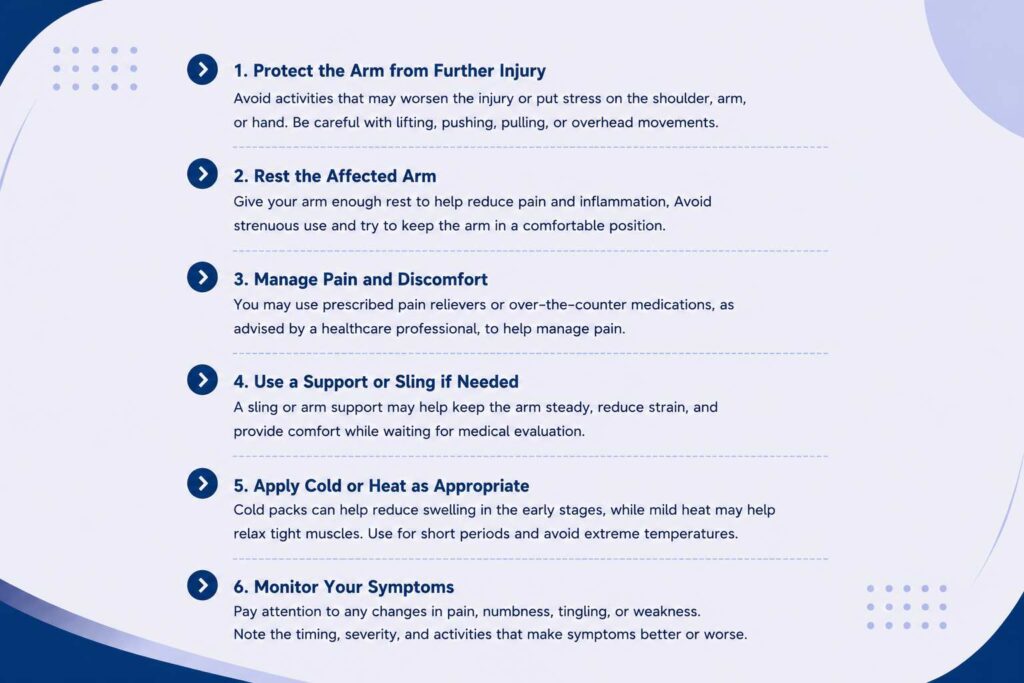
If you suspect a brachial plexus injury, protecting the affected arm and avoiding unnecessary strain can be helpful until you receive professional advice.
Useful steps may include:
- Avoid heavy lifting with the affected arm
- Protect areas with reduced sensation from burns or cuts
- Follow recommended pain-management instructions
- Avoid forceful exercises without professional guidance
- Keep follow-up appointments
- Record changes in strength and sensation
- Report worsening symptoms promptly
Do not assume that repeated exercise will speed nerve recovery. Certain injuries need rest or carefully supervised rehabilitation.
What Are the Benefits of Timely Treatment
Prompt evaluation provides several potential benefits. The most important is obtaining a clearer understanding of what has happened to the nerves.
Timely care can help with:
- Earlier diagnosis
- Better treatment planning
- Appropriate rehabilitation
- Monitoring of nerve regeneration
- Prevention of avoidable joint stiffness
- Protection of weakened muscles
- Identification of injuries that may require reconstruction
The question of when should you see a doctor for a brachial plexus injury should therefore be considered soon after symptoms develop, particularly following significant trauma.
Tips for Supporting Recovery
Recovery from a brachial plexus injury can take time. Nerves generally recover slowly, and progress may not always be noticeable from day to day.
Helpful recovery practices may include:
- Attend scheduled follow-up appointments
- Follow the prescribed physiotherapy programme
- Protect the affected limb
- Avoid activities that aggravate symptoms
- Maintain appropriate joint movement when advised
- Monitor changes in sensation and strength
- Follow surgical or post-treatment instructions carefully
- Discuss persistent pain with your healthcare team
Patience is important because nerve healing can be considerably slower than recovery from some other types of injuries.
When Is Emergency Care Needed
Some symptoms following trauma require urgent medical attention rather than routine follow-up.
Seek urgent medical evaluation if an injury is associated with:
- Sudden complete loss of arm movement
- Severe trauma
- Rapidly increasing weakness
- Significant loss of sensation
- Severe uncontrolled pain
- Major swelling or deformity
- Other serious injuries occurring at the same time
In these circumstances, when should you see a doctor for a brachial plexus injury has a straightforward answer: medical assessment should be sought promptly rather than waiting for symptoms to improve.
Key Takeaways
Knowing when should you see a doctor for a brachial plexus injury can help you respond appropriately when symptoms occur.
The key points are:
- Persistent weakness should be assessed.
- Ongoing numbness should not be ignored.
- Severe or nerve-like pain requires attention.
- Loss of arm movement after trauma needs prompt evaluation.
- Symptoms that worsen require medical review.
- Diagnostic testing can help determine the extent of nerve damage.
- Treatment may involve monitoring, physiotherapy, pain management, or surgery.
- Recovery can take time and requires appropriate follow-up.
- Early assessment can help guide treatment and rehabilitation.
Conclusion
If you are wondering when should you see a doctor for a brachial plexus injury, the safest approach is to seek professional assessment when symptoms such as weakness, numbness, severe pain, or loss of movement occur, particularly after significant trauma. Early evaluation can clarify the injury, guide treatment decisions, and establish an appropriate recovery plan.
A brachial plexus injury can range from a temporary nerve disturbance to a severe injury requiring reconstruction. Because symptoms and recovery differ from person to person, individual medical assessment is important. With appropriate diagnosis, rehabilitation, monitoring, and treatment when necessary, many patients can work toward improved arm function and quality of life. For those seeking evaluation and treatment options in Thrissur, timely professional assessment can be an important first step toward managing the injury effectively. For additional information about brachial plexus injuries, including symptoms, diagnosis, and treatment options, visit the Johns Hopkins Medicine.
Frequently Asked Questions
When should you see a doctor for a brachial plexus injury?
Can a brachial plexus injury heal on its own?
Is numbness after a shoulder injury normal?
Can a brachial plexus injury cause weakness?
Can a brachial plexus injury cause pain?
How long does brachial plexus injury recovery take?
Is physiotherapy useful for a brachial plexus injury?
Does every brachial plexus injury require surgery?
What tests are used to diagnose a brachial plexus injury?
What happens if a brachial plexus injury is ignored?

Dr. Pradeep Kumar
Plastic & Reconstructive Surgeon – Brachial Plexus & Nerve Surgery Specialist
Dr. Pradeep Kumar is an experienced plastic and reconstructive surgeon known for his expertise in brachial plexus and peripheral nerve surgery. With extensive microsurgical experience, he focuses on restoring movement and function for patients with complex nerve injuries.
Sushrutha Institute of Plastic Surgery, Elite Mission Hospital, Thrissur