Peripheral Nerve Injury Treatment in Thrissur: Advanced Diagnosis, Microsurgery, and Rehabilitation
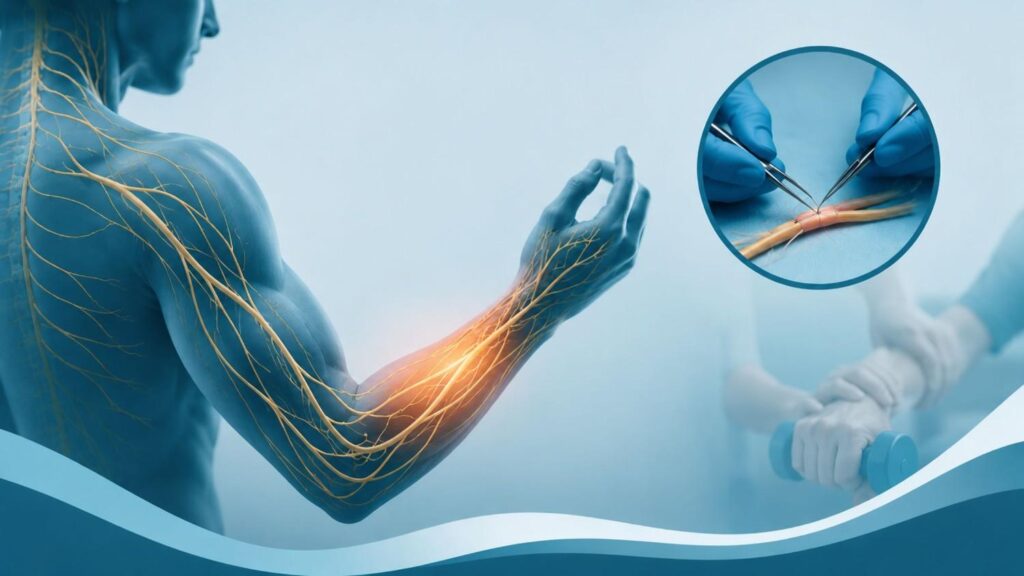
Peripheral nerves connect the brain and spinal cord to the muscles, skin, and other parts of the body, allowing movement and sensation. When these nerves are damaged due to trauma, compression, or disease, patients may experience weakness, numbness, pain, or loss of function. Peripheral Nerve Injury Treatment in Thrissur focuses on accurate diagnosis, personalized treatment planning, advanced microsurgical techniques, and structured rehabilitation to restore nerve function and improve quality of life.
The most appropriate Peripheral Nerve Injury Treatment in Thrissur depends on the type, location, and severity of the injury. Mild nerve injuries may recover with conservative management, while severe injuries often require microsurgical procedures such as nerve repair, nerve grafting, or nerve transfer. Early evaluation significantly improves the chances of successful nerve regeneration and functional recovery.
What Is a Peripheral Nerve Injury?
Peripheral nerves are located outside the brain and spinal cord and control movement, sensation, and muscle function throughout the body.
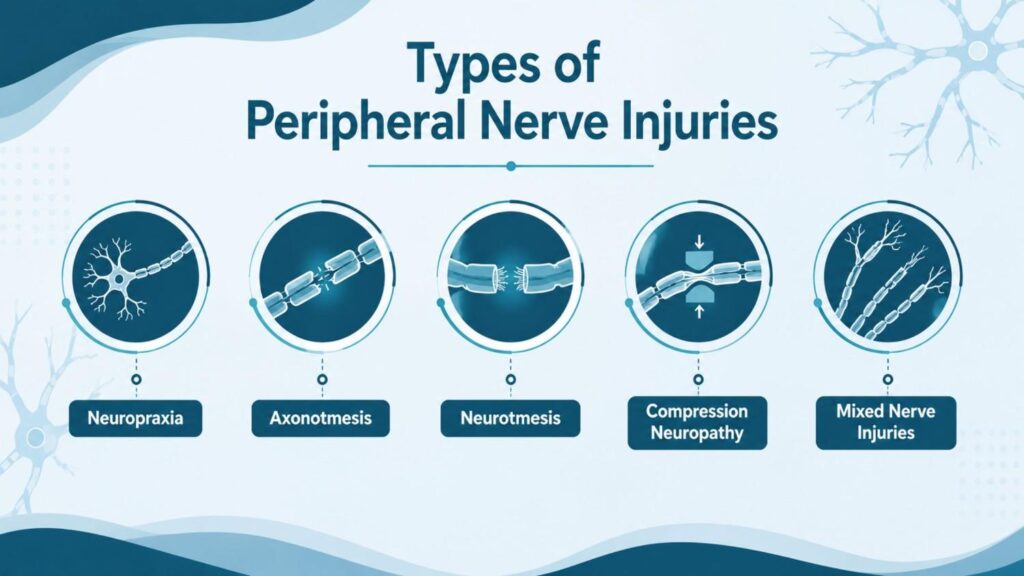
A peripheral nerve injury occurs when one or more of these nerves are stretched, compressed, partially torn, or completely severed. Depending on the nerve involved, patients may experience weakness, numbness, tingling, muscle paralysis, or persistent pain.
Early assessment is essential because prompt Peripheral Nerve Injury Treatment in Thrissur offers the best opportunity for successful nerve healing and functional recovery.
Common Causes of Peripheral Nerve Injuries
Peripheral nerve injuries can occur for many reasons and may affect both the upper and lower limbs.
Road Traffic Accidents
Motor vehicle accidents are among the most common causes of severe peripheral nerve injuries due to high-impact trauma.
Sharp Cut Injuries
Glass injuries, knife wounds, machinery accidents, and other sharp objects may partially or completely divide peripheral nerves.
Sports Injuries
Contact sports and high-energy activities may cause stretching, compression, or tearing of peripheral nerves.
Workplace Accidents
Industrial machinery, heavy equipment, crush injuries, and occupational trauma frequently result in nerve damage.
Fractures and Dislocations
Broken bones and joint dislocations can injure nearby nerves either directly or through compression caused by swelling.
Compression Injuries
Long-standing pressure on a nerve may gradually reduce its function and produce pain, numbness, or muscle weakness.
Understanding these causes allows specialists to recommend the most appropriate Peripheral Nerve Injury Treatment in Thrissur based on the mechanism and severity of injury.
Symptoms of Peripheral Nerve Injury
Symptoms vary depending on which nerve is affected and the extent of damage.
Common symptoms include:
- Numbness
- Tingling sensation
- Burning or shooting pain
- Muscle weakness
- Loss of movement
- Reduced grip strength
- Difficulty lifting the wrist or foot
- Loss of sensation
- Muscle wasting
- Poor coordination
Persistent symptoms should never be ignored, as early Peripheral Nerve Injury Treatment in Thrissur improves long-term recovery.
Diagnosis of Peripheral Nerve Injury
Accurate diagnosis guides the treatment plan and helps predict recovery.
Clinical Examination
A detailed neurological examination evaluates muscle strength, sensation, reflexes, and functional movement.
Medical History
The mechanism of injury, timing, symptoms, and progression help determine the severity of nerve damage.
Magnetic Resonance Imaging (MRI)
MRI helps visualize surrounding soft tissues, muscles, and certain peripheral nerve injuries.
Electromyography (EMG)
EMG evaluates electrical activity within muscles and helps identify nerve dysfunction.
Nerve Conduction Studies (NCS)
NCS measure how effectively electrical signals travel through peripheral nerves and help determine the location and severity of injury.
Ultrasound
High-resolution ultrasound can visualize superficial peripheral nerves and identify compression, swelling, or discontinuity in selected cases.
A comprehensive evaluation helps specialists develop an individualized plan for Peripheral Nerve Injury Treatment in Thrissur.
Treatment Options for Peripheral Nerve Injury
The treatment approach depends on the type of nerve injury, the location of the affected nerve, the severity of damage, and the duration of symptoms.
While many mild peripheral nerve injuries improve with conservative care, severe injuries may require advanced microsurgical reconstruction. Every patient receives an individualized plan for Peripheral Nerve Injury Treatment in Thrissur based on detailed clinical evaluation and diagnostic findings.
Conservative Treatment Options
Not every peripheral nerve injury requires surgery. Mild nerve injuries often recover with appropriate non-surgical management.
Conservative treatment may include:
- Pain management
- Anti-inflammatory medication
- Physiotherapy
- Occupational therapy
- Splinting when required
- Activity modification
- Regular neurological follow-up
- Home exercise programs
Patients are monitored regularly to assess nerve recovery and determine whether further intervention is necessary.
Physiotherapy
Physiotherapy is an important component of Peripheral Nerve Injury Treatment in Thrissur.
A structured rehabilitation program helps:
- Maintain joint mobility
- Improve muscle strength
- Prevent stiffness
- Reduce muscle wasting
- Improve flexibility
- Promote nerve recovery
- Restore functional movement
Treatment plans are adjusted according to each patient’s recovery and functional goals.
Occupational Therapy
Occupational therapy helps patients regain independence in daily activities affected by peripheral nerve injuries.
Therapy may include:
- Hand function training
- Fine motor skill exercises
- Grip strengthening
- Sensory re-education
- Adaptive techniques
- Functional task training
The rehabilitation program is individualized according to the patient’s occupation, lifestyle, and recovery progress.
When Is Surgery Recommended?
Surgery may be recommended when conservative treatment cannot restore adequate nerve function.
Common indications include:
- Complete nerve division
- Severe nerve compression
- Persistent weakness
- Progressive muscle wasting
- Loss of sensation
- Failure of non-surgical treatment
- Complex traumatic nerve injuries
Early surgical evaluation often improves the chances of successful recovery and nerve regeneration.
Advanced Surgical Treatment Options
Modern microsurgical procedures help restore nerve continuity and improve upper or lower limb function following severe peripheral nerve injuries.
The most appropriate procedure depends on the pattern and severity of the injury.
Nerve Repair
When the nerve ends can be directly reconnected without excessive tension, microsurgical nerve repair restores nerve continuity and promotes natural regeneration.
Nerve Grafting
If a gap exists between injured nerve ends, healthy donor nerves are used to bridge the defect and support nerve regeneration.
Nerve Transfer
When direct repair is not possible, a nearby healthy functioning nerve is redirected to restore movement or sensation to the affected muscles.
Nerve Decompression
Compressed peripheral nerves may be surgically released to relieve pressure, improve blood supply, and restore nerve function.
Tendon Transfer
In patients with permanent muscle weakness, tendon transfer surgery repositions healthy tendons to restore lost movement and improve limb function.
Recovery After Surgery
Recovery following Peripheral Nerve Injury Treatment in Thrissur is gradual because regenerating nerves grow slowly.
Most patients require several months of rehabilitation before meaningful improvement becomes noticeable.
Recovery commonly involves:
- Wound healing
- Nerve regeneration
- Muscle strengthening
- Sensory recovery
- Functional retraining
- Regular follow-up evaluations
The duration of recovery depends on the location of the injury, the type of surgery performed, and the distance the nerve must regenerate.
Long-Term Rehabilitation
Rehabilitation continues well beyond the initial treatment phase and is essential for achieving the best possible outcome.
Long-term rehabilitation may include:
- Progressive strengthening exercises
- Joint mobility training
- Sensory re-education
- Functional movement practice
- Occupational rehabilitation
- Home exercise programs
- Periodic clinical reviews
Patients who actively participate in rehabilitation often achieve better functional recovery and greater independence.
Importance of Early Intervention
Prompt diagnosis and timely Peripheral Nerve Injury Treatment in Thrissur can significantly improve long-term outcomes.
Early intervention helps:
- Preserve muscle function
- Promote nerve regeneration
- Prevent permanent muscle wasting
- Reduce joint stiffness
- Improve functional recovery
- Minimize long-term disability
Seeking specialist evaluation soon after a peripheral nerve injury allows treatment to begin before irreversible changes occur.
Why Choose Specialized Peripheral Nerve Care?
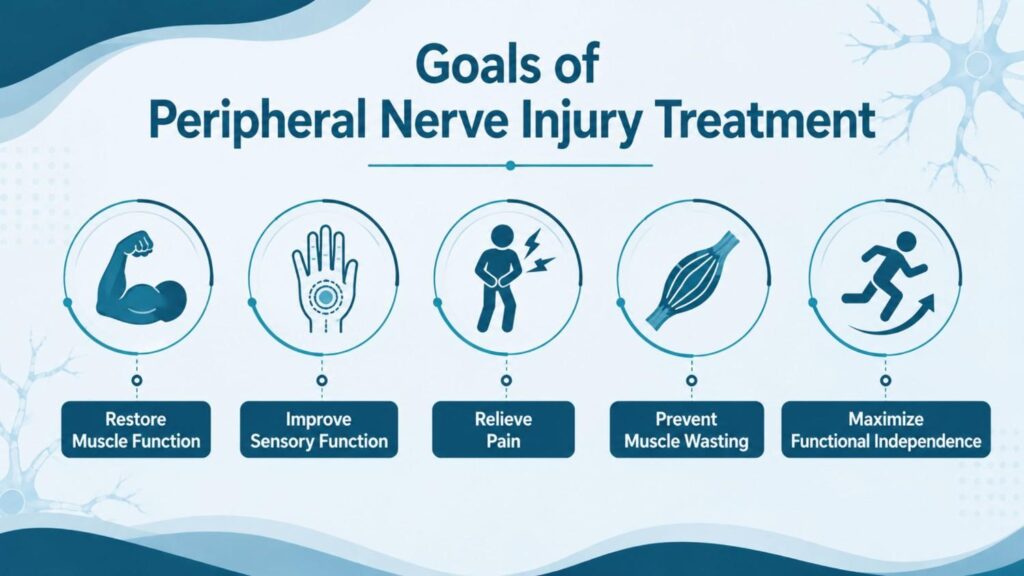
Peripheral nerve injuries require careful diagnosis, advanced surgical expertise, and comprehensive rehabilitation for the best outcomes.
Specialized care includes:
- Comprehensive neurological evaluation
- Advanced diagnostic investigations
- Personalized treatment planning
- Modern microsurgical reconstruction
- Structured physiotherapy
- Occupational therapy
- Long-term rehabilitation
- Regular follow-up assessments
Patients seeking Peripheral Nerve Injury Treatment in Thrissur benefit from a multidisciplinary approach focused on restoring movement, sensation, and long-term limb function.
For a broader understanding of complex nerve injuries, visit our page on Brachial Plexus Injury Treatment.
Conclusion
Peripheral nerve injuries can significantly affect movement, sensation, and daily activities, but early diagnosis and appropriate treatment can greatly improve recovery. Depending on the severity of the injury, treatment may include conservative management, physiotherapy, occupational therapy, or advanced microsurgical procedures such as nerve repair, nerve grafting, nerve transfer, and nerve decompression. A personalized treatment plan combined with structured rehabilitation helps restore function and supports long-term recovery.
If you are seeking Peripheral Nerve Injury Treatment in Thrissur, timely evaluation is essential to determine the most suitable treatment approach. Early intervention, specialized surgical expertise, and dedicated rehabilitation provide the best opportunity for restoring nerve function, reducing disability, and improving quality of life.
For additional information about peripheral nerve injuries and their management, refer to the American Society for Surgery of the Hand (ASSH) guide on peripheral nerve injuries.
Frequently Asked Questions
What is a peripheral nerve injury?
What causes peripheral nerve injuries?
Who may need Peripheral Nerve Injury Treatment in Thrissur?
Can peripheral nerve injuries heal without surgery?
What surgical procedures are available?
How is a peripheral nerve injury diagnosed?
How long does recovery take after treatment?
Is physiotherapy necessary after treatment?
Can I return to work after peripheral nerve treatment?
Why is early treatment important?

Dr. Pradeep Kumar
Plastic & Reconstructive Surgeon – Brachial Plexus & Nerve Surgery Specialist
Dr. Pradeep Kumar is an experienced plastic and reconstructive surgeon known for his expertise in brachial plexus and peripheral nerve surgery. With extensive microsurgical experience, he focuses on restoring movement and function for patients with complex nerve injuries.
Sushrutha Institute of Plastic Surgery, Elite Mission Hospital, Thrissur