Brachial Plexus Injury After a Road Accident: 5 Proven Steps
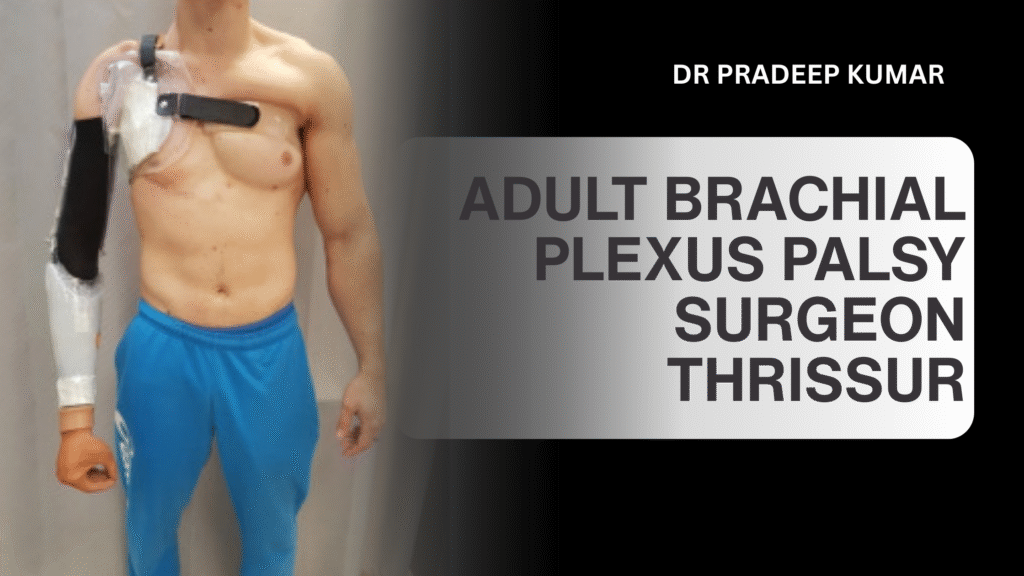
A brachial plexus injury after a road accident can affect the nerves that connect the spinal cord to the shoulder, arm, and hand. Depending on the severity, the injury may cause pain, weakness, numbness, reduced movement, or even loss of function in the affected arm. In Kerala, understanding the available treatment options can help accident survivors seek timely medical evaluation and appropriate care.
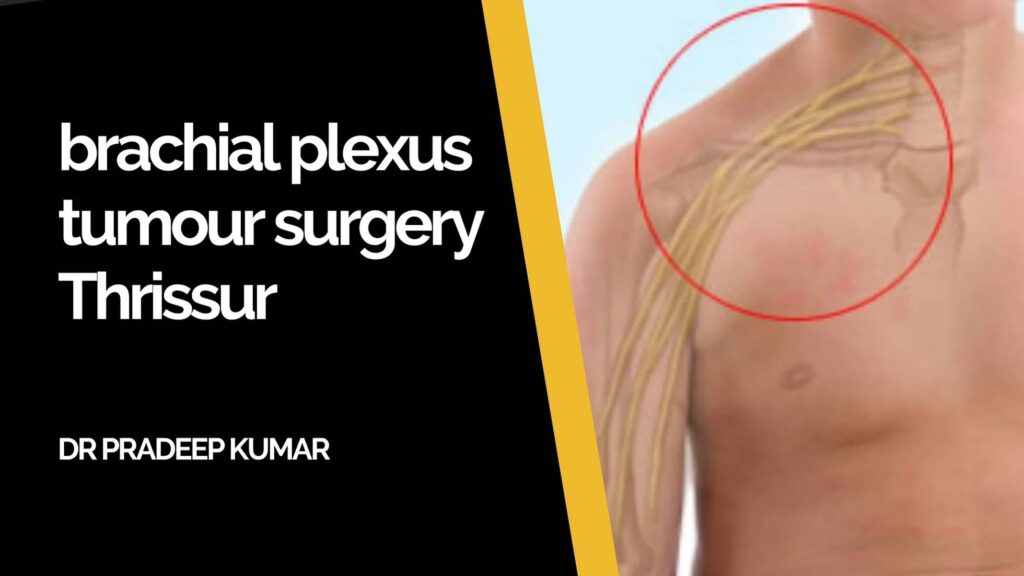
The brachial plexus is a network of nerves located between the neck and shoulder. These nerves control many of the movements and sensations of the upper limb. During a road accident, sudden stretching, compression, or tearing of these nerves can result in a brachial plexus injury.
Early assessment is important because treatment depends on the type and severity of nerve damage. Some injuries improve with observation and physiotherapy, while more severe injuries may require surgical treatment.
What Is a Brachial Plexus Injury After a Road Accident
A brachial plexus injury after a road accident occurs when the network of nerves supplying the shoulder, arm, forearm, or hand becomes stretched, compressed, or damaged during trauma.
Road accidents can expose the body to sudden forces. For example, the head and neck may move forcefully in one direction while the shoulder moves in another. This can stretch the nerves of the brachial plexus.
In more serious accidents, the nerves may be severely damaged or separated from their normal connections. The resulting symptoms can vary significantly between individuals.
The injury may affect:
- Shoulder movement
- Elbow bending and straightening
- Wrist movement
- Finger movement
- Grip strength
- Sensation in the arm and hand
- Overall coordination of the affected limb
Because nerve injuries can change over time, professional evaluation is important even when symptoms initially appear mild.
Causes of Brachial Plexus Injury After a Road Accident
A brachial plexus injury after a road accident can occur through several mechanisms. The exact cause often depends on the type of accident and the force involved.
Sudden Stretching
A sudden movement of the neck away from the shoulder can stretch the brachial plexus. This type of injury may range from temporary nerve irritation to more significant nerve damage.
Direct Trauma
A direct impact to the shoulder, collarbone, or surrounding tissues may compress or damage the nerves.
Fractures and Dislocations
Broken bones or joint dislocations caused by an accident can put pressure on nearby nerves. In some cases, swelling around the injured area can also contribute to nerve compression.
Severe Nerve Damage
High-impact accidents may cause partial or complete disruption of individual nerves or nerve roots. These injuries generally require detailed assessment and may need surgical consideration.
Types of Brachial Plexus Injuries
Understanding the type of injury is an important part of planning treatment. A brachial plexus injury after a road accident may involve different levels of nerve damage.
Neuropraxia
Neuropraxia is generally considered a milder form of nerve injury. The nerve remains structurally intact but its ability to transmit signals may temporarily be affected.
Symptoms may improve gradually as the nerve recovers.
Axonotmesis
In axonotmesis, the internal nerve fibers are damaged while some of the surrounding structures remain intact. Recovery can take longer and may require close monitoring and rehabilitation.
Neurotmesis
This refers to severe disruption of the nerve. Natural recovery may be limited, and surgical treatment may be considered depending on the location and extent of the injury.
Nerve Root Avulsion
A nerve root avulsion occurs when a nerve root is pulled away from the spinal cord. This is a particularly serious form of brachial plexus injury and requires specialist assessment.
Symptoms of Brachial Plexus Injury After a Road Accident
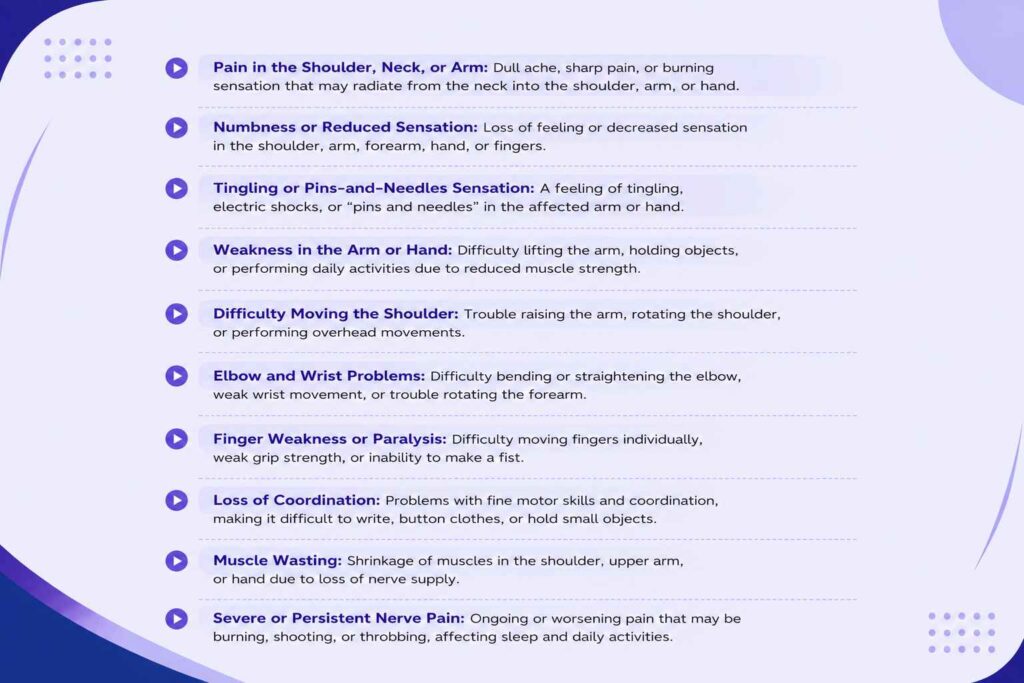
The symptoms of a brachial plexus injury after a road accident depend on which nerves are affected and how severely they have been damaged.
Common symptoms include:
- Sharp or burning pain in the shoulder or arm
- Numbness or reduced sensation
- Tingling or pins-and-needles sensations
- Weakness in the affected arm
- Difficulty lifting the arm
- Reduced elbow movement
- Weak wrist or finger movement
- Difficulty gripping objects
- Loss of coordination
- Muscle weakness or wasting over time
Some people experience severe pain immediately after the accident, while others mainly notice weakness or loss of sensation.
Any sudden loss of arm movement or sensation following major trauma should be assessed promptly.
How Is a Brachial Plexus Injury Diagnosed
Accurate diagnosis is essential because treatment depends on the extent and location of nerve damage.
Physical Examination
A healthcare professional may assess:
- Muscle strength
- Reflexes
- Sensation
- Range of motion
- Grip strength
- Shoulder and arm function
Comparing the injured and unaffected limbs can help identify specific functional deficits.
Imaging Tests
Imaging may be used to identify associated bone, joint, spinal, or soft-tissue injuries. Depending on the circumstances, MRI, CT, or other imaging studies may be recommended.
Nerve Conduction Studies
Nerve conduction testing can provide information about how effectively electrical signals travel through the affected nerves.
Electromyography
Electromyography may help assess muscle activity and provide information about nerve and muscle function.
The timing of these investigations can vary depending on the injury and clinical findings.
5 Treatment Options for Brachial Plexus Injury After a Road Accident
Treatment for a brachial plexus injury after a road accident should be individualized. Not every injury requires surgery. The most appropriate approach depends on the severity, location, symptoms, and evidence of nerve recovery.
1. Observation and Monitoring
Some nerve injuries improve naturally over time. In these cases, regular medical assessment may be recommended to monitor changes in strength, sensation, and movement.
Monitoring is particularly useful when there is evidence that the nerve is beginning to recover.
2. Physiotherapy and Rehabilitation
Physiotherapy can play an important role in recovery. Exercises may help maintain joint flexibility, reduce stiffness, preserve muscle function, and support the return of movement.
A rehabilitation program may include:
- Range-of-motion exercises
- Strengthening exercises when appropriate
- Functional movement training
- Joint protection techniques
- Muscle conditioning
- Activity modification
The exercise plan should be adjusted according to the patient’s injury and stage of recovery.
3. Pain Management
Pain can be a significant part of a brachial plexus injury after a road accident. Nerve-related pain may feel burning, shooting, electric, or severe.
Pain management may involve medication, rehabilitation techniques, and other approaches selected according to the individual’s condition.
Persistent or worsening pain should be discussed with a healthcare professional rather than ignored.
4. Nerve Repair or Nerve Grafting
When a nerve has been significantly damaged, surgical treatment may be considered.
Nerve repair aims to reconnect damaged nerve ends where appropriate. In some situations, a nerve graft may be used to bridge a damaged section.
The potential for recovery depends on several factors, including the type of injury, the location of damage, and how soon appropriate treatment is provided.
5. Nerve Transfer and Other Reconstructive Procedures
A nerve transfer may be considered when the original nerve pathway cannot adequately restore function. In this approach, a functioning nerve or nerve branch may be redirected to help restore movement or other functions.
Other reconstructive procedures may also be considered in complex injuries where nerve recovery alone is unlikely to provide sufficient function.
When Is Surgery Considered
Surgery is not automatically required for every brachial plexus injury after a road accident.
It may be considered when:
- There is severe nerve damage
- There is little or no evidence of nerve recovery
- A nerve has been disrupted
- Nerve root avulsion is suspected or confirmed
- Significant weakness persists
- The injury is unlikely to recover adequately without intervention
The timing of surgery is important because damaged nerves have a limited ability to regenerate over distance. Treatment planning should therefore be based on careful assessment rather than simply waiting indefinitely.
Benefits of Early Treatment
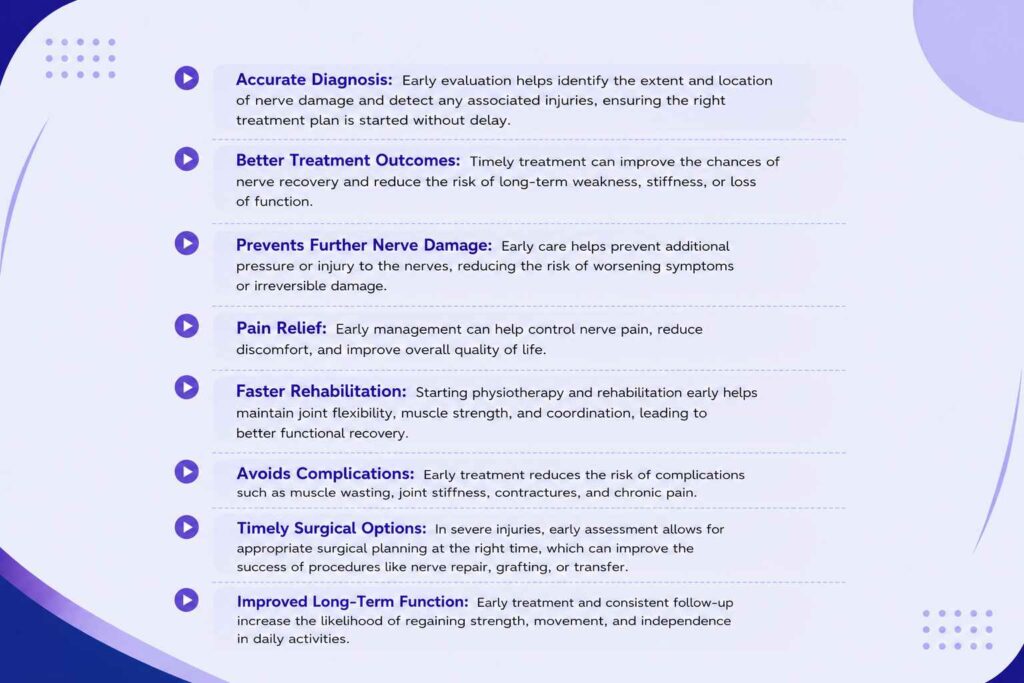
Early evaluation following a brachial plexus injury after a road accident can provide several advantages.
Identifying the Injury
A detailed assessment can determine whether symptoms are related to nerve damage, fractures, joint injuries, or a combination of problems.
Planning Treatment
Early diagnosis allows an appropriate treatment strategy to be developed based on the severity of the injury.
Protecting Joint Movement
Maintaining appropriate joint mobility can reduce stiffness and help preserve function during nerve recovery.
Supporting Rehabilitation
Starting suitable rehabilitation at the right stage can help maintain muscle and joint function while recovery progresses.
Avoiding Delayed Decisions
Some severe nerve injuries may benefit from timely surgical evaluation. Early specialist assessment can help avoid unnecessary delays.
Recovery After a Brachial Plexus Injury
Recovery from a brachial plexus injury after a road accident can vary considerably.
Milder nerve injuries may improve within weeks or months, while more serious injuries can require a much longer rehabilitation period.
Several factors influence recovery:
- Severity of nerve damage
- Location of the injury
- Number of affected nerves
- Age and general physical condition
- Time between injury and treatment
- Response to rehabilitation
- Whether surgery is required
Nerve regeneration is typically slow. As a result, improvement may occur gradually rather than immediately.
Physiotherapy During Recovery
Physiotherapy is often an important component of recovery from a brachial plexus injury after a road accident.
A rehabilitation professional may develop exercises designed to maintain movement while avoiding unnecessary stress on injured structures.
Maintaining Flexibility
Gentle movement can help reduce stiffness in the shoulder, elbow, wrist, and hand when clinically appropriate.
Preventing Muscle and Joint Problems
When an arm remains weak for an extended period, muscles can lose strength and joints can become stiff. Appropriate rehabilitation can help reduce these problems.
Gradual Strengthening
Strengthening exercises may be introduced when sufficient nerve and muscle function has returned.
Functional Training
Recovery should focus not only on isolated muscle movements but also on useful daily activities such as reaching, holding, lifting, and coordination.
Tips for Managing Recovery
People recovering from a brachial plexus injury after a road accident should follow their prescribed treatment and rehabilitation plan carefully.
Helpful measures may include:
- Attend scheduled follow-up appointments.
- Perform recommended exercises consistently.
- Avoid exercises that cause excessive pain unless specifically advised.
- Protect an affected arm from accidental injury.
- Avoid prolonged pressure on weak or numb areas.
- Follow medication instructions carefully.
- Report new or worsening symptoms promptly.
- Be patient because nerve recovery can be slow.
It is also important to avoid comparing recovery with another person’s experience. Two nerve injuries can look similar initially but have very different recovery patterns.
Warning Signs That Need Medical Attention
Certain symptoms following a road accident should not be ignored.
Seek prompt medical assessment if there is:
- Sudden inability to move the arm
- Rapidly increasing weakness
- Severe or persistent nerve pain
- Significant loss of sensation
- Progressive muscle wasting
- New swelling or severe pain
- Symptoms involving the neck or spine
- Worsening function despite treatment
A brachial plexus injury after a road accident can sometimes occur alongside other traumatic injuries, so a complete evaluation is important.
What Happens If a Brachial Plexus Injury Is Left Untreated
The outcome depends on the severity of the injury. Some mild injuries may recover without major intervention, but significant nerve damage may result in persistent weakness, loss of sensation, muscle wasting, or restricted movement.
Delayed treatment can also make rehabilitation more challenging in certain severe injuries.
This does not mean every patient needs immediate surgery. Instead, it highlights the importance of accurate diagnosis, regular monitoring, and timely treatment when intervention is appropriate.
Conclusion
A brachial plexus injury after a road accident can have a major effect on arm movement, sensation, strength, and everyday activities. The injury may range from temporary nerve dysfunction to severe nerve disruption requiring reconstructive treatment.
Accurate diagnosis is the foundation of effective care. Depending on the injury, treatment may include observation, pain management, physiotherapy, rehabilitation, nerve repair, nerve grafting, nerve transfer, or other reconstructive procedures.
Recovery can take time, particularly when the nerves have sustained significant damage. Following a structured rehabilitation plan and attending regular assessments can help track progress and address problems as they arise. If symptoms such as persistent weakness, numbness, severe pain, or loss of movement occur after an accident, timely medical evaluation is important. You can learn more about brachial plexus injuries, their symptoms, diagnosis, and treatment options from Mayo Clinic.
Frequently Asked Questions
What is a brachial plexus injury after a road accident?
Can a brachial plexus injury heal on its own?
How long does recovery from a brachial plexus injury take?
Is surgery always needed for a brachial plexus injury?
Can physiotherapy help after a brachial plexus injury?
What symptoms may indicate serious brachial plexus damage?
What tests are used to diagnose a brachial plexus injury?
Can movement return after a severe brachial plexus injury?
Can a brachial plexus injury cause permanent weakness?
Why is early treatment important after a road accident?

Dr. Pradeep Kumar
Plastic & Reconstructive Surgeon – Brachial Plexus & Nerve Surgery Specialist
Dr. Pradeep Kumar is an experienced plastic and reconstructive surgeon known for his expertise in brachial plexus and peripheral nerve surgery. With extensive microsurgical experience, he focuses on restoring movement and function for patients with complex nerve injuries.
Sushrutha Institute of Plastic Surgery, Elite Mission Hospital, Thrissur