What Is a Brachial Plexus Injury and How Does It Happen-7 Up
Understanding what is a brachial plexus injury and how does it happen can help people recognize symptoms early and seek appropriate medical evaluation. In Thrissur, people with arm weakness, numbness, or movement difficulties after an accident may benefit from understanding how these important nerves can become damaged.
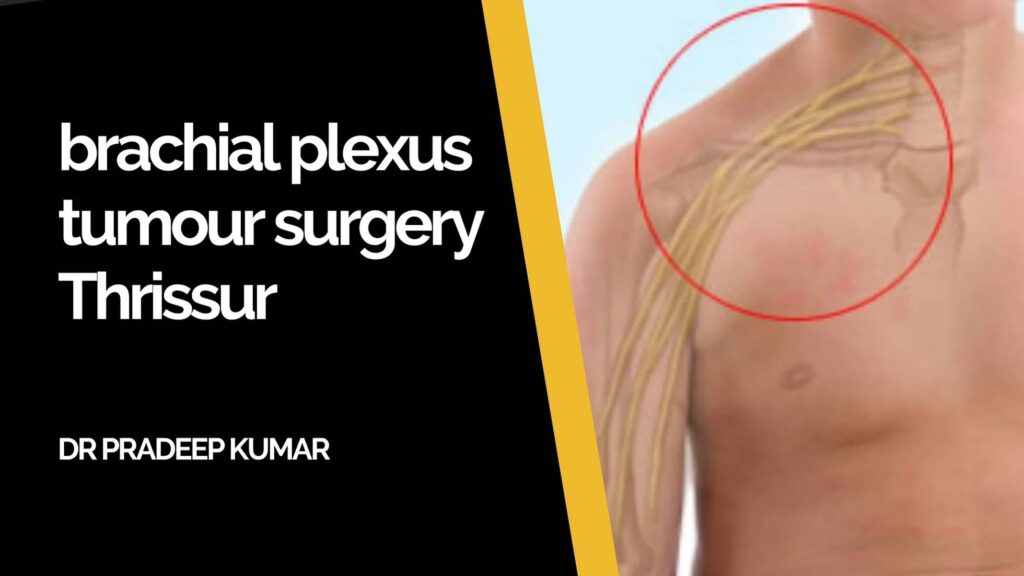
The brachial plexus is a network of nerves that begins near the neck and travels through the shoulder into the arm and hand. These nerves carry signals between the spinal cord and the upper limb, helping control movement and sensation.
A brachial plexus injury can range from temporary stretching of the nerves to severe nerve damage. The effects depend on which nerves are affected, how seriously they are injured, and how quickly treatment begins.
What Is a Brachial Plexus Injury and How Does It Happen
A brachial plexus injury occurs when the group of nerves connecting the spinal cord to the shoulder, arm, and hand becomes stretched, compressed, bruised, or torn.
The brachial plexus contains several interconnected nerves. Damage to these nerves can interfere with communication between the brain, spinal cord, and upper limb.
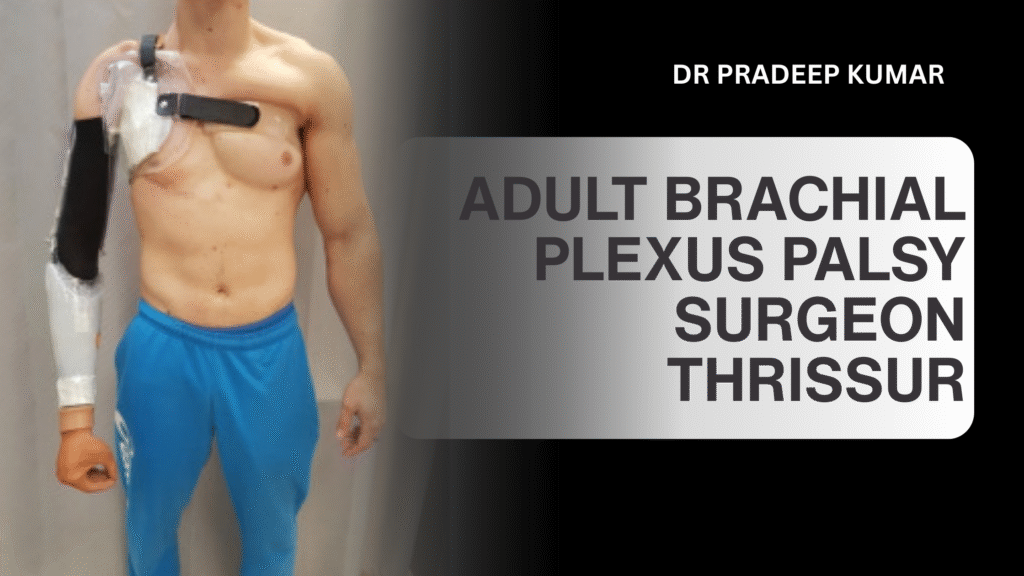
In simple terms, what is a brachial plexus injury and how does it happen can be understood by looking at the mechanism of nerve damage. A sudden force may pull the head and shoulder in different directions, stretching the nerves. More severe trauma can cause a nerve to rupture or become separated from its spinal cord attachment.
Some injuries improve naturally, while others require specialist treatment.
How Does the Brachial Plexus Work
The brachial plexus is formed by nerve roots that originate from the lower neck and upper chest region. These nerve structures combine and divide into different branches that supply the shoulder, arm, forearm, and hand.
Its main functions include:
- Controlling shoulder movement
- Helping move the elbow and wrist
- Supporting hand and finger movement
- Carrying sensation from the arm and hand
- Coordinating complex upper-limb movements
Because the brachial plexus supplies such a large area, an injury can affect several functions at the same time.
What Causes a Brachial Plexus Injury
When considering what is a brachial plexus injury and how does it happen, trauma is one of the most important factors.
Common causes include:
- Motor vehicle accidents
- Motorcycle accidents
- Falls from significant heights
- Contact sports injuries
- Shoulder trauma
- Severe traction injuries
- Complications during childbirth
- Penetrating injuries
- Tumours or other conditions that compress nerves
High-impact accidents can place considerable force on the neck and shoulder. This may stretch or tear the nerves.
In some cases, inflammation, radiation treatment, or pressure from nearby structures may also affect brachial plexus function.
What Are the Main Types of Brachial Plexus Injuries
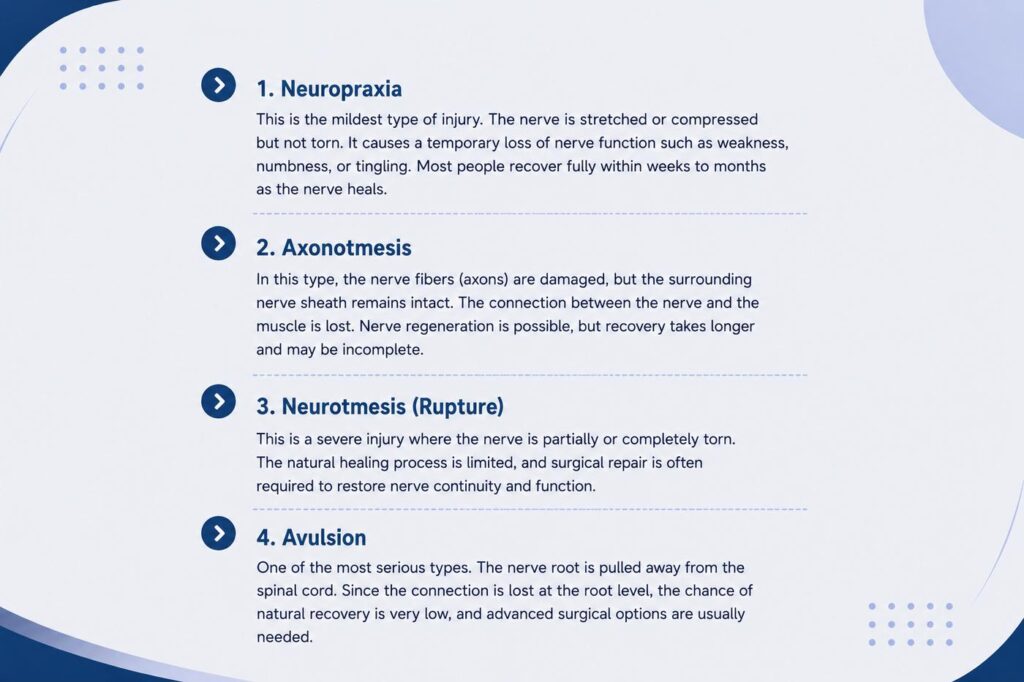
Brachial plexus injuries can be classified according to the type and severity of nerve damage.
Neuropraxia
This is generally a milder form of nerve injury. The nerve is stretched or compressed without being completely torn. Symptoms may improve as the nerve recovers.
Rupture
A rupture occurs when part of the nerve is torn. Recovery may be more difficult and can depend on the location and extent of the damage.
Avulsion
An avulsion is a severe injury in which the nerve root is pulled away from the spinal cord. This type of injury can cause significant weakness or loss of sensation.
Nerve Compression
Pressure on the brachial plexus can interfere with normal nerve signalling. The underlying cause of compression needs to be identified before treatment can be planned.
What Symptoms Can a Brachial Plexus Injury Cause
The symptoms depend on which nerves are affected and how severe the injury is.
Possible symptoms include:
- Shoulder weakness
- Arm weakness
- Reduced hand strength
- Numbness
- Tingling or pins-and-needles sensations
- Burning or nerve pain
- Loss of sensation
- Difficulty moving the arm
- Difficulty bending or straightening the elbow
- Problems with wrist or finger movement
- Reduced muscle control
Some people experience symptoms immediately following an injury, while others may notice changes gradually.
Persistent weakness, severe pain, or loss of movement after trauma should be medically evaluated.
How Is a Brachial Plexus Injury Diagnosed
Knowing what is a brachial plexus injury and how does it happen is only the first step. A proper diagnosis is important for determining the extent of nerve damage.
A healthcare professional may begin with a detailed medical history and physical examination. The examination may assess muscle strength, sensation, reflexes, and the range of movement in the affected arm.
Additional tests may include:
- Nerve conduction studies
- Electromyography
- Magnetic resonance imaging
- Computed tomography
- X-rays when bone injuries are suspected
- Other specialised nerve imaging
The results help determine whether the nerve has been stretched, compressed, ruptured, or severely damaged.
What Are the Benefits of Early Treatment
Early assessment can be particularly important after significant trauma. Understanding what is a brachial plexus injury and how does it happen may encourage people not to ignore persistent symptoms.
Potential benefits of timely evaluation include:
- Identifying the severity of nerve damage
- Detecting associated bone or soft-tissue injuries
- Establishing an appropriate treatment plan
- Supporting preservation of muscle function
- Managing pain and sensory symptoms
- Determining whether surgery may be appropriate
- Planning rehabilitation at the right stage
Not every brachial plexus injury requires surgery. The appropriate approach depends on the individual injury.
What Treatments Are Available
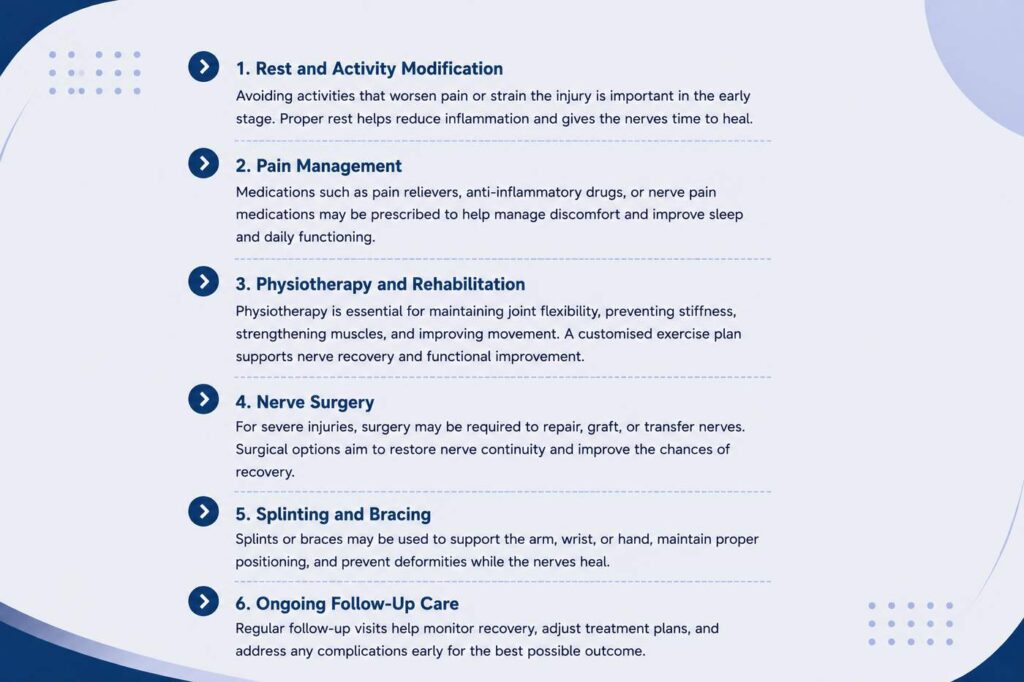
Treatment for a brachial plexus injury depends on the type, location, and severity of nerve damage.
Observation and Conservative Care
Milder nerve injuries may improve with time. During recovery, medical monitoring can help assess whether nerve function is returning.
Physiotherapy
Physiotherapy can help maintain joint flexibility, reduce stiffness, preserve muscle function, and support the gradual return of movement.
Exercises should be selected according to the individual’s condition and should not place unnecessary stress on injured nerves.
Pain Management
Nerve-related pain may require appropriate medication or other pain-management strategies. Persistent or severe pain should be discussed with a healthcare professional.
Nerve Surgery
Severe injuries may sometimes require procedures such as nerve repair, nerve grafting, or nerve transfer. The choice depends on the nature and location of the injury.
Reconstructive Procedures
When significant nerve damage has resulted in lasting loss of function, additional reconstructive procedures may be considered in selected cases.
How Long Does Recovery Take
Recovery varies considerably between individuals. A mild nerve injury may improve over weeks or months, while more serious injuries can require a longer period of rehabilitation.
Several factors influence recovery, including:
- Severity of nerve damage
- Location of the injury
- Age and overall health
- Time between injury and treatment
- Response to rehabilitation
- Whether surgery is required
- Extent of muscle and nerve involvement
Nerves regenerate slowly, so recovery may require patience and consistent follow-up.
Tips to Support Brachial Plexus Recovery
Once what is a brachial plexus injury and how does it happen is understood, following a structured recovery plan becomes important.
Helpful measures may include:
- Follow the recommended rehabilitation programme.
- Attend scheduled follow-up appointments.
- Perform prescribed exercises consistently.
- Avoid activities that place excessive strain on the affected arm.
- Protect areas with reduced sensation from burns and injuries.
- Maintain healthy nutrition and general physical activity as appropriate.
- Report new or worsening symptoms promptly.
- Give the injured nerve adequate time to recover.
Recovery should be guided by the severity and characteristics of the injury rather than by a fixed timeline.
When Should You Seek Medical Attention
A medical assessment is important after significant trauma involving the neck, shoulder, or arm, especially when there is sudden weakness or loss of sensation.
Seek prompt evaluation if you experience:
- Sudden inability to move the arm
- Severe or persistent nerve pain
- Significant numbness
- Progressive weakness
- Loss of hand function
- Symptoms following a major accident
- Visible muscle wasting
- Symptoms that do not improve as expected
Early assessment can help determine whether further investigations or specialist treatment are necessary.
Can a Brachial Plexus Injury Be Prevented
Not every injury can be prevented, particularly those caused by unexpected accidents. However, general safety measures can reduce the risk of traumatic nerve injuries.
Useful precautions include:
- Wearing appropriate seat belts in vehicles
- Using protective equipment during contact sports
- Following workplace safety practices
- Using appropriate protective gear for high-risk activities
- Taking care to prevent falls
- Following safe practices during physical activities
Preventing high-impact trauma is one of the most effective ways to reduce the risk of serious nerve injury.
Conclusion
Knowing what is a brachial plexus injury and how does it happen makes it easier to recognize warning signs and understand why timely evaluation matters. These injuries can range from mild nerve stretching to serious nerve tears or avulsions, and treatment varies accordingly.
Accurate diagnosis, appropriate rehabilitation, pain management, and timely surgical assessment when necessary can all play important roles in recovery. Anyone experiencing persistent arm weakness, numbness, unusual pain, or movement difficulties after trauma should seek professional medical evaluation.
With appropriate assessment and a structured recovery plan, many people can work toward improving function and maintaining the best possible use of the affected limb. For people seeking evaluation and treatment options in Thrissur, understanding the injury is an important first step toward making informed healthcare decisions. For additional information on brachial plexus injuries and available treatment approaches, visit the MedlinePlus resource on Brachial Plexus Injuries.
Frequently Asked Questions
What is a brachial plexus injury and how does it happen?
Is a brachial plexus injury serious?
Can a brachial plexus injury heal on its own?
What are the first signs of a brachial plexus injury?
Can a brachial plexus injury cause permanent weakness?
Can physiotherapy help with a brachial plexus injury?
Is surgery always required for a brachial plexus injury?
How long does brachial plexus recovery take?
Can a brachial plexus injury cause hand problems?
What tests are used to diagnose a brachial plexus injury?

Dr. Pradeep Kumar
Plastic & Reconstructive Surgeon – Brachial Plexus & Nerve Surgery Specialist
Dr. Pradeep Kumar is an experienced plastic and reconstructive surgeon known for his expertise in brachial plexus and peripheral nerve surgery. With extensive microsurgical experience, he focuses on restoring movement and function for patients with complex nerve injuries.
Sushrutha Institute of Plastic Surgery, Elite Mission Hospital, Thrissur