Nerve Transfer Surgery for Brachial Plexus in Thrissur: Advanced Microsurgical Treatment for Nerve Recovery
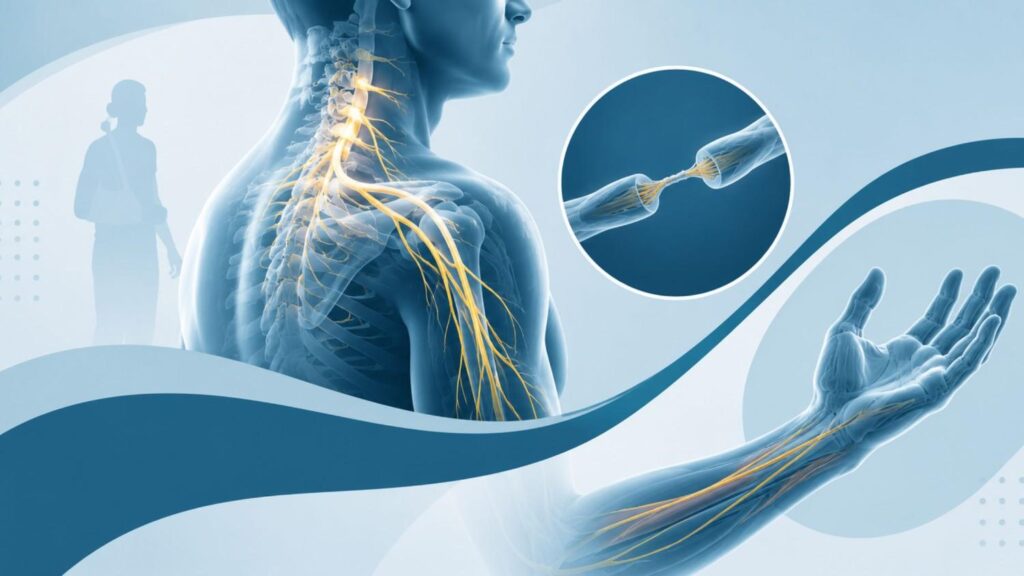
A brachial plexus injury can lead to significant weakness, loss of movement, and reduced sensation in the shoulder, arm, and hand. When damaged nerves cannot recover naturally or be repaired directly, Nerve Transfer Surgery for Brachial Plexus in Thrissur offers an advanced microsurgical solution to restore important upper limb functions. By redirecting healthy functioning nerves to injured nerves, nerve transfer surgery helps re-establish communication between the brain and affected muscles, improving the chances of meaningful recovery.
Choosing Nerve Transfer Surgery for Brachial Plexus in Thrissur requires a comprehensive evaluation of the injury, including its severity, location, and duration. Modern microsurgical techniques, combined with structured rehabilitation and long-term follow-up, allow many patients to regain shoulder stability, elbow movement, and functional use of the affected arm. Early diagnosis and timely surgical intervention remain key factors in achieving the best possible outcomes.
What Is Nerve Transfer Surgery?
Nerve transfer surgery is an advanced microsurgical procedure used to restore movement in muscles that have lost their original nerve supply due to severe brachial plexus injuries.
Instead of attempting to repair the damaged nerve directly, the surgeon redirects a healthy functioning nerve or one of its branches to the injured nerve. The transferred nerve gradually grows into the affected muscle, allowing it to receive new nerve signals and regain function over time.
Unlike tendon transfers, nerve transfer surgery restores movement by re-establishing nerve connections rather than mechanically repositioning muscles or tendons.
Today, Nerve Transfer Surgery for Brachial Plexus in Thrissur has become one of the most effective reconstructive options for selected patients with severe brachial plexus injuries.
When Is Nerve Transfer Surgery Recommended?
Not every brachial plexus injury requires nerve transfer surgery.
The procedure may be considered when:
- Nerves have been severely damaged or torn.
- Direct nerve repair is not possible.
- Nerve grafting alone is unlikely to provide sufficient recovery.
- There is complete loss of shoulder or elbow function.
- Certain muscles have permanently lost their original nerve supply.
- Early evaluation suggests that nerve transfer offers the best chance of restoring movement.
Patients undergoing assessment for Nerve Transfer Surgery for Brachial Plexus in Thrissur receive individualized treatment planning based on their specific injury pattern and functional goals.
How Nerve Transfer Surgery Works
The principle behind nerve transfer surgery is relatively straightforward.
Instead of waiting for damaged nerves to regenerate over a long distance, surgeons identify a nearby healthy nerve that performs a less critical function. A portion of this healthy nerve is then redirected to the injured nerve supplying an important muscle.
This shortens the distance required for nerve regeneration and often improves the chances of functional recovery.
The procedure is performed using high-powered operating microscopes and specialized microsurgical instruments that allow extremely precise handling of delicate nerve tissue.
The success of Nerve Transfer Surgery for Brachial Plexus in Thrissur depends on careful patient selection, meticulous surgical technique, and structured postoperative rehabilitation.
Conditions Treated with Nerve Transfer Surgery
Nerve transfer surgery can be beneficial for several complex brachial plexus conditions.
Adult Traumatic Brachial Plexus Injury
High-energy trauma caused by motorcycle accidents, road traffic collisions, industrial injuries, or falls may result in severe nerve damage requiring nerve transfer surgery.
Upper Brachial Plexus Injury
Patients with weakness involving shoulder movement and elbow flexion often benefit from carefully planned nerve transfers that help restore these essential functions.
Total Brachial Plexus Palsy
Although these injuries are more complex, selected nerve transfers may improve shoulder stability and elbow movement while forming part of a comprehensive reconstructive strategy.
Birth-Related Brachial Plexus Injury
Some children with persistent weakness following birth-related brachial plexus injuries may be candidates for nerve transfer procedures when spontaneous recovery is inadequate.
Failed Previous Nerve Repair
When previous nerve reconstruction does not produce sufficient recovery, nerve transfer surgery may be considered as part of secondary reconstruction.
These conditions may benefit from Nerve Transfer Surgery for Brachial Plexus in Thrissur after detailed clinical assessment and advanced diagnostic investigations.
Benefits of Nerve Transfer Surgery
Modern nerve transfer surgery offers several important advantages for carefully selected patients.
Potential benefits include:
- Restoration of shoulder movement
- Improved elbow flexion
- Better upper limb function
- Reduced disability
- Enhanced muscle control
- Improved independence
- Better quality of life
- Shorter nerve regeneration distance
- Improved functional recovery compared to delayed reconstruction in selected cases
While every patient’s recovery differs, Nerve Transfer Surgery for Brachial Plexus in Thrissur provides an important opportunity to restore meaningful movement following severe nerve injuries.
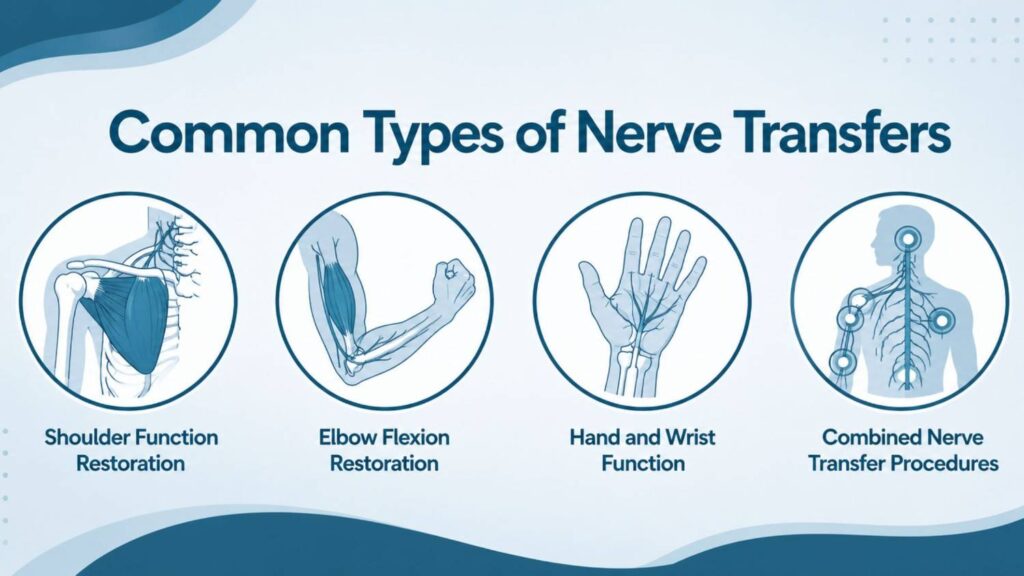
Preoperative Evaluation
Successful nerve transfer surgery begins long before entering the operating room.
A comprehensive assessment helps determine whether nerve transfer is the most appropriate treatment option and identifies which donor nerves can be safely used.
Evaluation typically includes:
- Detailed medical history
- Physical examination
- Neurological assessment
- Muscle strength evaluation
- Assessment of joint mobility
- Functional upper limb examination
- MRI
- CT Myelography when indicated
- Electromyography (EMG)
- Nerve Conduction Studies (NCS)
These investigations help specialists develop a personalized surgical plan and determine the most suitable approach for Nerve Transfer Surgery for Brachial Plexus in Thrissur.
The Surgical Procedure
Nerve transfer surgery is performed under general anesthesia using advanced microsurgical techniques.
During the procedure:
- The injured nerves are carefully exposed.
- Healthy donor nerves are identified.
- Suitable recipient nerves are selected.
- The donor nerve is redirected to the injured nerve.
- Precise microsurgical sutures are placed using an operating microscope.
- Blood supply and surrounding tissues are preserved whenever possible.
The objective is to create a new pathway through which nerve signals can travel to previously paralyzed muscles.
The duration of surgery varies depending on the complexity of the injury and the number of nerve transfers required.
Modern microsurgical techniques used in Nerve Transfer Surgery for Brachial Plexus in Thrissur prioritize both nerve preservation and functional restoration.
Risks and Possible Complications
Like all surgical procedures, nerve transfer surgery carries certain risks. However, careful patient selection, detailed planning, and meticulous microsurgical techniques help minimize complications.
Possible risks include:
- Infection
- Bleeding
- Temporary swelling
- Delayed wound healing
- Scar formation
- Incomplete nerve recovery
- Persistent weakness
- Temporary numbness around the surgical site
Patients receive detailed counseling regarding expected outcomes, recovery timelines, and postoperative care before undergoing surgery.
Recovery After Nerve Transfer Surgery
Recovery following nerve transfer surgery is gradual because nerves regenerate slowly.
Most patients do not notice immediate improvement after surgery. Instead, the transferred nerve gradually grows toward the target muscle over several months.
Recovery generally occurs in stages:
Early Recovery
The initial weeks focus on:
- Protecting the surgical repair
- Pain management
- Wound care
- Gentle joint movement
- Preventing stiffness
Intermediate Recovery
As nerve regeneration progresses, rehabilitation becomes more intensive.
Patients work on:
- Muscle activation
- Coordination exercises
- Strength development
- Functional movement training
Small improvements gradually become more noticeable as the new nerve connections strengthen.
Long-Term Recovery
Nerve regeneration continues slowly.
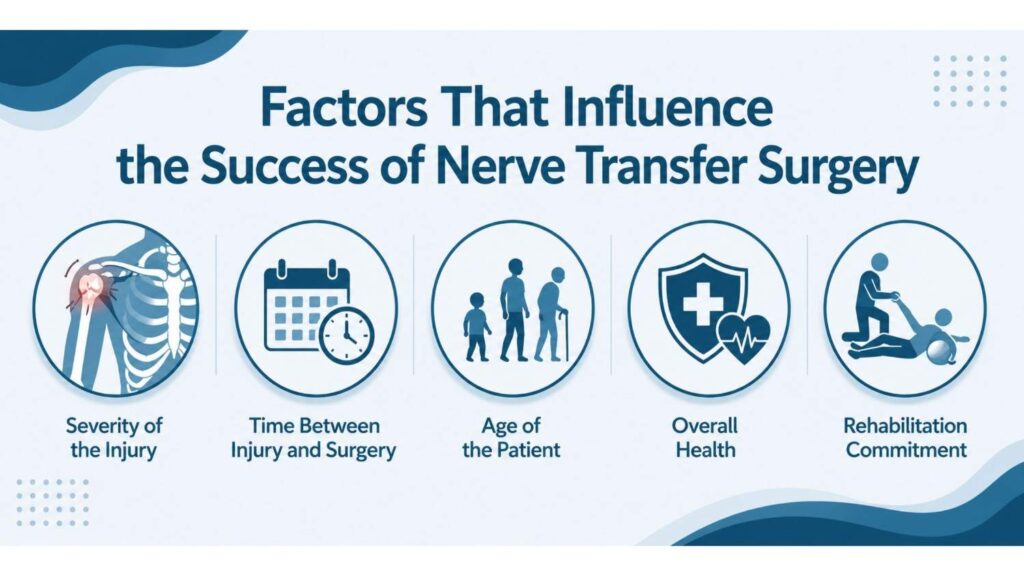
Many patients continue improving for one to two years after surgery, depending on:
- Severity of injury
- Distance for nerve regeneration
- Patient age
- Muscle condition
- Rehabilitation participation
Long-term commitment to therapy is essential for maximizing the benefits of Nerve Transfer Surgery for Brachial Plexus in Thrissur.
Physiotherapy After Surgery
Physiotherapy plays a central role in successful recovery.
A structured rehabilitation program helps patients:
- Maintain joint flexibility
- Prevent muscle stiffness
- Improve strength
- Re-educate muscles receiving new nerve signals
- Restore coordinated movement
- Improve posture
- Enhance upper limb function
Exercises are introduced gradually according to the stage of nerve recovery.
Consistent physiotherapy significantly contributes to the success of Nerve Transfer Surgery for Brachial Plexus in Thrissur.
Occupational Therapy
Occupational therapy complements physiotherapy by focusing on practical daily activities.
Therapists help patients:
- Improve fine motor skills
- Develop hand coordination
- Adapt daily activities
- Improve independence
- Regain confidence during recovery
Customized rehabilitation programs ensure that patients can safely return to work, school, and everyday routines whenever possible.
Follow-up Care
Regular follow-up appointments allow specialists to monitor nerve regeneration and modify rehabilitation as recovery progresses.
During follow-up visits, clinicians assess:
- Muscle strength
- Joint mobility
- Functional improvements
- Nerve regeneration
- Rehabilitation progress
- Need for additional reconstructive procedures
Close monitoring ensures that patients undergoing Nerve Transfer Surgery for Brachial Plexus in Thrissur receive ongoing support throughout their recovery journey and achieve the best possible functional outcomes.
Why Early Nerve Transfer Surgery Matters
The timing of surgery has a significant impact on recovery.
Following a severe brachial plexus injury, muscles gradually lose their ability to respond if they remain without nerve supply for an extended period. Even if the nerve is successfully reconstructed later, prolonged denervation can reduce the muscle’s capacity to recover.
Early assessment allows specialists to:
- Identify patients who require surgery
- Select the most appropriate donor nerves
- Preserve muscle function
- Improve nerve regeneration
- Optimize long-term functional recovery
- Reduce permanent disability
Seeking timely evaluation for Nerve Transfer Surgery for Brachial Plexus in Thrissur increases the likelihood of restoring shoulder movement, elbow flexion, and functional arm use.
Why Choose Specialized Brachial Plexus Care?
Brachial plexus injuries require a multidisciplinary approach that combines accurate diagnosis, advanced microsurgical expertise, personalized treatment planning, and comprehensive rehabilitation.
Specialized care offers several advantages:
- Detailed neurological evaluation
- Advanced imaging and nerve studies
- Individualized treatment planning
- Modern microsurgical nerve reconstruction
- Personalized rehabilitation programs
- Long-term follow-up
- Functional recovery-focused care
- Comprehensive upper limb rehabilitation
Patients undergoing Nerve Transfer Surgery for Brachial Plexus in Thrissur benefit from coordinated care that addresses every stage of recovery, from diagnosis to rehabilitation and long-term functional improvement.
To better understand the complete range of treatment options, read our guide on Brachial Plexus Injury Treatment.
Conclusion
Nerve transfer surgery has transformed the treatment of severe brachial plexus injuries by providing an effective way to restore important upper limb functions when direct nerve repair is not possible. Through advanced microsurgical techniques, personalized treatment planning, and structured rehabilitation, many patients can achieve meaningful improvements in shoulder stability, elbow movement, and overall arm function.
If you are considering Nerve Transfer Surgery for Brachial Plexus in Thrissur, early diagnosis and timely intervention are essential for achieving the best possible outcome. A comprehensive evaluation helps determine whether nerve transfer is the most appropriate treatment option based on the pattern and severity of the injury, allowing for a tailored approach focused on long-term functional recovery and improved quality of life.
For additional information about brachial plexus injuries and nerve reconstruction, visit the American Academy of Orthopaedic Surgeons (AAOS) OrthoInfo.
Frequently Asked Questions
What is nerve transfer surgery for brachial plexus injuries?
Who is a suitable candidate for Nerve Transfer Surgery for Brachial Plexus in Thrissur?
How is nerve transfer different from nerve grafting?
Is nerve transfer surgery always required?
How long does nerve transfer surgery take?
When will I notice improvement after nerve transfer surgery?
Will I need physiotherapy after nerve transfer surgery?
Can children undergo nerve transfer surgery?
What tests are required before nerve transfer surgery?
Why is early evaluation important for nerve transfer surgery?
Dr. Pradeep Kumar
Plastic & Reconstructive Surgeon – Brachial Plexus & Nerve Surgery Specialist
Dr. Pradeep Kumar is an experienced plastic and reconstructive surgeon known for his expertise in brachial plexus and peripheral nerve surgery. With extensive microsurgical experience, he focuses on restoring movement and function for patients with complex nerve injuries.
Sushrutha Institute of Plastic Surgery, Elite Mission Hospital, Thrissur