Brachial Plexus Surgery: Advanced Microsurgical Care for Nerve Injuries
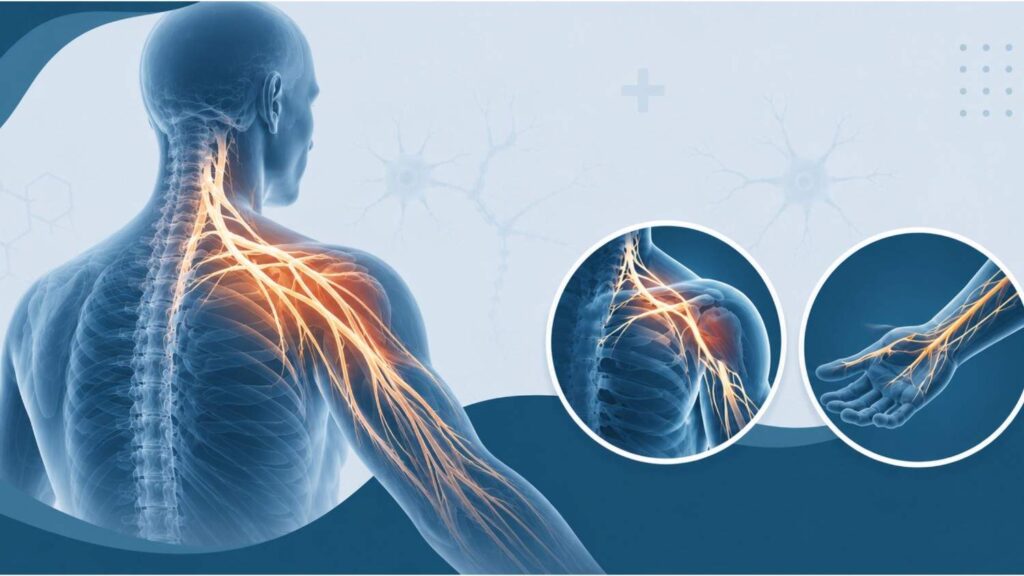
A brachial plexus injury can severely affect the movement, strength, and sensation of the shoulder, arm, and hand. When conservative treatment is not sufficient, surgery may offer the best chance of restoring nerve function and improving quality of life. If you are searching for Brachial Plexus Surgery in Thrissur, understanding when surgery is needed and the available surgical techniques can help you make informed decisions about your treatment.
Brachial Plexus Surgery in Thrissur involves advanced microsurgical procedures designed to repair, reconstruct, or transfer damaged nerves. Combined with early diagnosis and structured rehabilitation, these procedures aim to restore movement, reduce disability, and improve functional recovery following complex nerve injuries.
What Is Brachial Plexus Surgery?
Brachial plexus surgery is a group of specialized microsurgical procedures performed to repair damaged nerves that control the shoulder, arm, forearm, and hand. These surgeries are considered when nerves are severely stretched, ruptured, compressed, or completely detached from the spinal cord.
The primary goal of Brachial Plexus Surgery in Thrissur is to restore nerve continuity, improve muscle function, reduce pain, and help patients regain independence in daily activities.
When Is Brachial Plexus Surgery Needed?
Not every brachial plexus injury requires surgery. Mild nerve injuries may recover with observation and physiotherapy. However, surgery is often recommended when:
- There is complete loss of arm function.
- Imaging confirms severe nerve injury.
- There is no meaningful recovery after observation.
- Nerve rupture or avulsion is present.
- Birth-related brachial plexus injuries fail to improve adequately.
- Progressive weakness affects daily activities.
Early evaluation helps determine whether Brachial Plexus Surgery is the most appropriate treatment option.
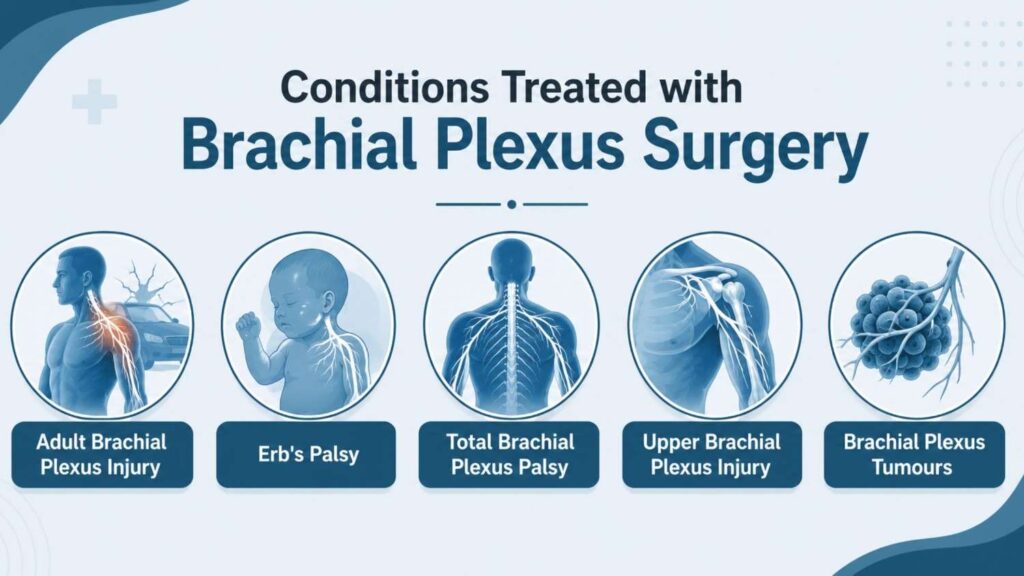
Types of Brachial Plexus Surgery
Treatment is individualized based on the location, severity, and duration of the injury.
Nerve Repair
Healthy nerve ends are carefully reconnected using microsurgical techniques whenever direct repair is possible.
Nerve Grafting
When there is a gap between damaged nerve ends, a healthy donor nerve is used to bridge the defect and promote nerve regeneration.
Nerve Transfer
A functioning nerve or one of its branches is redirected to restore movement in muscles that have lost their original nerve supply.
Nerve Decompression
Pressure on compressed nerves is relieved to improve nerve function and reduce symptoms.
Tendon Transfer
Healthy tendons are repositioned to restore important movements that cannot be achieved through nerve surgery alone.
Muscle Transfer
Functional muscles from another part of the body may be transferred to improve upper limb movement in longstanding injuries.
These procedures form the foundation of modern Brachial Plexus Surgery in Thrissur.
How Is Brachial Plexus Surgery Planned?
Every patient requires a detailed evaluation before surgery.
The assessment may include:
- Comprehensive neurological examination
- Muscle strength assessment
- MRI scan
- CT Myelography when required
- Electromyography (EMG)
- Nerve Conduction Studies (NCS)
- Functional assessment of the upper limb
This information helps determine the most suitable surgical technique and expected outcomes following Brachial Plexus Surgery in Thrissur.
Benefits of Brachial Plexus Surgery in Thrissur
Advanced microsurgical techniques offer several potential benefits, including:
- Improved shoulder stability
- Better elbow movement
- Enhanced hand function in selected patients
- Reduced nerve pain
- Improved muscle strength
- Better functional independence
- Enhanced quality of life
- Increased chances of long-term recovery
Although recovery varies between individuals, timely Brachial Plexus Surgery in Thrissur can significantly improve functional outcomes when combined with rehabilitation.
Recovery After Brachial Plexus Surgery
Recovery is gradual because nerves regenerate slowly.
Following surgery, patients typically undergo:
Physiotherapy
Exercises help maintain joint mobility, prevent stiffness, and strengthen recovering muscles.
Occupational Therapy
Patients learn techniques to improve daily function while recovery progresses.
Regular Follow-up
Periodic assessments monitor nerve regeneration and functional improvement.
Long-Term Rehabilitation
Recovery often continues for several months and may extend up to two years, depending on the severity of the injury.
Why Early Surgery Matters
Timing plays a critical role in nerve reconstruction. Delayed treatment may reduce the ability of muscles to recover because prolonged denervation can lead to irreversible muscle changes.
Seeking early evaluation for Brachial Plexus Surgery in Thrissur allows appropriate treatment planning before permanent muscle deterioration occurs, improving the chances of restoring movement and function.
Conclusion
Brachial plexus injuries require specialized assessment and individualized treatment to achieve the best possible outcomes. Modern microsurgical procedures, combined with dedicated rehabilitation, can help restore movement, improve strength, and enhance independence after severe nerve injuries. If you are considering Brachial Plexus Surgery in Thrissur, timely evaluation and a personalized treatment plan are essential for maximizing recovery and long-term function.
To learn more about brachial plexus injuries and surgical management, visit the American Academy of Orthopaedic Surgeons (AAOS) OrthoInfo.
Frequently Asked Questions
What is brachial plexus surgery?
Who may need Brachial Plexus Surgery in Thrissur?
How do I know if I need brachial plexus surgery?
What are the different types of brachial plexus surgery?
Is brachial plexus surgery safe?
How long does recovery take after Brachial Plexus Surgery in Thrissur?
Will I need physiotherapy after brachial plexus surgery?
Can children undergo brachial plexus surgery?
What tests are performed before brachial plexus surgery?
Why is early evaluation important for brachial plexus surgery?
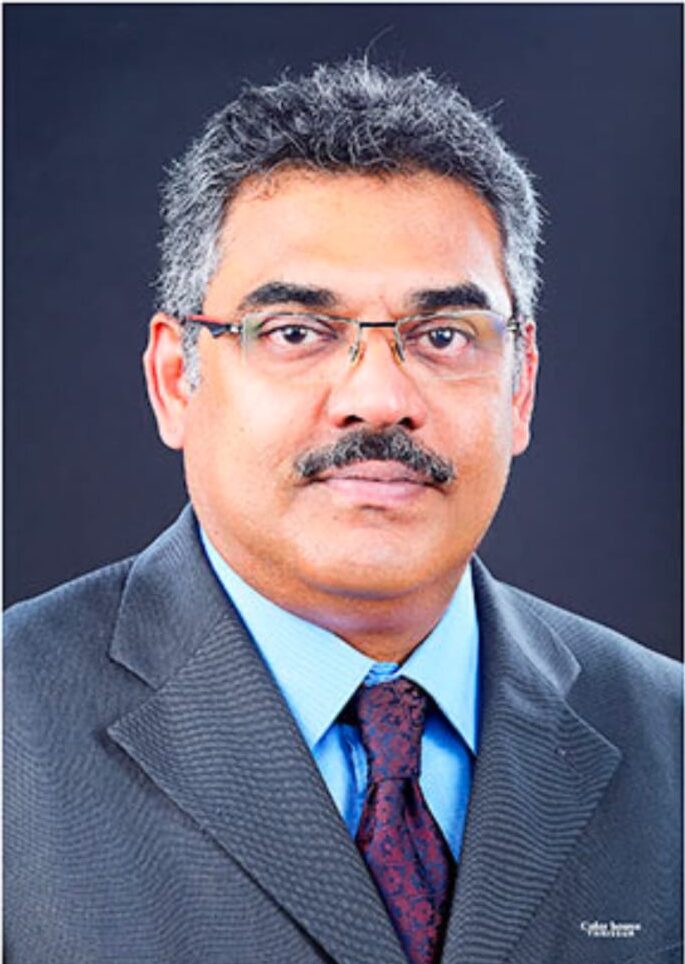
Dr. Pradeep Kumar
Plastic & Reconstructive Surgeon – Brachial Plexus & Nerve Surgery Specialist
Dr. Pradeep Kumar is an experienced plastic and reconstructive surgeon known for his expertise in brachial plexus and peripheral nerve surgery. With extensive microsurgical experience, he focuses on restoring movement and function for patients with complex nerve injuries.
Sushrutha Institute of Plastic Surgery, Elite Mission Hospital, Thrissur