7 Powerful Signs: WHEN SHOULD YOU SEE A BRACHIAL PLEXUS SURGERY DOCTOR
A brachial plexus injury can affect the network of nerves that controls movement and sensation in the shoulder, arm, and hand. If you are wondering WHEN SHOULD YOU SEE A BRACHIAL PLEXUS SURGERY DOCTOR, understanding the warning signs can help you seek timely medical care and improve recovery outcomes. People in Thrissur experiencing persistent weakness, numbness, severe pain, or loss of arm function should never ignore these symptoms. Early evaluation plays a vital role in preventing long-term complications and restoring function.
While some brachial plexus injuries recover naturally with rest and rehabilitation, others require specialized surgical treatment. Knowing when symptoms indicate a more serious problem can make a significant difference in treatment success.
Why It Is Important to Know WHEN SHOULD YOU SEE A BRACHIAL PLEXUS SURGERY DOCTOR
Many nerve injuries improve over time, but severe brachial plexus injuries may lead to permanent disability if treatment is delayed. Understanding WHEN SHOULD YOU SEE A BRACHIAL PLEXUS SURGERY DOCTOR helps ensure that nerve damage is evaluated before muscles lose their ability to recover.
Early diagnosis allows specialists to determine whether conservative treatment is enough or whether surgery offers the best chance for recovery.
Understanding the Brachial Plexus
The brachial plexus is a complex group of nerves that begins in the neck and extends into the shoulder, arm, forearm, and hand.
These nerves control:
- Shoulder movement
- Arm strength
- Hand coordination
- Finger movement
- Sensation throughout the upper limb
Damage to these nerves may occur after trauma, sports injuries, falls, motorcycle accidents, birth injuries, or tumors.
Common Causes of Brachial Plexus Injury
Several conditions can damage the brachial plexus.
Road Traffic Accidents
Motorcycle and car accidents are among the most common causes.
Sports Injuries
Contact sports may overstretch or tear the nerves.
Falls
Landing on the shoulder or arm can injure the nerve network.
Birth Injuries
Some newborns experience brachial plexus injuries during difficult deliveries.
Tumors
Growths near the neck or shoulder may compress the nerves.
Penetrating Trauma
Knife wounds or gunshot injuries may directly damage the nerves.
Types of Brachial Plexus Injuries
Different injuries require different treatments.
Neuropraxia
The nerve stretches without tearing and usually heals naturally.
Rupture
The nerve tears but remains attached to the spinal cord.
Avulsion
The nerve is pulled completely away from the spinal cord.
Neuroma
Scar tissue develops after injury and blocks normal nerve function.
WHEN SHOULD YOU SEE A BRACHIAL PLEXUS SURGERY DOCTOR
Recognizing the following symptoms helps determine WHEN SHOULD YOU SEE A BRACHIAL PLEXUS SURGERY DOCTOR.
1. Persistent Arm Weakness
Weakness lasting several weeks may indicate significant nerve damage.
If lifting objects becomes difficult or impossible, specialist evaluation is recommended.
2. Complete Loss of Arm Movement
An inability to move the shoulder, elbow, or fingers requires urgent assessment.
This often indicates severe nerve injury.
3. Numbness That Does Not Improve
Temporary numbness may resolve naturally.
Persistent numbness should never be ignored.
4. Severe Burning or Electric Shock Pain
Sharp, shooting pain may indicate nerve injury requiring specialized care.
Pain that worsens despite medication deserves prompt evaluation.
5. Loss of Hand Function
Difficulty gripping, holding, or writing may indicate advanced nerve involvement.
6. Muscle Wasting
Shrinking muscles suggest that nerves are no longer supplying normal signals.
Early treatment offers better recovery potential.
7. Symptoms After a Major Accident
Anyone experiencing arm weakness or numbness following trauma should undergo evaluation immediately.
8. No Improvement After Several Weeks
If symptoms remain unchanged despite therapy, surgery may become necessary.
Symptoms That Need Immediate Medical Attention
Seek urgent care if you experience:
- Complete arm paralysis
- Loss of shoulder movement
- Severe neck pain
- Intense burning pain
- Progressive weakness
- Muscle wasting
- Hand paralysis
- Loss of sensation
- Open injuries involving nerves
Risk Factors for Severe Brachial Plexus Injury
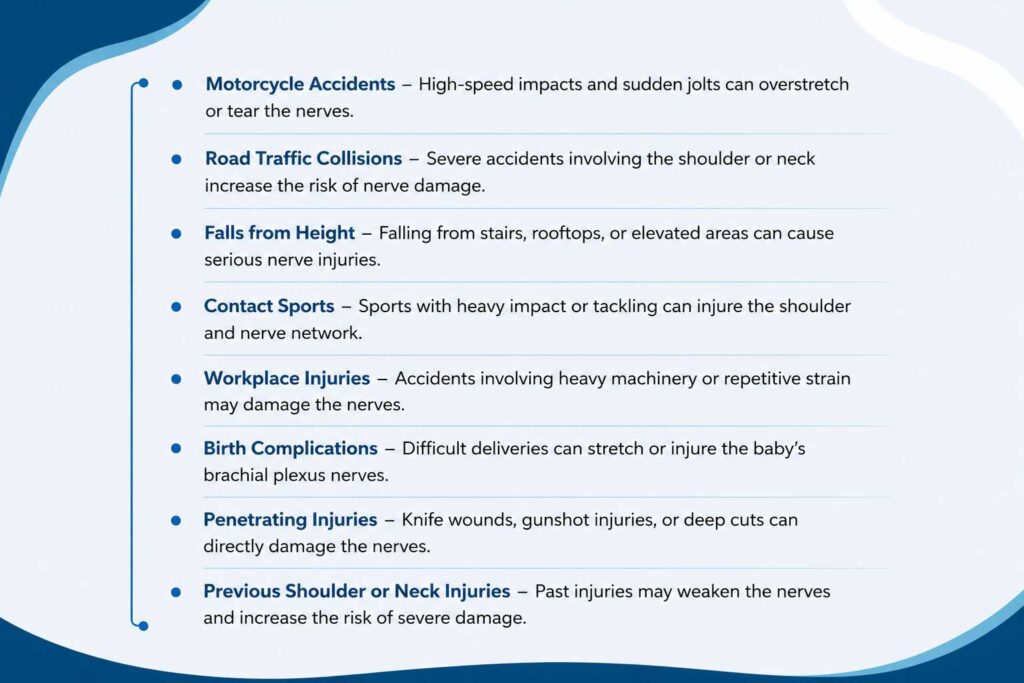
The likelihood of serious injury increases with:
- Motorcycle accidents
- High-speed collisions
- Contact sports
- Falls from height
- Heavy machinery accidents
- Birth complications
- Previous nerve injuries
How a Brachial Plexus Injury Is Diagnosed
When deciding WHEN SHOULD YOU SEE A BRACHIAL PLEXUS SURGERY DOCTOR, diagnosis is the next important step.
Doctors may perform:
Physical Examination
Strength, movement, and sensation are carefully assessed.
MRI Scan
Shows soft tissue and nerve injuries.
CT Myelography
Useful for detecting nerve root avulsions.
Electromyography (EMG)
Measures muscle activity.
Nerve Conduction Studies
Evaluate how well electrical signals travel through nerves.
Ultrasound
May identify certain nerve abnormalities.
Non-Surgical Treatment Options
Not every injury requires surgery.
Treatment may include:
- Rest
- Pain medications
- Anti-inflammatory medicines
- Physical therapy
- Occupational therapy
- Splints
- Regular follow-up
Many stretch injuries recover gradually over several months.
Surgical Treatment Options
When discussing WHEN SHOULD YOU SEE A BRACHIAL PLEXUS SURGERY DOCTOR, surgery becomes important for severe injuries.
Nerve Grafting
Healthy donor nerves replace damaged sections.
Nerve Transfer
Working nerves are redirected to restore function.
Neurolysis
Scar tissue surrounding nerves is removed.
Tendon Transfer
Healthy tendons improve movement when nerves cannot recover.
Muscle Transfer
Used in selected advanced cases.
Benefits of Early Surgical Evaluation
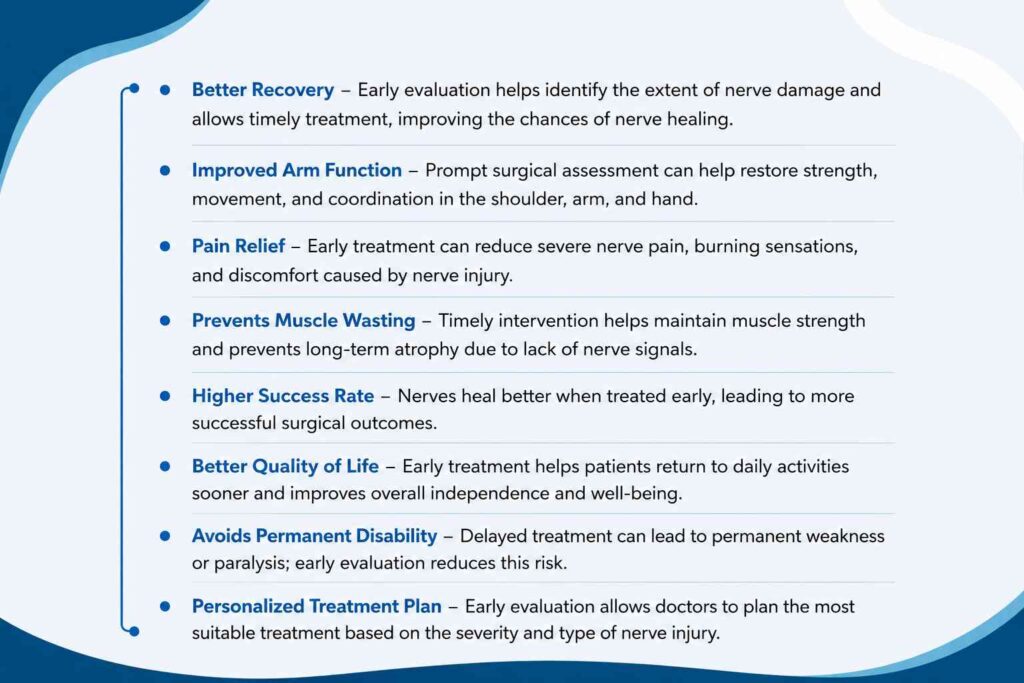
Prompt evaluation offers several advantages.
Better Recovery
Earlier intervention increases the chance of nerve healing.
Improved Arm Function
Patients often regain better movement.
Pain Relief
Surgery may reduce chronic nerve pain.
Prevents Muscle Wasting
Early treatment preserves muscle health.
Improved Quality of Life
Daily activities become easier after recovery.
What Happens During Recovery
Recovery varies depending on injury severity.
Patients usually require:
- Regular follow-up
- Physiotherapy
- Occupational therapy
- Home exercises
- Strength training
- Gradual return to activities
Nerves regenerate slowly, so improvement may continue for months or even years.
Rehabilitation After Surgery
Rehabilitation is just as important as surgery.
Programs often include:
- Range-of-motion exercises
- Strengthening exercises
- Hand function training
- Pain management
- Electrical stimulation
- Functional retraining
Consistency improves long-term outcomes.
Tips to Protect Your Nerves
Reduce the risk of brachial plexus injuries by:
- Wearing helmets while riding motorcycles
- Using seat belts
- Following workplace safety rules
- Wearing sports protective equipment
- Avoiding risky activities
- Strengthening shoulder muscles
- Maintaining good posture
Possible Complications of Delayed Treatment
Ignoring severe symptoms may lead to:
- Permanent paralysis
- Chronic pain
- Muscle wasting
- Joint stiffness
- Loss of hand function
- Reduced independence
- Disability
This is why understanding WHEN SHOULD YOU SEE A BRACHIAL PLEXUS SURGERY DOCTOR is essential.
Who Is Most Likely to Need Surgery
Surgery may be recommended for people with:
- Torn nerves
- Avulsed nerves
- Persistent paralysis
- Progressive weakness
- Severe traumatic injuries
- Failed conservative treatment
- Significant muscle wasting
Can Brachial Plexus Injuries Heal Without Surgery
Yes, mild stretch injuries often heal naturally.
However, severe nerve tears generally require surgical treatment for the best possible recovery.
A specialist can determine the appropriate treatment after imaging and nerve testing.
Long-Term Outlook
Recovery depends on:
- Severity of injury
- Age
- Overall health
- Time before treatment
- Type of surgery
- Rehabilitation commitment
Many patients regain meaningful function with proper treatment and rehabilitation.
Conclusion
Knowing WHEN SHOULD YOU SEE A BRACHIAL PLEXUS SURGERY DOCTOR can help prevent permanent nerve damage and improve the chances of recovery. Persistent weakness, numbness, severe pain, or loss of arm movement should never be ignored. Early diagnosis, timely treatment, and dedicated rehabilitation all contribute to better outcomes. If symptoms continue after an injury, seeking professional evaluation is the safest course of action. People in Thrissur should not delay assessment when symptoms suggest significant brachial plexus nerve damage. For reliable medical information about brachial plexus injuries, symptoms, diagnosis, and treatment options, visit the National Institute of Neurological Disorders and Stroke (NINDS) .
Frequently Asked Questions
When should I see a brachial plexus surgery doctor?
Can brachial plexus injuries heal naturally?
Is surgery always necessary for a brachial plexus injury?
How soon should brachial plexus surgery be performed?
What tests are used to diagnose a brachial plexus injury?
How long does recovery take after brachial plexus surgery?
Is physiotherapy important after brachial plexus surgery?
Can children develop brachial plexus injuries?
What are the warning signs of a severe brachial plexus injury?
Can delayed treatment reduce the chances of recovery?

Dr. Pradeep Kumar
Plastic & Reconstructive Surgeon – Brachial Plexus & Nerve Surgery Specialist
Dr. Pradeep Kumar is an experienced plastic and reconstructive surgeon known for his expertise in brachial plexus and peripheral nerve surgery. With extensive microsurgical experience, he focuses on restoring movement and function for patients with complex nerve injuries.
Sushrutha Institute of Plastic Surgery, Elite Mission Hospital, Thrissur