7 Powerful Guide to Peripheral Nerve Surgery in Kerala Today
Peripheral nerve injuries can affect movement, sensation, strength, and everyday activities. When a nerve is severely damaged and cannot recover adequately on its own, peripheral nerve surgery in Kerala may be considered to restore nerve continuity and improve function. Understanding the causes, symptoms, treatment options, recovery process, and expected outcomes can help patients make informed decisions about their care.
Peripheral nerves connect the brain and spinal cord to different parts of the body. They control movement and carry sensory information such as touch, temperature, pressure, and pain. Damage to these nerves can therefore have a significant impact on quality of life.
What Is Peripheral Nerve Surgery
Peripheral nerve surgery in Kerala refers to surgical procedures used to repair or reconstruct damaged nerves outside the brain and spinal cord. The objective is to restore the pathway through which nerve signals travel between the central nervous system and the affected muscles or skin.
Peripheral nerve surgery may be recommended when a nerve is:
- Completely cut or divided
- Severely compressed
- Damaged by trauma
- Trapped by scar tissue
- Injured during an accident
- Not recovering adequately after an injury
- Affected by a mass or other structural problem
The appropriate procedure depends on the type, location, severity, and duration of the nerve injury.
Why Peripheral Nerve Surgery May Be Needed
Not every nerve injury requires an operation. Some mild nerve injuries improve naturally with time, rest, physiotherapy, and appropriate medical management.
However, significant structural damage may prevent normal nerve regeneration. In such situations, delaying treatment may reduce the possibility of meaningful functional recovery.
Peripheral nerve surgery in Kerala may be considered when examinations and investigations indicate that spontaneous recovery is unlikely or insufficient.
Common Situations Requiring Surgery
Surgery may be considered for:
- Severed nerves
- Severe nerve compression
- Nerve injuries associated with fractures
- Traumatic wounds
- Entrapment that does not respond to conservative treatment
- Nerve gaps caused by tissue loss
- Persistent weakness or numbness
- Nerve injuries with progressive functional impairment
Early assessment is particularly important after major trauma because nerves regenerate slowly, and treatment timing can influence the final outcome.
Causes of Peripheral Nerve Injuries
There are several potential causes of peripheral nerve damage. Trauma is one of the most common, but nerve problems can also develop gradually.
Traumatic Injuries
Road accidents, workplace injuries, sports injuries, falls, and penetrating wounds can damage peripheral nerves.
A nerve may be stretched, compressed, bruised, partially damaged, or completely divided.
Fractures and Dislocations
Broken bones or displaced joints can compress nearby nerves. In some cases, the injury itself damages the nerve; in others, swelling or scar tissue can contribute to nerve dysfunction.
Surgical or Medical Causes
Although uncommon, nerves can sometimes be affected during surgical procedures or by prolonged pressure associated with certain medical conditions.
Repetitive Compression
Repeated movements or prolonged pressure can cause nerve entrapment. Common examples include compression around the wrist, elbow, or other anatomical passageways.
Types of Peripheral Nerve Surgery
The specific approach used for peripheral nerve surgery in Kerala depends on the condition being treated.
Nerve Repair
Direct nerve repair may be possible when the ends of a damaged nerve can be brought together without excessive tension.
The surgeon carefully aligns the nerve ends to create an environment that supports regeneration.
Nerve Grafting
When a section of the nerve is missing or cannot be repaired directly, a nerve graft may be used to bridge the gap.
This technique provides a pathway through which regenerating nerve fibers can grow toward their target.
Nerve Transfer
A nerve transfer involves redirecting a functioning nerve or one of its branches to a damaged nerve or muscle target.
This can be useful when the original nerve pathway is unlikely to recover sufficiently.
Nerve Decompression
When pressure is the primary cause of nerve dysfunction, surgery may involve releasing the structures compressing the nerve.
The goal is to reduce pressure and create better conditions for nerve function and recovery.
Neurolysis
Neurolysis involves carefully freeing a nerve from surrounding scar tissue or adhesions.
It may be considered when scar tissue is interfering with nerve movement or function.
Symptoms That May Indicate Nerve Damage
Recognizing nerve-related symptoms can encourage timely evaluation.
Common symptoms include:
- Numbness
- Tingling or pins-and-needles sensations
- Burning pain
- Shooting or electric-like pain
- Muscle weakness
- Reduced grip strength
- Difficulty moving a limb
- Loss of sensation
- Muscle wasting
- Increased sensitivity
- Poor coordination
The symptoms can vary depending on which nerve is affected and whether the injury involves sensory, motor, or mixed nerve fibers.
How Peripheral Nerve Injuries Are Diagnosed
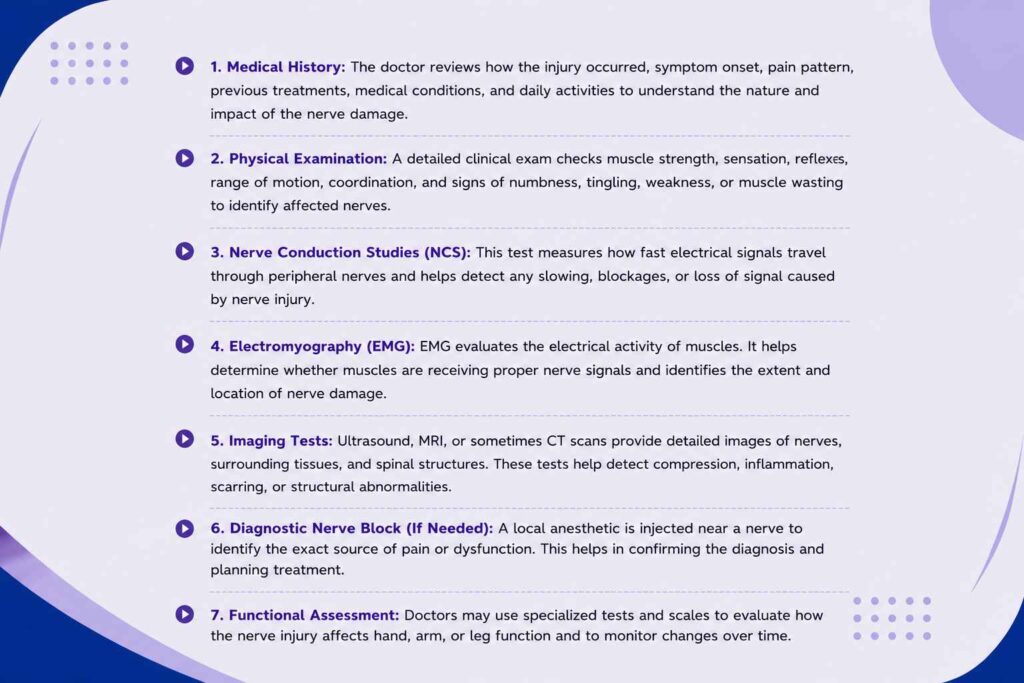
Before recommending peripheral nerve surgery in Kerala, a specialist generally evaluates the patient’s symptoms, injury history, physical findings, and functional limitations.
Physical Examination
A clinical examination may assess:
- Muscle strength
- Sensory function
- Reflexes
- Range of movement
- Coordination
- Signs of muscle wasting
- Pain patterns
Comparing the affected side with the unaffected side can provide useful information about the extent of functional impairment.
Nerve Conduction Studies
Nerve conduction testing evaluates how electrical signals travel along a nerve. It can help identify impaired nerve function and provide information about the location and severity of damage.
Electromyography
Electromyography can assess electrical activity within muscles and may help determine whether muscles are receiving appropriate nerve signals.
Imaging
Depending on the injury, imaging techniques such as ultrasound or magnetic resonance imaging may provide additional information about nerve continuity, compression, surrounding tissues, or structural abnormalities.
Benefits of Peripheral Nerve Surgery
The potential benefits of peripheral nerve surgery in Kerala depend heavily on the type and severity of injury and the timing of treatment.
Potential benefits include:
- Restoring nerve continuity
- Improving sensation
- Supporting muscle recovery
- Reducing nerve-related pain
- Improving movement
- Enhancing hand or limb function
- Reducing functional limitations
- Supporting greater independence
It is important to understand that surgery does not guarantee complete recovery. Nerve regeneration is gradual, and outcomes vary considerably between individuals.
Peripheral Nerve Surgery and Nerve Regeneration
One of the most important factors to understand about peripheral nerve surgery in Kerala is that nerve healing takes time.
Peripheral nerves can regenerate, but the process is slow. Even when a surgical repair is technically successful, useful function may take months to return.
The final outcome may depend on:
- Patient age
- Type of nerve injury
- Location of the injury
- Distance between the injury and target muscle
- Time between injury and treatment
- Degree of muscle damage
- Overall tissue condition
- Rehabilitation participation
For this reason, realistic expectations are an important part of the treatment process.
What Happens During Peripheral Nerve Surgery
The exact surgical process varies according to the procedure.
Generally, the damaged nerve is identified and carefully exposed. The surgeon evaluates its condition and determines whether direct repair, grafting, decompression, neurolysis, or nerve transfer is appropriate.
Microsurgical techniques may be used because peripheral nerves contain delicate structures that require precise handling.
The procedure is performed with the goal of creating the best possible environment for nerve regeneration while protecting surrounding tissues.
Recovery After Peripheral Nerve Surgery
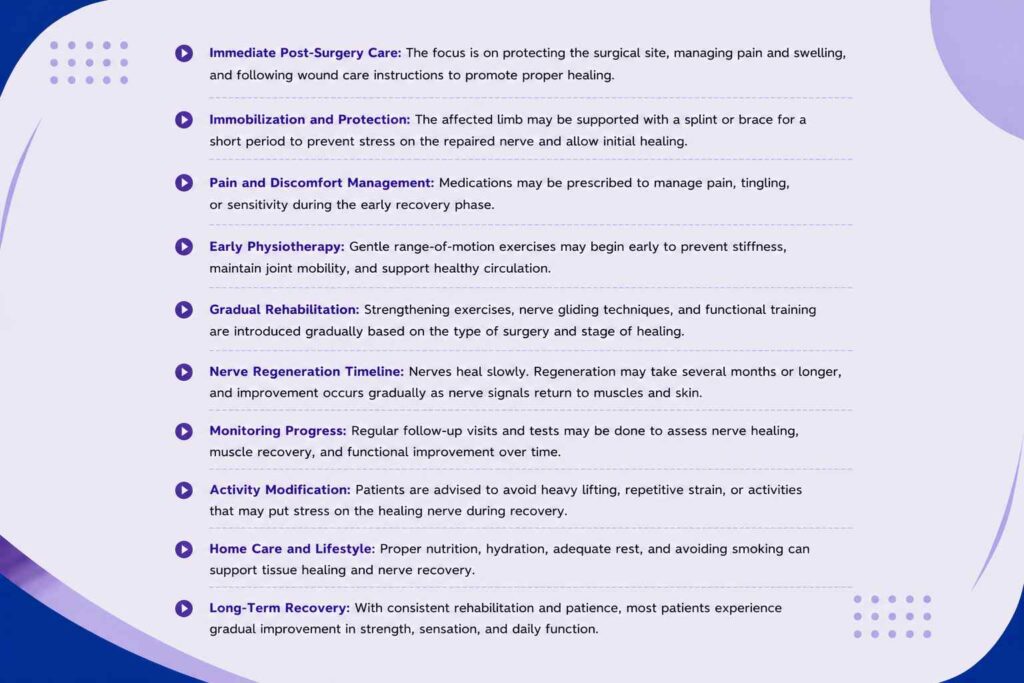
Recovery following peripheral nerve surgery in Kerala is usually gradual rather than immediate.
Patients may require a combination of protection, observation, physiotherapy, occupational therapy, and functional exercises.
Early Recovery
The initial period may focus on:
- Protecting the surgical area
- Controlling swelling
- Managing discomfort
- Maintaining appropriate joint positioning
- Preventing stiffness
- Following wound-care instructions
Rehabilitation
Rehabilitation is an important part of recovery. Exercises may be introduced progressively based on the procedure and the patient’s condition.
Therapy may focus on:
- Maintaining joint flexibility
- Preventing muscle stiffness
- Improving strength
- Retraining movement
- Sensory re-education
- Functional activities
Consistency is often important because recovering nerves and muscles need time and appropriate stimulation.
Tips for Better Recovery
Patients undergoing peripheral nerve surgery in Kerala can support recovery by following their treatment plan carefully.
Useful measures include:
- Attend scheduled follow-up appointments.
- Follow activity restrictions during the early healing period.
- Complete recommended physiotherapy exercises.
- Protect areas with reduced sensation from burns and injuries.
- Avoid putting unnecessary pressure on the affected nerve.
- Maintain good nutrition and general health.
- Report unusual swelling, wound problems, or worsening symptoms.
- Be patient because nerve regeneration is slow.
Patients should not increase exercise intensity independently without guidance, particularly during the early stages of recovery.
Risks and Limitations
Like other surgical procedures, peripheral nerve surgery in Kerala can involve potential risks.
Possible concerns include:
- Infection
- Bleeding
- Scarring
- Persistent pain
- Incomplete nerve recovery
- Continued numbness
- Muscle weakness
- Reduced movement
- Recurrence of compression
- Need for additional treatment
The likelihood of complications varies according to the procedure and the patient’s individual circumstances.
A detailed discussion before surgery can help patients understand the expected benefits, limitations, and possible risks.
How to Prepare for Peripheral Nerve Surgery
Good preparation can make the treatment process easier.
Patients may be advised to:
- Provide a complete history of the injury.
- Share previous medical reports and imaging results.
- Discuss current medications.
- Understand the planned procedure.
- Ask about expected recovery time.
- Arrange appropriate support during the initial recovery period.
- Understand rehabilitation requirements.
- Follow preoperative instructions carefully.
Having realistic expectations is equally important. Nerve recovery cannot usually be judged immediately after surgery.
When Should You Seek Evaluation
Persistent weakness, numbness, loss of movement, or severe nerve pain following an injury should not be ignored.
Early evaluation can help determine whether the nerve is likely to recover naturally or whether additional intervention may be necessary.
A specialist may recommend observation when recovery appears likely, while significant structural injuries may require surgical treatment.
The decision should be based on clinical examination, diagnostic testing, injury characteristics, and expected recovery potential.
Choosing the Right Treatment Approach
The best approach to peripheral nerve surgery in Kerala is not necessarily the same for every patient.
Treatment decisions should consider:
- Exact nerve involved
- Severity of damage
- Location of the injury
- Duration since injury
- Degree of functional loss
- Diagnostic findings
- Patient-specific factors
- Rehabilitation requirements
A personalized treatment plan can help balance potential benefits with the limitations of surgery.
Conclusion
Peripheral nerve surgery in Kerala can play an important role in treating significant nerve injuries that do not have a realistic chance of adequate spontaneous recovery. Procedures such as nerve repair, nerve grafting, nerve transfer, decompression, and neurolysis may be considered according to the individual injury.
Successful treatment involves more than the operation itself. Accurate diagnosis, appropriate timing, careful surgical planning, realistic expectations, and consistent rehabilitation all contribute to the recovery process. Anyone experiencing persistent weakness, numbness, loss of movement, or nerve-related pain after an injury should seek an appropriate specialist evaluation to understand the available treatment options.
With timely assessment and a structured treatment and rehabilitation plan, peripheral nerve surgery in Kerala may help support improved nerve function, movement, sensation, and overall quality of life. You can learn more about peripheral nerve disorders, diagnosis, and treatment from the Mayo Clinic’s overview of peripheral neuropathy.
Frequently Asked Questions
What is peripheral nerve surgery?
When is peripheral nerve surgery required?
What are the common symptoms of peripheral nerve damage?
What types of peripheral nerve surgery are available?
What is the difference between nerve repair and nerve grafting?
What is a nerve transfer?
How long does nerve regeneration take after surgery?
Is physiotherapy necessary after peripheral nerve surgery?
Can peripheral nerve surgery restore movement and sensation?
Does timing matter for peripheral nerve surgery?

Dr. Pradeep Kumar
Plastic & Reconstructive Surgeon – Brachial Plexus & Nerve Surgery Specialist
Dr. Pradeep Kumar is an experienced plastic and reconstructive surgeon known for his expertise in brachial plexus and peripheral nerve surgery. With extensive microsurgical experience, he focuses on restoring movement and function for patients with complex nerve injuries.
Sushrutha Institute of Plastic Surgery, Elite Mission Hospital, Thrissur