10 Powerful Common Causes of Brachial Plexus Injuries Guide
Brachial plexus injuries can affect the nerves that control movement and sensation in the shoulder, arm, and hand. Understanding the Common Causes of Brachial Plexus Injuries is important because early recognition can improve recovery and reduce long-term complications. Whether the injury occurs during sports, road accidents, childbirth, or workplace trauma, identifying the cause helps guide the most appropriate treatment. People in Thrissur experiencing symptoms after an injury should seek prompt medical evaluation to prevent permanent nerve damage.
The brachial plexus is a complex network of nerves that begins in the neck and extends into the shoulder, arm, and hand. These nerves are responsible for muscle movement and sensation throughout the upper limb. Damage to these nerves can range from mild stretching to complete tearing, leading to weakness, numbness, pain, or paralysis.
What Is a Brachial Plexus Injury
A brachial plexus injury occurs when the network of nerves connecting the spinal cord to the shoulder, arm, and hand becomes stretched, compressed, torn, or detached.
Depending on the severity of the injury, patients may experience:
- Shoulder weakness
- Arm weakness
- Hand numbness
- Loss of muscle control
- Burning or electric shock-like pain
- Difficulty lifting objects
Some injuries heal naturally, while severe injuries require specialized surgical treatment.
Understanding the Common Causes of Brachial Plexus Injuries
The Common Causes of Brachial Plexus Injuries vary depending on age, occupation, lifestyle, and the type of trauma experienced. Some injuries happen suddenly during accidents, while others develop gradually because of prolonged pressure on the nerves.
Knowing these causes helps reduce the risk of serious complications.
1. Road Traffic Accidents
Motorcycle and car accidents are among the Common Causes of Brachial Plexus Injuries.
During high-speed collisions:
- The head moves forcefully away from the shoulder.
- The nerves become stretched.
- Violent impact may tear the nerve roots.
Motorcycle riders are particularly vulnerable because they have less protection during crashes.
Risk factors include:
- High-speed driving
- Not wearing protective gear
- Side-impact collisions
- Falls from two-wheelers
2. Sports Injuries
Contact sports frequently contribute to the Common Causes of Brachial Plexus Injuries.
Athletes participating in:
- Football
- Wrestling
- Rugby
- Hockey
- Martial arts
may experience sudden stretching of the shoulder and neck.
These injuries are often called “stingers” or “burners” because they cause:
- Burning sensation
- Sharp pain
- Temporary numbness
- Arm weakness
Repeated sports injuries can increase the risk of permanent nerve damage.
3. Falls
Falls are another major reason behind the Common Causes of Brachial Plexus Injuries.
People may injure the nerves when:
- Falling from ladders
- Falling down stairs
- Slipping on wet floors
- Falling during construction work
The force placed on the shoulder can stretch or compress the brachial plexus.
Older adults are especially vulnerable because of reduced balance and osteoporosis.
4. Birth-Related Injuries
Newborn babies can develop brachial plexus injuries during difficult deliveries.
Risk factors include:
- Large baby
- Shoulder dystocia
- Prolonged labor
- Breech delivery
Although many infants recover completely, severe injuries may require surgery.
5. Heavy Workplace Accidents
Industrial workers frequently experience traumatic injuries involving the shoulder and neck.
Examples include:
- Machinery accidents
- Falling equipment
- Construction injuries
- Heavy lifting accidents
These are recognized among the Common Causes of Brachial Plexus Injuries, especially in physically demanding occupations.
6. Penetrating Trauma
Knife wounds, gunshot injuries, or deep cuts around the neck and shoulder can directly damage the nerves.
Penetrating trauma may result in:
- Complete nerve disruption
- Severe pain
- Permanent weakness
- Loss of sensation
Immediate medical attention is essential.
7. Tumors
Although less common, tumors can compress the brachial plexus.
These may include:
- Benign tumors
- Malignant tumors
- Metastatic cancers
- Nerve sheath tumors
Compression develops gradually and symptoms worsen over time.
8. Radiation Therapy
Radiation treatment for cancers involving the neck or chest may occasionally damage nearby nerves.
Symptoms may appear months or years after treatment.
9. Inflammatory Conditions
Certain inflammatory diseases may affect the brachial plexus.
Examples include:
- Autoimmune disorders
- Viral infections
- Brachial neuritis
Inflammation may produce:
- Severe shoulder pain
- Weakness
- Muscle wasting
10. Compression Injuries
Long periods of pressure on the shoulder may compress the nerves.
This may happen because of:
- Poor sleeping position
- Heavy backpacks
- Incorrect crutch use
- Prolonged surgical positioning
Compression injuries are usually mild but should not be ignored.
Types of Brachial Plexus Injuries
Different injuries vary in severity.
Neuropraxia
- Mild stretching
- Temporary nerve dysfunction
- Excellent recovery
Rupture
- Nerve tears
- May require surgery
Avulsion
- Nerve pulled away from spinal cord
- Most severe injury
- Complex reconstruction often needed
Neuroma
- Scar tissue formation
- Interferes with nerve healing
Symptoms Associated with Common Causes of Brachial Plexus Injuries
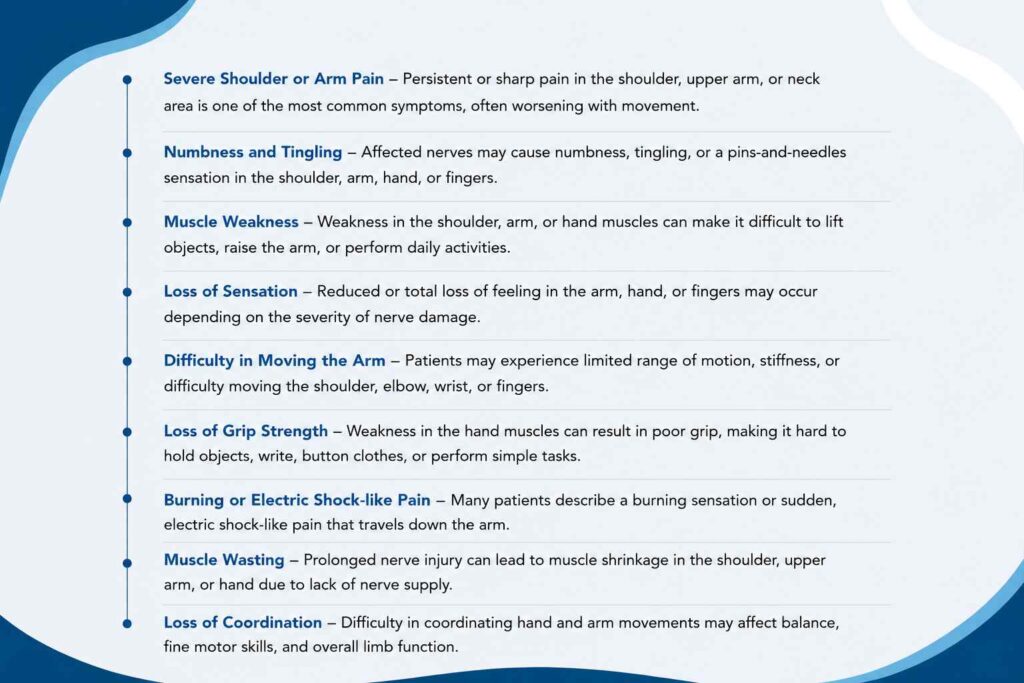
Symptoms depend on the severity of nerve damage.
Common symptoms include:
- Severe shoulder pain
- Neck pain
- Tingling sensation
- Numbness
- Muscle weakness
- Arm paralysis
- Loss of grip strength
- Burning sensation
- Reduced coordination
- Muscle wasting
Some symptoms appear immediately, while others develop gradually.
Risk Factors
Several factors increase the likelihood of experiencing brachial plexus injuries.
These include:
- Contact sports
- High-speed driving
- Motorcycle riding
- Construction work
- Heavy lifting
- Older age
- Difficult childbirth
- Previous shoulder injuries
How Doctors Diagnose Brachial Plexus Injuries
Diagnosis usually involves multiple assessments.
Physical Examination
Doctors evaluate:
- Muscle strength
- Reflexes
- Sensation
- Joint movement
Imaging Tests
Common imaging includes:
- MRI
- CT scan
- Ultrasound
- X-rays
Nerve Studies
Doctors may recommend:
- Electromyography (EMG)
- Nerve conduction studies
These tests help determine the location and severity of nerve damage.
Treatment Options
Treatment depends on the type and severity of injury.
Conservative Treatment
Mild injuries often improve with:
- Rest
- Pain medication
- Physical therapy
- Occupational therapy
- Home exercises
Recovery may take several months.
Surgical Treatment
Severe injuries may require surgery.
Procedures include:
Nerve Repair
Damaged nerves are stitched together.
Nerve Grafting
Healthy nerves replace damaged sections.
Nerve Transfer
Working nerves are redirected to restore movement.
Muscle Transfer
Muscles from another body part restore function.
Early surgery generally provides better outcomes in suitable cases.
Rehabilitation After Treatment
Recovery continues long after surgery or conservative care.
Rehabilitation may include:
- Range-of-motion exercises
- Strength training
- Occupational therapy
- Electrical stimulation
- Functional retraining
Patients should follow rehabilitation plans consistently.
Possible Complications
Untreated injuries may lead to:
- Permanent weakness
- Chronic pain
- Muscle wasting
- Joint stiffness
- Limited arm function
- Disability
Early intervention helps reduce these risks.
Can Brachial Plexus Injuries Be Prevented
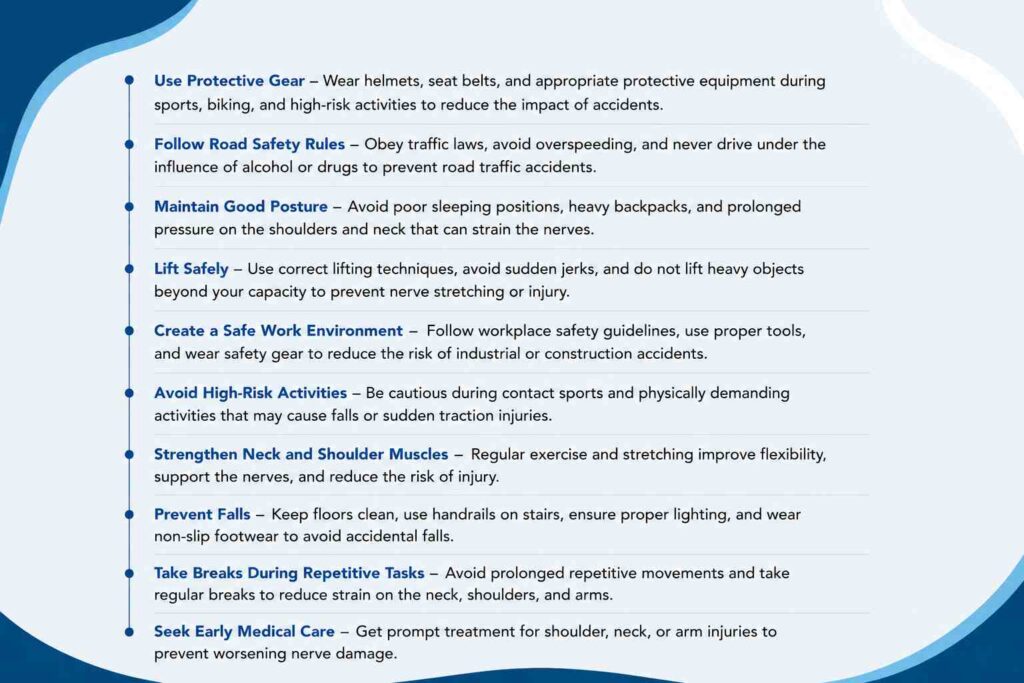
Although not every injury can be prevented, the risk can be reduced.
Helpful prevention tips include:
- Wear helmets and seat belts.
- Follow workplace safety guidelines.
- Use proper sports equipment.
- Strengthen shoulder muscles.
- Warm up before exercise.
- Lift heavy objects correctly.
- Prevent falls at home.
- Seek treatment after shoulder trauma.
When Should You Seek Medical Attention
Immediate evaluation is recommended if you experience:
- Sudden arm weakness
- Complete numbness
- Severe shoulder pain
- Loss of hand movement
- Symptoms after an accident
- Persistent burning sensation
- Difficulty lifting the arm
Prompt diagnosis often improves treatment outcomes.
Recovery Expectations
Recovery depends on:
- Type of injury
- Age
- Overall health
- Timing of treatment
- Rehabilitation participation
Mild injuries may recover within weeks or months, while severe injuries may require surgery and longer rehabilitation.
Conclusion
Understanding the Common Causes of Brachial Plexus Injuries helps people recognize symptoms early and seek timely medical care. Road accidents, sports injuries, falls, workplace trauma, childbirth complications, tumors, and nerve compression are among the leading causes. Early diagnosis, appropriate treatment, and dedicated rehabilitation play a major role in improving recovery and restoring arm function. If you or someone you know develops symptoms after shoulder or neck trauma, timely medical evaluation is essential. Individuals in Thrissur experiencing persistent weakness, numbness, or severe pain should not delay seeking professional assessment. For more detailed information about brachial plexus injuries and available treatment options, visit the Johns Hopkins Medicine guide .
Frequently Asked Questions
What are the most common causes of brachial plexus injuries?
Can a brachial plexus injury heal without surgery?
What symptoms should I watch for after a brachial plexus injury?
Are motorcycle accidents a leading cause of brachial plexus injuries?
How is a brachial plexus injury diagnosed?
How long does recovery take after a brachial plexus injury?
Is surgery always necessary for brachial plexus injuries?
Can children develop brachial plexus injuries?
Can brachial plexus injuries be prevented?
When should I seek medical attention for a brachial plexus injury?

Dr. Pradeep Kumar
Plastic & Reconstructive Surgeon – Brachial Plexus & Nerve Surgery Specialist
Dr. Pradeep Kumar is an experienced plastic and reconstructive surgeon known for his expertise in brachial plexus and peripheral nerve surgery. With extensive microsurgical experience, he focuses on restoring movement and function for patients with complex nerve injuries.
Sushrutha Institute of Plastic Surgery, Elite Mission Hospital, Thrissur