Understanding the Causes of Brachial Plexus Injury
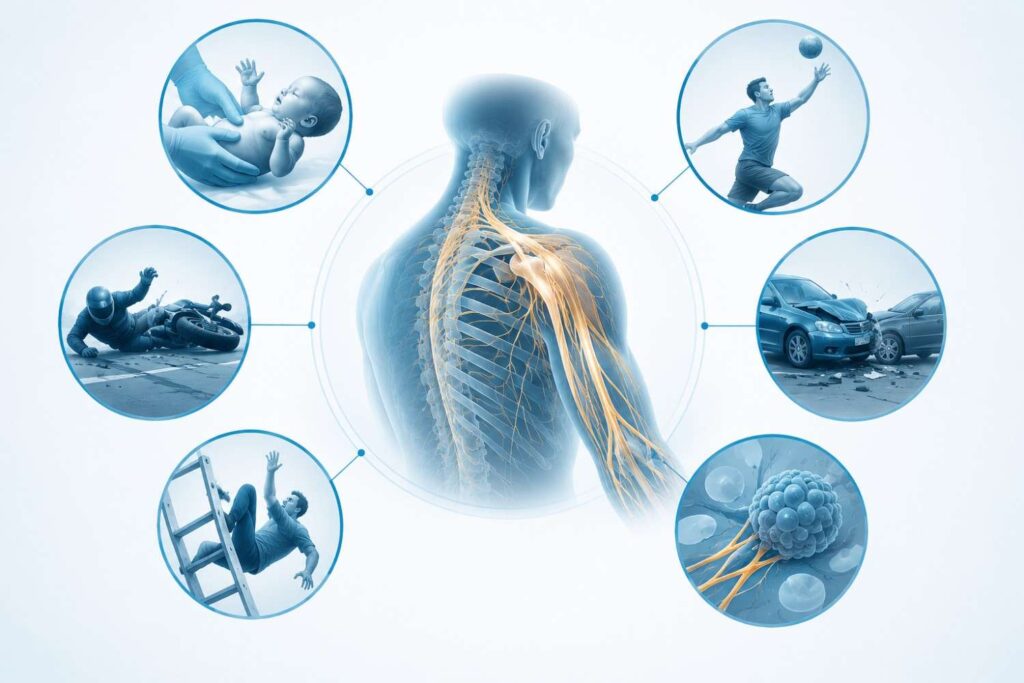
A brachial plexus injury occurs when the network of nerves that controls movement and sensation in the shoulder, arm, and hand becomes stretched, compressed, or torn. Understanding the causes of brachial plexus injury is important because early identification of the underlying cause can help guide treatment and improve recovery outcomes.
These injuries may occur at birth, during accidents, sports activities, or as a result of certain medical conditions affecting the nerves.
Table of Contents
- What Causes Brachial Plexus Injury?
- Birth-Related Injuries
- Road Traffic Accidents
- Sports Injuries
- Falls and Trauma
- Nerve Compression and Tumors
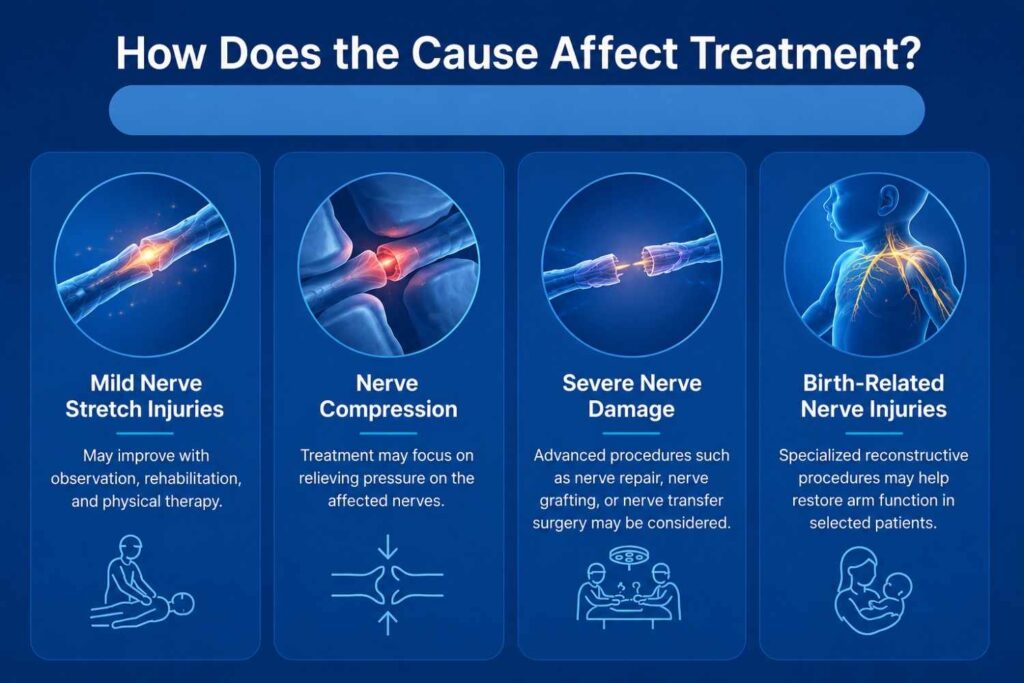
- How Does the Cause Affect Treatment?
- When to Consult a Specialist
- Conclusion
- Frequently Asked Questions
What Causes Brachial Plexus Injury?
The causes of brachial plexus injury can vary from mild nerve stretching to severe nerve tears. The extent of nerve damage often depends on the type and severity of the injury.
Common causes include:
- Birth-related injuries
- Road traffic accidents
- Sports injuries
- Falls and trauma
- Nerve compression
- Brachial plexus tumors
Birth-Related Injuries
Birth-related brachial plexus injuries can occur when excessive force is applied to the baby’s neck or shoulder during a difficult delivery.
Erb’s Palsy
Affects the upper nerves of the brachial plexus and may result in weakness of the shoulder and arm.
Shoulder Dystocia
Difficulty delivering the baby’s shoulder can increase the risk of nerve stretching during childbirth.
Birth Trauma
Complicated deliveries may occasionally lead to temporary or permanent nerve damage.
Road Traffic Accidents
Motor vehicle accidents are among the most common causes of brachial plexus injury in adults.
Motorcycle Accidents
Sudden forceful separation of the shoulder and neck can damage the brachial plexus nerves.
High-Impact Collisions
Severe trauma may stretch, compress, or tear the nerve structures.
Shoulder Trauma
Direct injury to the shoulder region can affect nerve function and arm movement.
Sports Injuries
Contact sports and high-impact activities can sometimes cause brachial plexus injuries.
Contact Sports
Football, rugby, wrestling, and similar sports may place excessive stress on the neck and shoulder.
Repetitive Trauma
Repeated stretching or impact may irritate or damage the nerve network.
Sudden Neck Movement
Forceful bending of the neck away from the shoulder can injure the brachial plexus.
Falls and Trauma
Falls can place significant force on the shoulder and neck, resulting in nerve injury.
- Fall from height
- Workplace injuries
- Heavy object impact
- Direct shoulder trauma
- Accidental injuries
Nerve Compression and Tumors
Not all brachial plexus injuries are caused by trauma. Certain medical conditions may also affect the nerve network.
Brachial Plexus Tumors
Tumors arising within or near the brachial plexus may compress surrounding nerves.
Scar Tissue Formation
Previous injuries or surgeries can sometimes lead to nerve compression.
Thoracic Outlet Syndrome
Compression of nerves near the neck and shoulder may produce symptoms similar to brachial plexus injury.
When to Consult a Specialist
Early evaluation is important if symptoms develop following trauma or childbirth.
Common warning signs include:
- Arm weakness
- Shoulder weakness
- Arm numbness
- Tingling sensations
- Reduced grip strength
- Difficulty lifting the arm
Conclusion
The causes of brachial plexus injury range from birth trauma and road traffic accidents to sports injuries, falls, nerve compression, and tumors. Identifying the underlying cause is essential for selecting the most appropriate treatment and improving recovery outcomes. Early diagnosis and specialist evaluation can help restore function and prevent long-term complications.
For additional information on Brachial Plexus injuries, visit AAOS – Brachial Plexus Injuries
Frequently Asked Questions
What is the most common cause of brachial plexus injury?
Road traffic accidents, particularly motorcycle accidents, are among the most common causes of brachial plexus injury in adults.
Can a baby develop a brachial plexus injury during birth?
Yes. Difficult deliveries may occasionally result in stretching or injury to the brachial plexus nerves.
Can sports cause brachial plexus injuries?
Yes. Contact sports and high-impact activities can increase the risk of nerve injury around the neck and shoulder.
Are brachial plexus tumors a cause of nerve injury?
Yes. Tumors near the brachial plexus may compress nerves and affect arm function.
When should I seek medical attention?
Medical evaluation is recommended if you experience persistent arm weakness, numbness, pain, or difficulty moving the arm after an injury.
Can a fall cause a brachial plexus injury?
Yes. Falls, especially those involving direct impact to the shoulder or neck, can damage the brachial plexus nerves.
Can brachial plexus injuries occur without an accident?
Yes. Nerve compression, tumors, infections, and certain medical conditions can sometimes affect the brachial plexus without trauma.
Does every brachial plexus injury require surgery?
No. Mild nerve stretch injuries may improve with observation, physical therapy, and rehabilitation, while severe injuries may require surgical treatment.
Can brachial plexus injuries lead to permanent weakness?
If severe nerve damage is left untreated, it may result in long-term weakness, loss of sensation, or reduced arm function.
Can brachial plexus injuries be prevented?
While not all injuries can be prevented, following road safety measures, using protective sports equipment, and seeking proper medical care during childbirth can help reduce the risk of brachial plexus injury.

Dr. Pradeep Kumar
Plastic & Reconstructive Surgeon – Brachial Plexus & Nerve Surgery Specialist
Dr. Pradeep Kumar is an experienced plastic and reconstructive surgeon known for his expertise in brachial plexus and peripheral nerve surgery. With extensive microsurgical experience, he focuses on restoring movement and function for patients with complex nerve injuries.
Sushrutha Institute of Plastic Surgery, Elite Mission Hospital, Thrissur