What Are the Risks of Brachial Plexus Injuries
Brachial plexus injuries can have a serious impact on arm, shoulder, and hand function, affecting daily life, work, and emotional well-being. In Thrissur, increasing awareness about nerve injuries has helped patients seek early diagnosis and treatment, but many people still do not fully understand the risks associated with brachial plexus damage. This page explains in detail the medical, physical, and long-term risks of brachial plexus injuries so patients and families can make informed decisions.
Understanding the Brachial Plexus
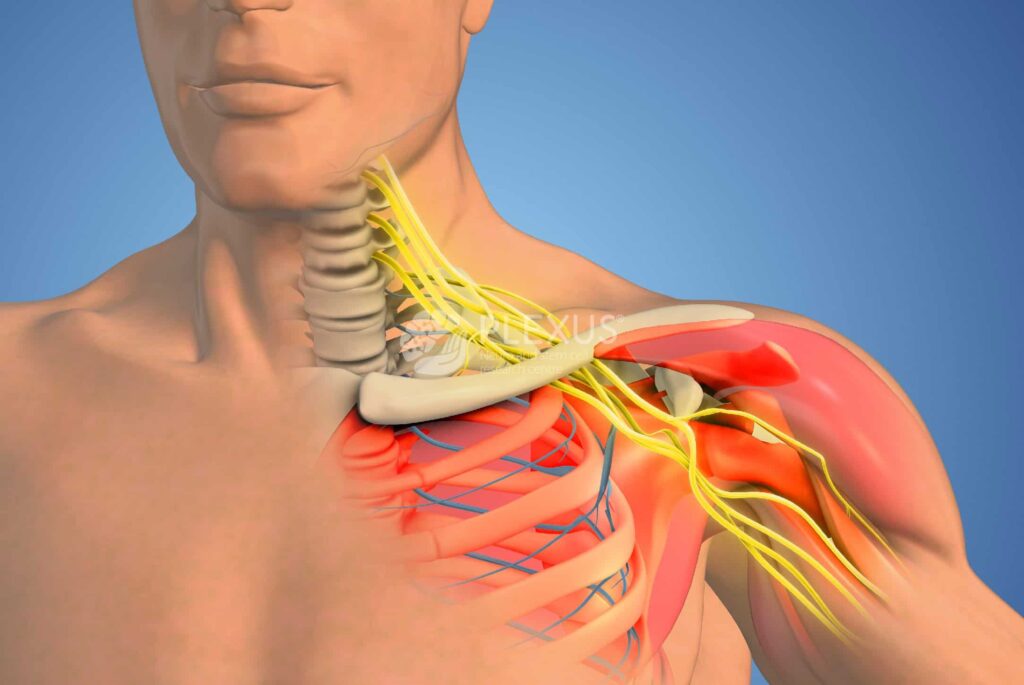
The brachial plexus is a network of nerves that starts from the neck and travels through the shoulder to the arm and hand. These nerves control:
Shoulder movement
Arm lifting and rotation
Elbow bending and straightening
Wrist and finger motion
Sensation in the arm and hand
When these nerves are stretched, compressed, or torn, communication between the brain and muscles is disrupted. This leads to weakness, numbness, paralysis, or abnormal sensations. The risks of brachial plexus injury depend on how severe the damage is and how quickly treatment begins.
Primary Medical Risks
Loss of Arm and Hand Function
One of the biggest risks is partial or complete loss of movement in the affected arm. Patients may lose the ability to:
Lift the shoulder
Bend the elbow
Grip objects
Perform fine hand movements
Severe injuries can result in a “flail limb,” where the arm hangs without active control.
Permanent Nerve Damage
If nerve fibers are completely torn or avulsed (pulled from the spinal cord), natural healing may not occur. Delayed or untreated injuries can result in irreversible nerve loss, making full recovery impossible even with surgery.
Muscle Wasting (Atrophy)
Without nerve signals, muscles slowly shrink and weaken. Over time, this leads to:
Thinning of the arm
Loss of strength
Stiff joints
Once muscles degenerate beyond a certain point, even nerve repair may not restore function.
Risks to Sensation and Feeling
Brachial plexus injuries often affect sensation. Patients may experience:
Numbness
Tingling
Burning sensations
Loss of touch and temperature awareness
This creates a risk of accidental burns, cuts, or injuries because the person may not feel pain or heat normally.
Chronic Pain Risks
Some brachial plexus injuries cause severe nerve pain that is difficult to control. This pain may feel like:
Electric shocks
Deep burning
Stabbing sensations
Chronic nerve pain can:
Disrupt sleep
Reduce concentration
Lead to depression and anxiety
This is one of the most emotionally challenging risks of brachial plexus injuries.
Psychological and Emotional Risks
Living with a paralyzed or weak arm affects confidence, independence, and quality of life. Many patients experience:
Depression
Anxiety
Social withdrawal
Loss of self-esteem
Children with brachial plexus birth injuries may also develop emotional stress as they grow older and become aware of physical limitations.
Risks in Children (Birth-Related Brachial Plexus Injuries)
Babies can develop brachial plexus injury during difficult deliveries. Risks include:
Permanent weakness of one arm
Abnormal growth of bones and joints
Shoulder deformities
Reduced coordination
Without proper treatment, these problems can worsen as the child grows.
Risks in Adults
In adults, brachial plexus injuries are often caused by:
Road traffic accidents
Falls
Sports injuries
Penetrating wounds
Risks in adults include:
Permanent disability
Loss of employment
Inability to perform daily activities
Long-term dependence on others
Risks in Adults
In adults, brachial plexus injuries are often caused by:
Road traffic accidents
Falls
Sports injuries
Penetrating wounds
Risks in adults include:
Permanent disability
Loss of employment
Inability to perform daily activities
Long-term dependence on others
Complications From Delayed Treatment
One of the most serious risks is waiting too long for medical care. Delayed diagnosis can lead to:
Irreversible nerve degeneration
Muscle fibrosis (hardening)
Poor surgical outcomes
Early nerve surgery gives the best chance for recovery, especially within the first few months after injury.
Functional Limitations
Brachial plexus injuries affect many everyday tasks, such as:
Eating
Writing
Dressing
Driving
Using mobile phones
This loss of independence can deeply affect a person’s lifestyle.
Social and Financial Risks
Long-term disability can lead to:
Loss of job
Medical expenses
Need for long-term therapy
Reduced family income
These social and financial stresses are often overlooked but are very real consequences.
Surgical Risks
In severe cases, surgery is required. Like any surgery, nerve procedures carry risks such as:
Infection
Bleeding
Scarring
Partial or limited recovery
However, these risks are usually far lower than the risk of leaving a severe nerve injury untreated
Why Early Diagnosis Is Critical
The earlier a brachial plexus injury is evaluated:
The better the chance of nerve regeneration
The better the functional outcome
The lower the risk of permanent disability
Delays allow nerves and muscles to deteriorate beyond repair.
Long-Term Outlook
Not all brachial plexus injuries are the same. Some mild cases recover naturally, but severe injuries require expert care. The long-term risks depend on:
Type of nerve injury
Speed of treatment
Quality of rehabilitation
With proper care, many patients can regain useful arm function and improve their quality of life.
Conclusion
The risks of brachial plexus injuries go far beyond simple arm weakness. They include permanent disability, chronic pain, emotional distress, and major lifestyle changes. Understanding these risks helps patients seek timely care and avoid irreversible damage. With increasing medical awareness in Thrissur, patients now have better opportunities for early diagnosis, nerve repair, and functional recovery, reducing the long-term burden of this complex condition.
Lorem ipsum dolor sit amet, consectetur adipiscing elit. Ut elit tellus, luctus nec ullamcorper mattis, pulvinar dapibus leo.
Frequently Asked Questions
It is a condition where the network of nerves that controls the shoulder, arm, and hand becomes damaged, leading to weakness, numbness, or paralysis of the upper limb.
The main risks include loss of arm movement, reduced sensation, chronic pain, muscle wasting, and in severe cases, permanent disability.
Mild nerve stretching injuries may recover naturally, but moderate to severe nerve damage often requires medical treatment or surgery for proper recovery.
Without treatment, nerve damage can become permanent, muscles may shrink, joints can become stiff, and arm function may be permanently lost.
Yes, many patients experience nerve pain such as burning, tingling, or electric-shock-like sensations, which can become chronic if not managed.
Yes, babies can develop this condition during difficult childbirth, which may affect arm growth and movement if not treated early.
Recovery depends on the severity of the injury and how quickly treatment begins. Early diagnosis greatly improves the chance of regaining function.
They can make simple activities like eating, dressing, writing, and lifting objects difficult, affecting independence and quality of life.
Long-term damage can lead to muscle wasting, joint stiffness, abnormal arm posture, and emotional distress due to reduced function.
Anyone with arm weakness, numbness, or loss of movement after an injury or at birth should seek medical evaluation as early treatment gives the best results.
Table of Content
The brachial plexus is a network of nerves that controls movement and sensation in the shoulder, arm, and hand. Learn more
A good candidate for brachial plexus treatment is someone with ongoing arm weakness or paralysis from nerve injury that has not improved naturally. Learn more
The exact cost can only be determined after a detailed clinical evaluation and imaging studies, as each brachial plexus injury is unique. Learn more
Brachial plexus injuries can arise from a wide range of causes. Learn more
Common symptoms of brachial plexus injuries include weakness or paralysis of the arm, loss of sensation, nerve pain, and difficulty moving the shoulder, elbow, or hand. Learn more
Brachial plexus injuries vary in type and severity, ranging from mild nerve stretching to complete paralysis of the arm depending on which nerves are affected. Learn more
During a brachial plexus consultation, the doctor evaluates symptoms, reviews imaging and nerve studies, examines arm function, and discusses possible treatment options. Learn more
You should ask about the type of nerve injury, surgical options, expected recovery time, risks, and realistic functional outcomes. Learn more
The procedure usually involves preoperative evaluation, nerve exploration, repair or grafting, postoperative care, and structured rehabilitation. Learn more
Results may include gradual improvement in muscle strength, sensation, and arm function, with recovery progressing over months. Learn more
Before-and-after images typically demonstrate changes in arm position, muscle bulk, and functional improvement following treatment. Learn more