10 Essential Facts: Brachial Plexus Surgery in Kerala, Now
Brachial Plexus Surgery in Kerala is an important treatment option for people with significant nerve damage affecting the shoulder, arm, forearm, or hand. The brachial plexus is a network of nerves that carries signals from the spinal cord to the upper limb. When these nerves are stretched, compressed, torn, or severely damaged, normal movement and sensation can be affected.
Understanding when surgery may be required, what procedures are available, and how recovery works can help patients make informed decisions. Brachial plexus injuries may occur after accidents, falls, sports injuries, birth-related complications, or other traumatic events. Early assessment is often important because the timing and severity of nerve damage can influence treatment planning.
This guide explains the major aspects of Brachial Plexus Surgery in Kerala in simple language, including causes, symptoms, diagnosis, surgical techniques, rehabilitation, benefits, risks, and recovery expectations.
What Is a Brachial Plexus Injury
The brachial plexus is a group of interconnected nerves located between the neck and shoulder. These nerves control many movements and sensations in the upper limb.
An injury can affect one nerve, several nerves, or a larger part of the nerve network. The impact depends on the location and severity of the damage.
Common problems may include:
- Weakness in the shoulder or arm
- Reduced hand movement
- Numbness or altered sensation
- Difficulty bending or straightening the elbow
- Loss of grip strength
- Muscle wasting
- Persistent nerve pain
- Partial or complete loss of movement
Mild nerve injuries may improve without surgery. More severe injuries, particularly those involving nerve rupture or avulsion, may require reconstructive treatment.
When Is Brachial Plexus Surgery Needed
Not every brachial plexus injury requires an operation. Doctors generally consider several factors before recommending surgery.
Severe Nerve Damage
If a nerve has been completely torn or separated, spontaneous recovery may be unlikely. Surgical reconstruction may be considered to reconnect or reroute nerve pathways.
Lack of Natural Recovery
Some nerve injuries can recover gradually over several months. If there is inadequate improvement or testing suggests that meaningful recovery is unlikely, surgery may become an option.
Loss of Important Movement
Surgery may be considered when nerve damage causes major functional problems, such as an inability to lift the arm, bend the elbow, extend the wrist, or use the hand effectively.
Traumatic Injuries
High-energy accidents can cause complex nerve injuries involving multiple parts of the brachial plexus. These cases may need detailed assessment and, in selected situations, reconstruction.
Brachial Plexus Surgery in Kerala: Common Types
The appropriate procedure depends on the type, location, and severity of nerve damage. Several surgical techniques may be used during Brachial Plexus Surgery in Kerala.
Nerve Grafting
Nerve grafting involves using a healthy nerve segment to bridge a damaged portion of a nerve. The graft creates a pathway through which nerve fibres can gradually regenerate toward the target muscles and sensory areas.
This technique may be useful when the damaged ends of a nerve can be identified but cannot be directly joined without excessive tension.
Nerve Transfer
A nerve transfer uses a functioning nerve or nerve branch and connects it to a damaged nerve closer to the muscles that need restoration.
The purpose is to provide a new source of nerve signals. Nerve transfers can be particularly useful when the original nerve pathway is too damaged or the distance for nerve regeneration is too long.
Neurolysis
Neurolysis involves freeing a nerve from surrounding scar tissue or other structures that may be restricting its function.
It may be considered when the nerve remains continuous but is affected by compression or scar formation.
Muscle or Tendon Procedures
In some complex cases, nerve reconstruction alone may not restore sufficient function. Additional reconstructive procedures involving muscles or tendons may therefore be considered as part of a broader treatment plan.
Causes of Brachial Plexus Injuries
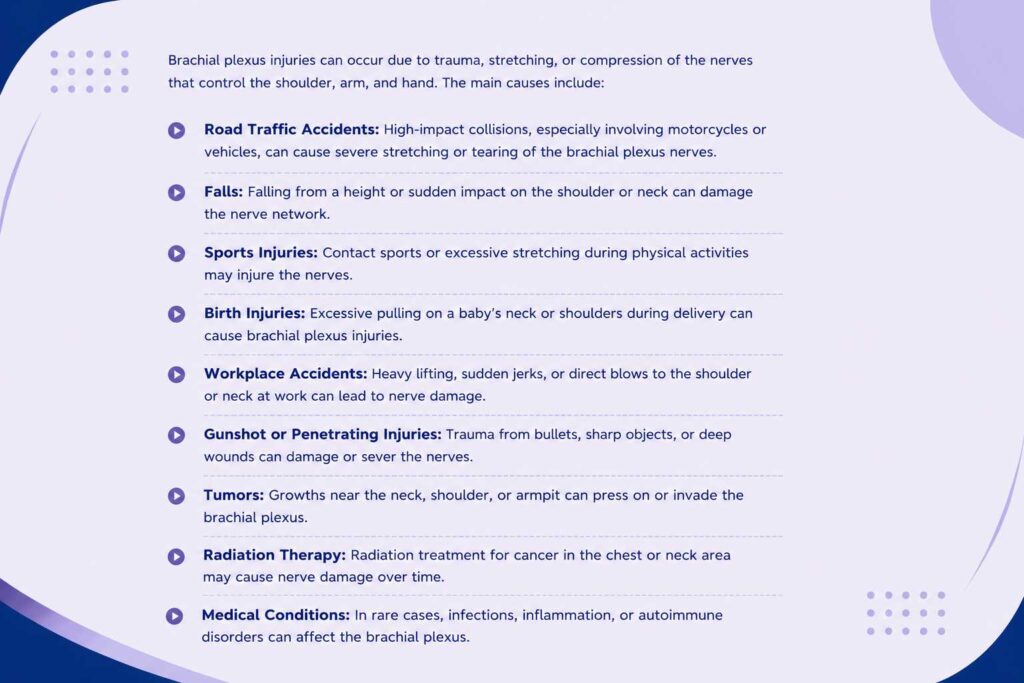
Brachial plexus injuries can develop from different types of trauma or physical stress.
Common causes include:
- Motorcycle and road traffic accidents
- Falls from height
- Sports-related trauma
- Shoulder injuries
- Direct impact to the neck or shoulder
- Penetrating injuries
- Severe stretching of the arm
- Birth-related nerve injuries
- Tumours or other conditions affecting the nerve network
- Radiation-related nerve damage in selected cases
Traumatic injuries are particularly important because they can cause stretching, compression, rupture, or complete separation of nerves.
Types of Brachial Plexus Injuries
Understanding the type of nerve injury helps determine the possible treatment approach.
Neuropraxia
Neuropraxia is generally considered a less severe nerve injury. The nerve remains structurally intact but its normal function is temporarily interrupted.
Many cases improve with observation and rehabilitation.
Axonotmesis
In this type of injury, the nerve fibres are damaged while some of the surrounding structures remain intact. Recovery can occur, although it may take considerable time.
Neurotmesis
Neurotmesis is a severe injury in which the nerve is disrupted. Surgical treatment may be required depending on the location and extent of damage.
Nerve Root Avulsion
A nerve root avulsion occurs when the nerve root is pulled away from the spinal cord. This represents a particularly serious form of brachial plexus injury and may require complex reconstructive strategies.
Symptoms That Should Not Be Ignored
Symptoms can vary significantly between patients. Some people experience mild weakness, while others may have almost complete loss of arm or hand function.
Important symptoms include:
- Sudden weakness following an accident
- Inability to move part of the arm
- Persistent numbness
- Burning or electric-shock-like pain
- Reduced sensation
- Loss of hand grip
- Difficulty lifting the arm
- Muscle weakness or wasting
- Problems with coordinated hand movement
Persistent or severe symptoms following trauma should be evaluated promptly.
How Is a Brachial Plexus Injury Diagnosed
A detailed diagnosis is essential before planning Brachial Plexus Surgery in Kerala.
Physical Examination
The examination may assess muscle strength, sensation, reflexes, joint movement, and functional ability. Different movements can help identify which nerves or nerve groups may be affected.
Imaging Tests
Imaging may provide information about the surrounding anatomy and the condition of the nerve structures. Depending on the case, doctors may consider MRI, ultrasound, CT imaging, or other investigations.
Electrodiagnostic Testing
Electromyography and nerve conduction studies can provide information about nerve and muscle function. These tests may help determine the severity and location of nerve damage.
Medical History
The nature of the accident, time since injury, changes in symptoms, previous treatment, and functional limitations can all contribute to treatment planning.
How Brachial Plexus Surgery Works
The exact surgical approach depends on the injury pattern.
During reconstructive surgery, damaged nerves may be repaired, grafted, or connected to functioning donor nerves. The objective is to establish a pathway for nerve signals to reach muscles and sensory structures.
Nerve regeneration is a slow biological process. Even after technically successful surgery, functional recovery does not occur immediately. Nerve fibres need time to grow toward their target muscles.
The recovery process therefore involves both surgery and structured rehabilitation.
Benefits of Brachial Plexus Surgery
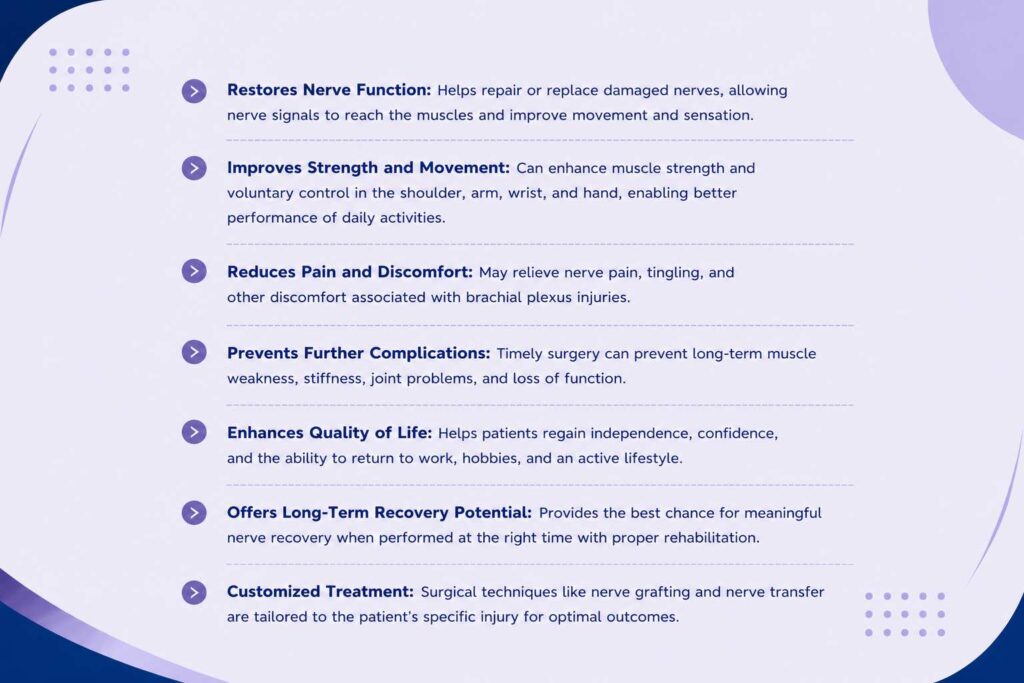
The potential benefits of Brachial Plexus Surgery in Kerala depend on the injury and the patient’s individual circumstances.
Potential goals include:
- Improving arm movement
- Restoring selected hand functions
- Improving elbow control
- Reducing functional limitations
- Supporting better muscle activation
- Improving independence in daily activities
- Recovering useful sensation in selected cases
- Preventing long-term deterioration of certain functions
Surgery does not guarantee complete recovery. The expected outcome depends on factors such as injury severity, timing, age, distance between the repair and target muscle, and rehabilitation.
Recovery After Brachial Plexus Surgery
Recovery is usually gradual and may take months or longer.
Early Recovery
Immediately after surgery, the affected limb may need protection while the repaired nerves and tissues begin to heal.
Patients may receive instructions regarding positioning, wound care, movement restrictions, and follow-up appointments.
Nerve Regeneration
Nerves regenerate slowly. The time required for useful function to return depends on the distance between the surgical site and the target muscle or sensory area.
Rehabilitation
Physiotherapy and occupational therapy can play an important role in recovery. Rehabilitation may focus on:
- Maintaining joint flexibility
- Preventing stiffness
- Preserving muscle condition
- Training emerging movement
- Improving coordination
- Supporting functional hand use
- Adapting daily activities during recovery
Risks and Limitations
Like other major surgical procedures, Brachial Plexus Surgery has potential risks. These should be discussed carefully before treatment.
Possible concerns include:
- Infection
- Bleeding
- Scar formation
- Persistent pain
- Limited nerve recovery
- Weakness that does not fully improve
- Changes in sensation
- Need for additional procedures
- Long recovery periods
The outcome can also be affected by the severity and age of the nerve injury. A realistic treatment plan should therefore include both potential benefits and limitations.
Factors That Influence Surgical Outcomes
Several factors can affect recovery following Brachial Plexus Surgery in Kerala.
Time Since Injury
Earlier evaluation can help determine whether an injury may recover naturally or requires reconstruction.
Severity of Damage
A partial nerve injury generally has different recovery possibilities from a complete rupture or nerve root avulsion.
Location of the Injury
The distance between the repaired nerve and the muscles it supplies can influence how long regeneration takes.
Overall Health
General health, nutrition, activity levels, and the ability to participate in rehabilitation can influence recovery.
Rehabilitation
Consistent rehabilitation can help patients make the most of returning nerve function and maintain flexibility while recovery occurs.
Tips for Better Recovery
Patients undergoing treatment should follow their surgical and rehabilitation team’s instructions carefully.
Helpful principles include:
- Attend scheduled follow-up appointments.
- Follow activity restrictions during early healing.
- Complete recommended physiotherapy.
- Protect areas with reduced sensation from burns and injuries.
- Perform exercises only as instructed.
- Maintain healthy nutrition and hydration.
- Report unusual swelling, wound problems, or increasing pain.
- Be patient because nerve recovery is gradual.
- Avoid comparing your recovery timeline with another patient’s experience.
What Should Patients Ask Before Surgery
Before proceeding with Brachial Plexus Surgery, patients may want to discuss several important questions with their treatment team.
Useful questions include:
- What type of nerve injury do I have?
- Is surgery necessary?
- Could the nerve recover without surgery?
- Which surgical technique is being considered?
- What movement is the procedure intended to restore?
- How long could recovery take?
- What rehabilitation will I need?
- What are the possible risks?
- Could another procedure be needed?
- What level of improvement is realistically expected?
Clear communication can help patients understand the treatment plan and set realistic expectations.
Brachial Plexus Surgery in Kerala: Preparing for Treatment
Preparation begins with accurate diagnosis and an understanding of the treatment objectives. Patients should provide complete information about previous injuries, operations, medications, imaging studies, and rehabilitation.
It can also be helpful to arrange practical support during the early recovery period. Depending on the extent of surgery, everyday tasks may temporarily become more difficult.
Before treatment, patients should understand:
- The planned surgical technique
- Expected hospital stay
- Initial activity restrictions
- Rehabilitation requirements
- Follow-up schedule
- Expected recovery milestones
- Warning signs that require medical attention
Good preparation can make the recovery process more manageable.
Conclusion
Brachial Plexus Surgery can be an important option for patients with severe nerve injuries that affect arm and hand function. Understanding the injury, obtaining appropriate diagnostic testing, selecting a suitable surgical technique, and following a structured rehabilitation program are all important parts of treatment.
Brachial Plexus Surgery in Kerala should be considered as part of an individualized treatment plan rather than a one-size-fits-all procedure. Patients with persistent weakness, numbness, severe nerve pain, or loss of movement after an injury should seek timely medical assessment to understand their condition and available treatment options. For reliable information about brachial plexus injuries and treatment options, patients can learn more about brachial plexus injuries from the National Institute of Neurological Disorders and Stroke.
Frequently Asked Questions
What is Brachial Plexus Surgery?
Is surgery necessary for every brachial plexus injury?
How long does recovery take after Brachial Plexus Surgery?
Can Brachial Plexus Surgery restore arm movement?
What is a nerve transfer?
What is nerve grafting?
Is physiotherapy needed after Brachial Plexus Surgery?
Can a brachial plexus injury cause permanent weakness?
Can children have brachial plexus injuries?
Is nerve recovery immediate after surgery?
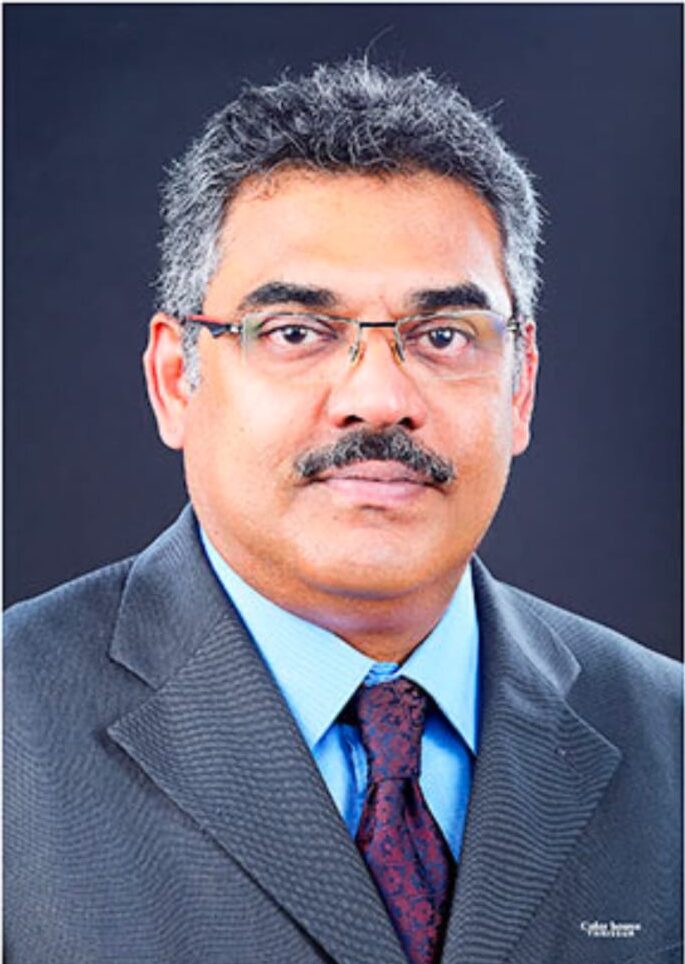
Dr. Pradeep Kumar
Plastic & Reconstructive Surgeon – Brachial Plexus & Nerve Surgery Specialist
Dr. Pradeep Kumar is an experienced plastic and reconstructive surgeon known for his expertise in brachial plexus and peripheral nerve surgery. With extensive microsurgical experience, he focuses on restoring movement and function for patients with complex nerve injuries.
Sushrutha Institute of Plastic Surgery, Elite Mission Hospital, Thrissur