5 Quick: How Long Does Brachial Plexus Surgery Recovery Take
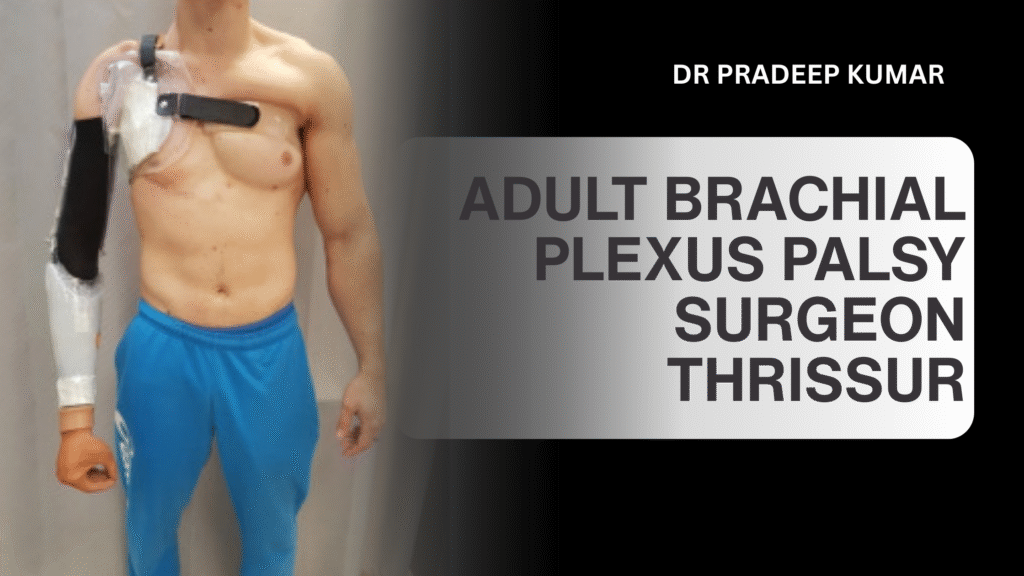
Brachial plexus surgery recovery can take several months because damaged nerves heal much more slowly than muscles, skin, or bones. If you are considering treatment at a specialist center in Thrissur, understanding the expected recovery timeline can help you prepare physically and emotionally. How Long Does Brachial Plexus Surgery Recovery Take depends on the type and severity of nerve damage, the procedure performed, the patient’s age and overall health, and how consistently rehabilitation is followed.
Unlike many surgical procedures where recovery may be measured mainly in weeks, nerve reconstruction often requires a longer period of observation and rehabilitation. Some patients notice early improvements within a few months, while meaningful nerve recovery can continue for a year or longer.
How Long Does Brachial Plexus Surgery Recovery Take
There is no single recovery timeline that applies to every patient. How Long Does Brachial Plexus Surgery Recovery Take can vary significantly depending on whether surgery involves nerve repair, nerve grafting, nerve transfer, or another reconstructive technique.
A general recovery pattern may look like this:
- First few weeks: Focus is mainly on wound healing, pain control, protection of the surgical area, and following movement restrictions.
- One to three months: Gentle rehabilitation may gradually increase depending on the procedure and the surgeon’s recommendations.
- Three to six months: Early nerve regeneration and improvements in muscle activation may become more noticeable in some patients.
- Six to twelve months: Strength, coordination, and functional movement may continue improving with consistent therapy.
- One year and beyond: Nerve recovery can continue, particularly when substantial nerve regeneration is required.
These are general timeframes rather than guarantees. Nerves regenerate slowly, and the extent of recovery depends heavily on the original injury and the condition of the nerves before surgery.
What Is the Brachial Plexus
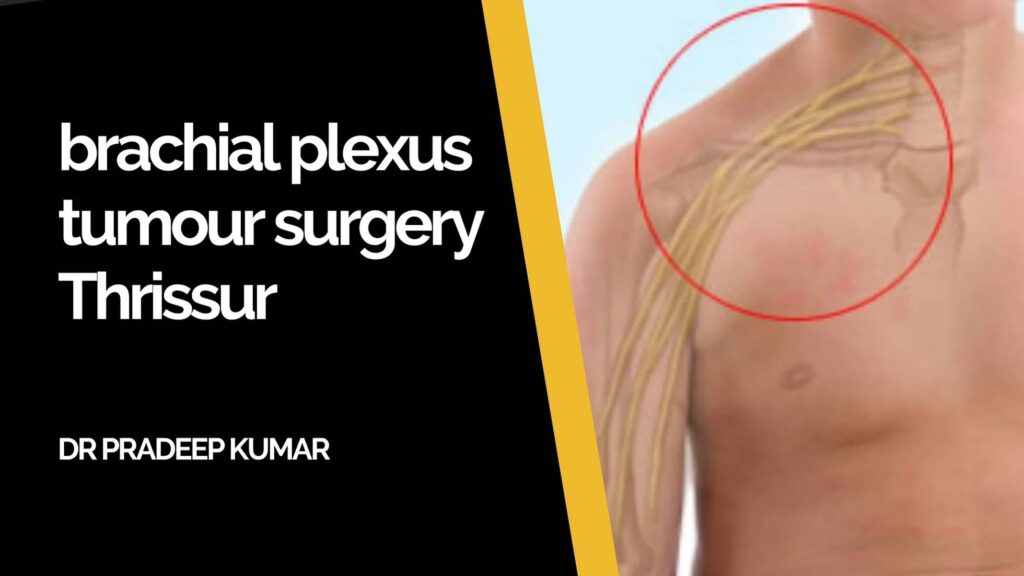
The brachial plexus is a network of nerves that begins near the neck and travels through the shoulder region into the arm. These nerves carry signals between the spinal cord and the shoulder, arm, forearm, and hand.
An injury to this network can interfere with:
- Shoulder movement
- Elbow bending and straightening
- Wrist movement
- Hand and finger function
- Muscle strength
- Sensation
- Coordination
Because several nerves can be affected at the same time, treatment and rehabilitation may be complex.
Causes of Brachial Plexus Injury
Understanding the original cause can help explain why How Long Does Brachial Plexus Surgery Recovery Take differs from one person to another.
Traumatic Injuries
Traumatic brachial plexus injuries are among the most common reasons for reconstructive surgery. They may occur because of:
- Road traffic accidents
- Motorcycle accidents
- Falls
- Sports injuries
- Shoulder trauma
- Penetrating injuries
- Severe stretching of the neck and shoulder
High-energy trauma can damage nerves at different levels, sometimes causing more than one type of nerve injury.
Birth-Related Injuries
Some brachial plexus injuries occur during childbirth. The condition may affect infants when excessive stretching occurs around the neck and shoulder during delivery.
The treatment approach for children can differ from that used for adults, and the recovery timeline depends on the nerves involved and the severity of the injury.
Other Causes
Less commonly, brachial plexus problems can be associated with tumors, inflammation, radiation-related injury, or other medical conditions affecting the nerve network.
Types of Brachial Plexus Nerve Damage
The severity and location of nerve damage are important factors in determining How Long Does Brachial Plexus Surgery Recovery Take.
Neuropraxia
Neuropraxia is generally considered a milder form of nerve injury. The nerve remains structurally intact but does not function normally for a period of time.
Some cases recover without surgery.
Axonotmesis
In axonotmesis, the internal nerve fibers are damaged while some of the surrounding structures remain intact. Recovery may occur gradually as the nerve regenerates.
Neurotmesis
Neurotmesis is a more severe injury in which the nerve is significantly disrupted. Surgical reconstruction may be required to reconnect or redirect nerve signals.
Nerve Root Avulsion
A nerve root avulsion occurs when a nerve root is pulled away from the spinal cord. This is a serious injury and may require specialized reconstructive strategies.
Symptoms That May Lead to Surgery
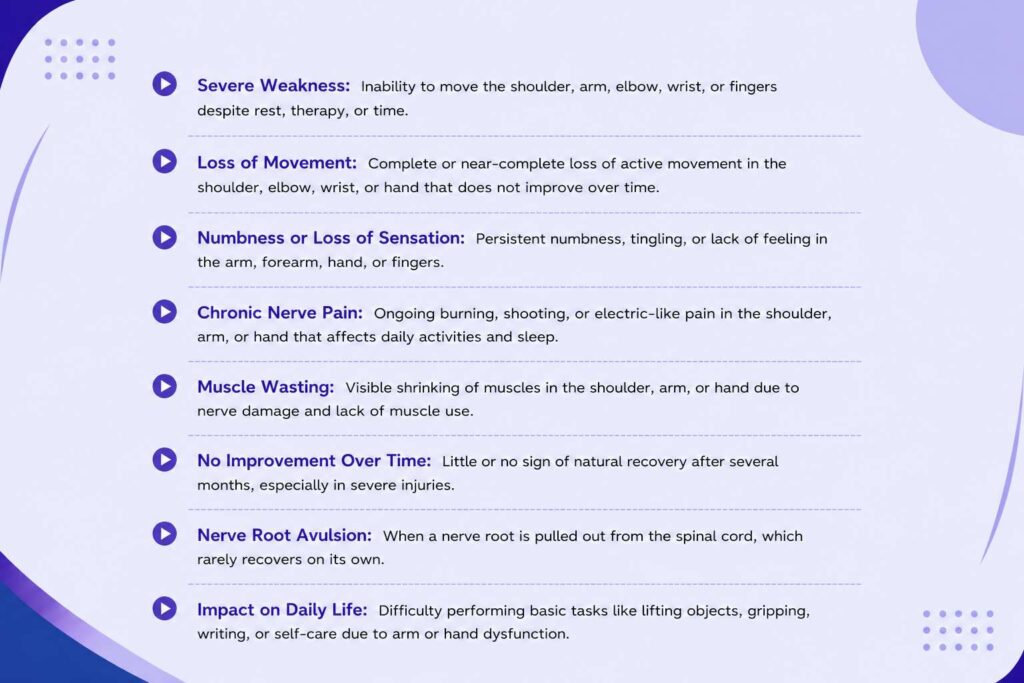
Symptoms vary depending on the nerves affected. Common signs include:
- Weakness in the shoulder or arm
- Loss of movement
- Numbness or reduced sensation
- Persistent nerve pain
- Tingling or abnormal sensations
- Difficulty bending the elbow
- Poor grip strength
- Muscle wasting
- Loss of hand function
Severe symptoms, especially following major trauma, require prompt assessment. Early evaluation can help determine whether observation, physiotherapy, or surgical treatment is appropriate.
When Is Brachial Plexus Surgery Recommended
Surgery is not necessary for every brachial plexus injury. The decision depends on the injury pattern, severity, clinical examination, imaging, electrodiagnostic studies, and evidence of spontaneous recovery.
Surgery may be considered when:
- There is severe or complete nerve disruption.
- A nerve root has been avulsed.
- There is little evidence of natural recovery.
- Muscle function remains significantly impaired.
- Severe nerve injury has occurred following trauma.
- Diagnostic testing suggests that reconstruction may improve function.
The timing of surgery is important because muscles can lose their ability to respond effectively when they remain disconnected from nerve signals for too long.
Types of Brachial Plexus Surgery
The surgical technique can have a major influence on How Long Does Brachial Plexus Surgery Recovery Take.
Nerve Repair
Nerve repair reconnects the ends of a damaged nerve when they can be brought together without excessive tension.
Nerve Grafting
When a damaged nerve has a gap between its ends, a nerve graft may be used to bridge the space and provide a pathway for nerve regeneration.
Nerve Transfer
A nerve transfer uses a functioning nearby nerve or nerve branch to provide a new source of signals to a damaged nerve or muscle.
Other Reconstruction Techniques
Complex injuries may require a combination of procedures. The objective is generally to restore useful movement and function rather than simply repair the nerve anatomically.
Early Recovery After Surgery
The first stage of How Long Does Brachial Plexus Surgery Recovery Take involves protecting the surgical reconstruction and allowing the tissues to heal.
During the early postoperative period, patients may experience:
- Swelling
- Bruising
- Temporary discomfort
- Reduced movement
- Sensitivity around the surgical area
- Fatigue
Movement restrictions may be necessary depending on the operation. Patients should follow their postoperative instructions carefully and avoid activities that could place unnecessary stress on the repair.
The Role of Physiotherapy
Physiotherapy is one of the most important parts of brachial plexus rehabilitation. Surgery creates an opportunity for nerve recovery, but rehabilitation helps maintain joint flexibility, muscle condition, and functional movement.
A rehabilitation program may include:
- Passive range-of-motion exercises
- Active-assisted exercises
- Strengthening exercises at the appropriate stage
- Sensory retraining
- Motor re-education
- Coordination training
- Functional exercises
- Home exercise programs
The exact exercises should be individualized. Starting or increasing exercises too aggressively can be counterproductive, so rehabilitation should progress according to professional guidance.
How Long Does Brachial Plexus Surgery Recovery Take With Physiotherapy
Patients often ask whether physiotherapy can speed up How Long Does Brachial Plexus Surgery Recovery Take. Physiotherapy cannot force a nerve to regenerate faster than its biological capacity, but it can play an important role in maintaining the condition of the affected limb and maximizing functional recovery.
Consistent rehabilitation can help:
- Maintain joint mobility
- Reduce stiffness
- Prevent contractures
- Preserve muscle condition
- Improve coordination
- Encourage appropriate motor patterns
- Support the return of functional movement
Recovery is usually a gradual process rather than a sudden change.
Factors That Affect Recovery Time
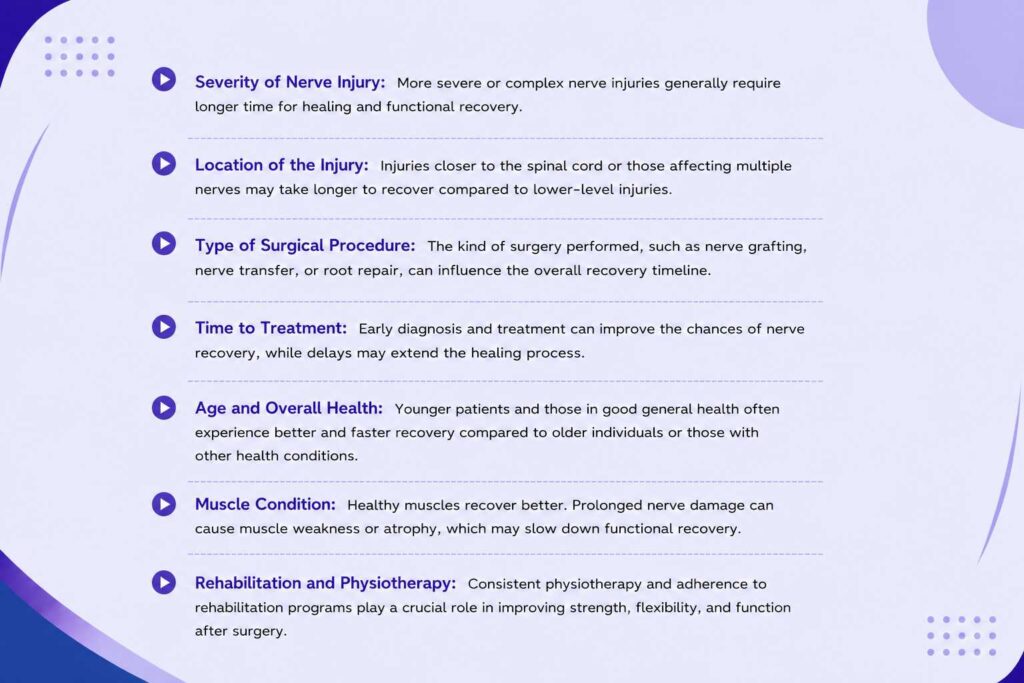
Several factors influence How Long Does Brachial Plexus Surgery Recovery Take.
Severity of the Injury
More extensive nerve damage generally requires a longer recovery period.
Location of the Injury
The distance between the repaired nerve and the target muscle matters because regenerating nerve fibers must travel along the nerve pathway before reaching the muscle.
Type of Surgery
Nerve grafting, nerve transfers, nerve repairs, and combined reconstruction procedures can have different recovery patterns.
Age
Age may influence the body’s ability to recover and the potential for functional nerve regeneration.
Overall Health
Nutrition, physical health, smoking status, diabetes, and other health factors may influence tissue healing and rehabilitation.
Timing of Treatment
For certain severe nerve injuries, timely evaluation and appropriate treatment are important because prolonged denervation can reduce the potential for functional muscle recovery.
Rehabilitation
Regular, appropriately supervised physiotherapy can make a substantial difference in functional outcomes.
What Can You Expect at Different Recovery Stages
First Month
The priority is protecting the surgical site and allowing initial healing. Pain and swelling usually receive attention during this period. Movement may be limited.
One to Three Months
Rehabilitation typically becomes more structured. Depending on the surgery, patients may begin working more actively on maintaining or improving range of motion.
Three to Six Months
Some patients may begin noticing changes in muscle activation or movement during this period. However, the absence of obvious improvement does not necessarily mean that recovery has stopped.
Six to Twelve Months
Functional improvements may become more noticeable as nerve signals gradually reach target muscles. Continued physiotherapy is important.
Beyond Twelve Months
Some patients continue to experience gradual improvements beyond one year. The final outcome can depend on the severity of the injury and the muscles involved.
Signs of Progress During Recovery
Knowing what improvement may look like can make the rehabilitation process easier to understand.
Possible signs include:
- Improved muscle activation
- Better shoulder control
- Increased elbow movement
- Improved wrist or hand function
- Greater sensation
- Better coordination
- Increased strength
- Improved ability to perform daily activities
Progress may be subtle at first. Small changes in muscle activation or control can be meaningful during nerve recovery.
Tips for a Better Recovery
Patients can support their rehabilitation by following a structured recovery plan.
Follow Postoperative Instructions
Protect the surgical area and follow restrictions regarding movement, lifting, driving, and other activities.
Attend Physiotherapy Regularly
Consistent therapy can help maintain mobility and develop functional movement as nerve recovery progresses.
Follow the Home Exercise Program
Exercises recommended by the rehabilitation team should be performed consistently and safely.
Protect the Affected Limb
Reduced sensation can make it easier to overlook burns, cuts, pressure injuries, or other problems. Take extra care when using the affected arm.
Maintain Good Nutrition
Adequate protein, vitamins, minerals, hydration, and overall balanced nutrition support general recovery.
Avoid Smoking
Smoking can interfere with circulation and tissue healing. Avoiding tobacco can support postoperative recovery.
Be Patient
One of the most important aspects of How Long Does Brachial Plexus Surgery Recovery Take is understanding that nerve healing is slow. Comparing your recovery with someone else’s may create unnecessary concern.
When Should You Contact Your Medical Team
Certain symptoms after surgery should be assessed promptly. Contact your medical team if you experience:
- Increasing rather than improving pain
- Significant swelling
- Fever
- Wound drainage
- Redness around the surgical site
- Sudden loss of function
- New or worsening symptoms
- Concerns about the surgical wound
Follow the specific postoperative instructions provided to you because recommendations can vary depending on the procedure.
How Long Does Brachial Plexus Surgery Recovery Take for Full Function
Full functional recovery is difficult to predict. Some people regain substantial movement, while others may experience partial recovery.
The goal of treatment is often to achieve useful function rather than guarantee completely normal nerve performance.
For example, restoring elbow flexion may be prioritized because it can have a significant impact on the ability to bring the hand toward the face. In other cases, shoulder stability, wrist control, or hand function may receive greater attention.
The expected outcome should therefore be discussed in relation to the specific nerves and muscles affected.
Can Nerve Recovery Continue After One Year
Yes. Nerve regeneration and functional improvement can continue for an extended period. The rate of progress may slow over time, but some patients continue to develop better strength, coordination, and movement after the first year.
However, long-term recovery varies significantly. Regular clinical assessments can help determine whether additional treatment or rehabilitation may be useful.
Conclusion
Understanding How Long Does Brachial Plexus Surgery Recovery Take can help patients set realistic expectations and prepare for a long-term rehabilitation journey. Recovery is influenced by the severity of nerve damage, surgical technique, treatment timing, nerve regeneration, overall health, and commitment to physiotherapy.
There is rarely a single moment when recovery is considered complete. Instead, progress often occurs gradually through small improvements in movement, strength, sensation, and daily function. Patients receiving treatment in Thrissur should follow their individualized postoperative and rehabilitation plan closely and attend recommended follow-up appointments. With appropriate treatment and consistent rehabilitation, meaningful functional improvement may be possible even when recovery takes many months. For reliable information on brachial plexus surgery and long-term recovery, see Johns Hopkins Medicine – Brachial Plexus Surgery, a high-authority medical source.
Frequently Asked Questions
How Long Does Brachial Plexus Surgery Recovery Take?
Is recovery from brachial plexus surgery painful?
When can I return to normal activities after brachial plexus surgery?
When does nerve regeneration begin after brachial plexus surgery?
Is physiotherapy necessary after brachial plexus surgery?
Can brachial plexus surgery restore normal arm function?
Why does brachial plexus surgery recovery take so long?
Can recovery continue after 12 months?
Does age affect brachial plexus surgery recovery?
Can physiotherapy make brachial plexus nerves regenerate faster?
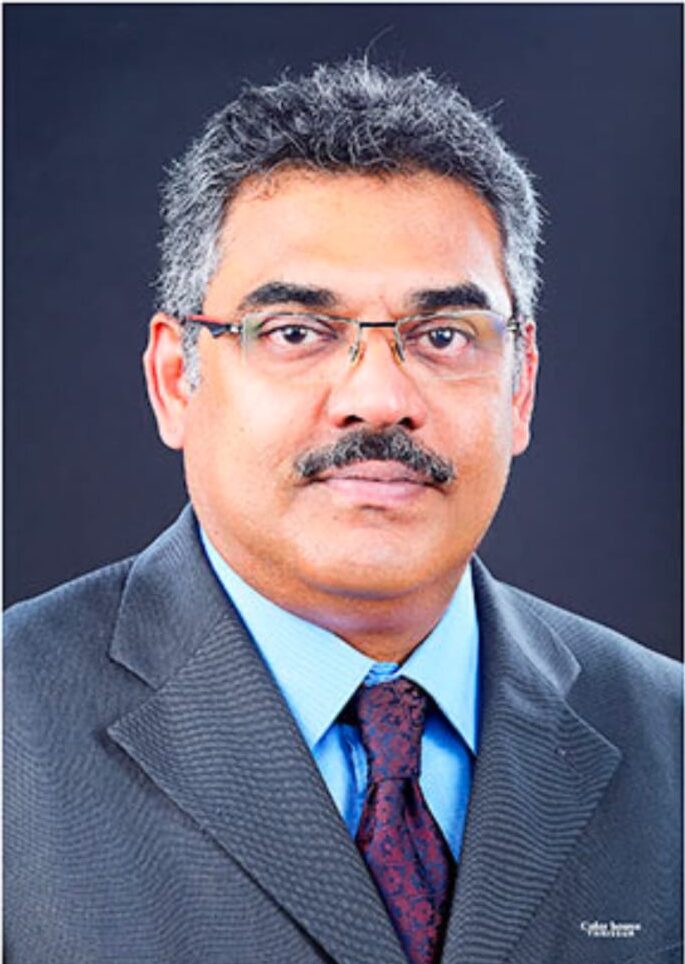
Dr. Pradeep Kumar
Plastic & Reconstructive Surgeon – Brachial Plexus & Nerve Surgery Specialist
Dr. Pradeep Kumar is an experienced plastic and reconstructive surgeon known for his expertise in brachial plexus and peripheral nerve surgery. With extensive microsurgical experience, he focuses on restoring movement and function for patients with complex nerve injuries.
Sushrutha Institute of Plastic Surgery, Elite Mission Hospital, Thrissur