7 Key Benefits of Brachial Plexus Reconstruction in Thrissur
Brachial plexus injuries can affect the nerves that connect the spinal cord to the shoulder, arm, and hand. Depending on the severity of the injury, a person may experience weakness, numbness, loss of movement, or difficulty using the affected limb. Brachial Plexus Reconstruction in Thrissur is a specialized surgical approach designed to restore nerve continuity or redirect healthy nerves to damaged areas when natural recovery is unlikely.
The treatment plan depends on the type, location, and severity of nerve damage, as well as how long ago the injury occurred. Early assessment is important because damaged nerves have a limited window in which meaningful recovery may be possible. A detailed evaluation can help determine whether observation, nerve repair, nerve grafting, nerve transfer, or another reconstructive procedure is appropriate.
Understanding the condition, available procedures, expected recovery, and rehabilitation process can help patients and families make informed decisions.
What Is Brachial Plexus Reconstruction
Brachial Plexus Reconstruction in Thrissur refers to surgical procedures used to restore or improve nerve function after damage to the brachial plexus.
The brachial plexus is a network of nerves originating from the lower neck and upper spinal region. These nerves travel through the shoulder area and supply movement and sensation to much of the upper limb.
When these nerves are stretched, compressed, torn, or separated from the spinal cord, normal communication between the brain and muscles can be interrupted.
Reconstructive surgery may involve:
- Direct nerve repair
- Nerve grafting
- Nerve transfers
- Neurolysis in selected situations
- Reconstruction using healthy donor nerves
- A combination of nerve procedures
- Additional tendon or muscle procedures when appropriate
The objective is to establish a pathway through which nerve signals can reach muscles and sensory areas again.
What Causes Brachial Plexus Injuries
Brachial plexus injuries can occur because of different types of trauma or, less commonly, other medical conditions.
Common Causes
Motor vehicle and motorcycle accidents are important causes, particularly when the neck and shoulder are forced apart suddenly. Sports injuries, falls, penetrating injuries, and shoulder trauma may also damage the nerve network.
Other possible causes include:
- Severe traction injuries
- Shoulder dislocation
- Fractures around the shoulder or collarbone
- Penetrating trauma
- Surgical or treatment-related nerve injury
- Tumours affecting the nerve pathway
- Inflammatory nerve conditions
- Birth-related brachial plexus injuries in infants
The mechanism of injury can provide important information about the likely severity and location of nerve damage.
What Are the Different Types of Brachial Plexus Injury
Not every nerve injury has the same severity. Understanding the type of injury is important when planning Brachial Plexus Reconstruction in Thrissur.
Neuropraxia
Neuropraxia is generally considered a milder nerve injury. The nerve remains structurally continuous, although its ability to conduct signals may temporarily be affected.
Some patients recover naturally with appropriate observation and rehabilitation.
Axonotmesis
In axonotmesis, the internal nerve fibres are damaged while some of the surrounding structures remain intact. Recovery may occur as the nerve regenerates, although the process can take considerable time.
Neurotmesis
Neurotmesis involves severe disruption of the nerve structure. Spontaneous recovery is unlikely when the nerve is completely divided, and surgical reconstruction may be considered.
Root Avulsion
Root avulsion is among the most severe forms of brachial plexus injury. The nerve root is pulled away from its attachment to the spinal cord. Conventional direct repair may not be possible, so nerve transfer or other reconstructive techniques may be considered.
What Symptoms Can a Brachial Plexus Injury Cause
Symptoms vary according to which nerves are affected and how severe the damage is.
Common symptoms include:
- Shoulder weakness
- Difficulty lifting the arm
- Reduced elbow movement
- Weakness of the wrist or hand
- Numbness or reduced sensation
- Tingling or abnormal sensations
- Burning or nerve-related pain
- Loss of grip strength
- Muscle wasting
- Difficulty performing everyday activities
Some injuries affect only one part of the upper limb, while more extensive injuries may affect the shoulder, arm, forearm, and hand.
Persistent weakness following a significant injury should not be ignored. Early assessment can help determine whether the nerves are showing signs of natural recovery or whether reconstruction should be considered.
How Is a Brachial Plexus Injury Diagnosed
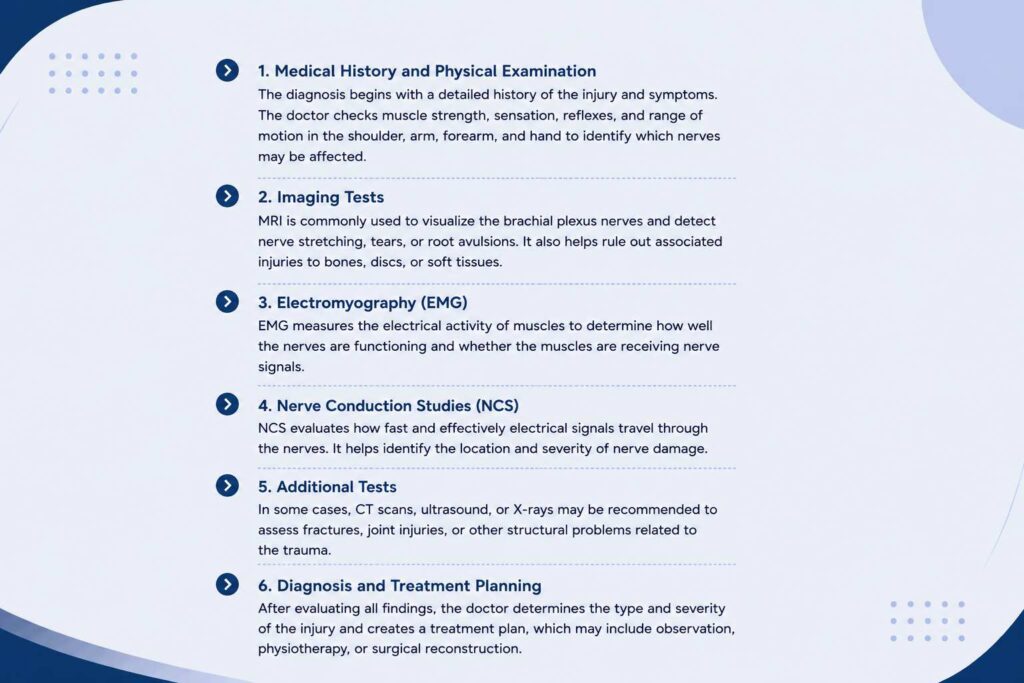
A detailed diagnosis is an essential part of Brachial Plexus Reconstruction in Thrissur planning.
The evaluation usually begins with a medical history and physical examination. The specialist may assess muscle strength, sensation, reflexes, joint movement, and the distribution of symptoms.
Additional investigations may include:
Imaging Tests
MRI or other imaging studies can provide information about the brachial plexus, surrounding structures, and possible nerve-root abnormalities.
Electromyography and Nerve Conduction Studies
Electrodiagnostic testing can help assess how nerves and muscles are functioning. It may also provide information about the location and severity of nerve damage.
Other Investigations
Depending on the injury, additional imaging or tests may be recommended to evaluate associated fractures, blood vessel injuries, or other structural problems.
The findings from these assessments help determine whether observation or surgical treatment is more appropriate.
When Is Brachial Plexus Reconstruction Considered
Not every brachial plexus injury requires immediate surgery. Some nerves can recover naturally, particularly when the injury is less severe.
Surgery may be considered when:
- There is evidence of severe nerve disruption
- Recovery is not progressing as expected
- A nerve has been completely divided
- There is a nerve-root avulsion
- Significant weakness persists
- The injury is unlikely to recover without reconstruction
- The timing is still suitable for meaningful nerve regeneration
Timing is particularly important. Nerves regenerate slowly, and muscles can become less responsive when they remain disconnected from their nerve supply for too long.
For this reason, patients with significant brachial plexus trauma should receive timely specialist evaluation rather than waiting indefinitely for symptoms to improve.
What Procedures Are Used in Brachial Plexus Reconstruction
The specific surgical technique depends on the injury pattern.
Nerve Repair
If the nerve ends can be brought together without excessive tension, direct repair may sometimes be possible.
Nerve Grafting
When a damaged section must be removed or cannot be repaired directly, a nerve graft may be used to bridge the gap. The graft creates a pathway through which regenerating nerve fibres can grow.
Nerve Transfer
A nerve transfer uses a functioning nerve or a selected part of one to provide a new source of nerve supply to a damaged nerve or muscle.
This technique can be useful when the original nerve pathway is severely damaged.
Combined Reconstruction
Some complex injuries require more than one technique. Different nerves may need different reconstructive approaches depending on the extent of damage.
The purpose of Brachial Plexus Reconstruction in Thrissur is not simply to reconnect a nerve. The broader objective is to restore useful function wherever realistically possible.
What Are the Potential Benefits of Reconstruction
The potential benefits of Brachial Plexus Reconstruction in Thrissur depend on the severity and timing of the injury, the nerves involved, and the patient’s individual recovery capacity.
Possible benefits include:
- Improved muscle activation
- Better shoulder stability
- Improved elbow function
- Greater hand or wrist function in selected cases
- Improved sensation in some areas
- Reduction in disability
- Better ability to perform daily activities
- Improved functional independence
It is important to understand that reconstruction does not guarantee complete recovery. Nerve healing is slow and unpredictable, and improvement may take many months.
The goal is often meaningful functional improvement rather than an immediate return to normal strength.
What Is Recovery Like After Reconstruction
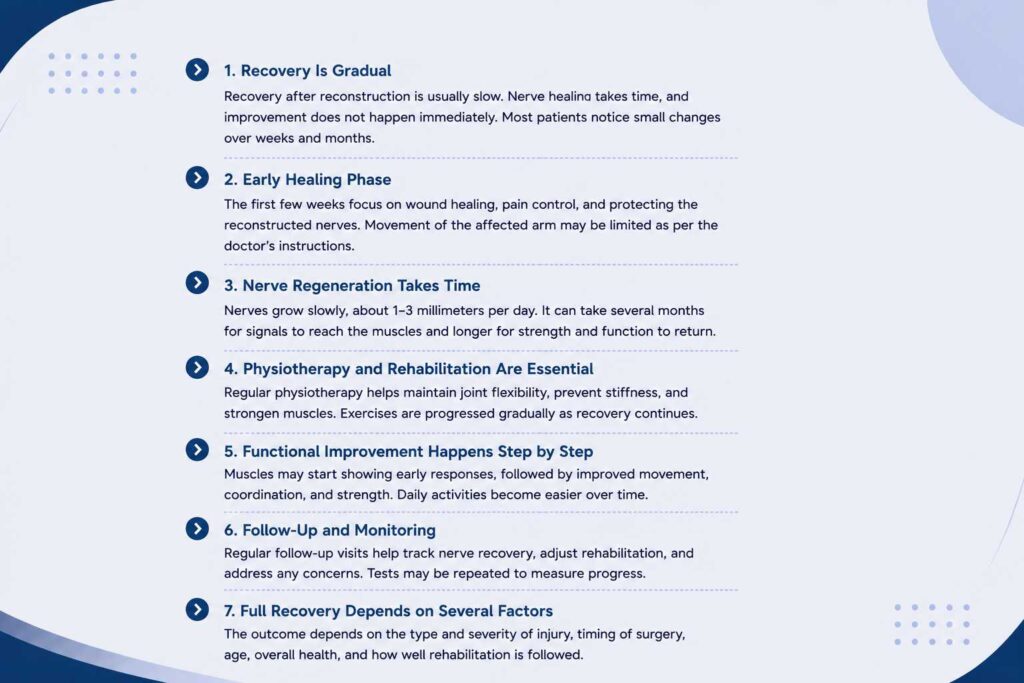
Recovery after Brachial Plexus Reconstruction in Thrissur is usually gradual. Unlike some other surgical procedures, nerve reconstruction does not produce immediate functional improvement.
A repaired or transferred nerve needs time to establish a functional connection with the target muscles. Regenerating nerve fibres grow slowly, and the eventual outcome can depend on the distance they need to travel.
Early Recovery
The initial period may focus on wound healing, protection of the reconstruction, pain management, and maintaining appropriate joint positioning.
Rehabilitation
Physiotherapy and occupational therapy can become important parts of recovery. Rehabilitation may focus on:
- Maintaining joint flexibility
- Preventing stiffness
- Preserving muscle condition
- Retraining movement
- Improving coordination
- Developing practical strategies for daily activities
Regular follow-up is important because the rehabilitation plan may change as nerve recovery progresses.
What Factors Affect the Outcome
The outcome of Brachial Plexus Reconstruction in Thrissur varies considerably from one person to another.
Important factors include:
- Patient age
- Type of nerve injury
- Location of the injury
- Number of nerves involved
- Severity of nerve damage
- Time between injury and treatment
- Condition of the target muscles
- Surgical technique used
- Rehabilitation participation
- Overall health and healing capacity
Earlier evaluation is generally valuable because prolonged denervation can reduce the potential for useful muscle recovery.
Patients should discuss realistic goals with their treating team before surgery. In some cases, restoring one important movement may be a more achievable objective than restoring complete arm function.
Why Is Physiotherapy Important
Surgery is only one component of successful nerve reconstruction. Rehabilitation plays an important role in helping the recovering limb make use of newly restored nerve signals.
Physiotherapy may help maintain range of motion and reduce stiffness. As nerve signals return, exercises can be adjusted to encourage appropriate muscle activation and movement patterns.
Occupational therapy may also help patients adapt everyday activities and improve functional independence.
Rehabilitation May Include
- Passive and active range-of-motion exercises
- Muscle strengthening when appropriate
- Sensory re-education
- Motor retraining
- Functional movement training
- Joint protection strategies
- Home exercise programs
Rehabilitation should be individualized. Exercises that are appropriate at one stage may not be suitable at another, particularly during the early healing period.
Tips to Support Recovery
Patients undergoing Brachial Plexus Reconstruction in Thrissur can support recovery by following the treatment and rehabilitation plan carefully.
Helpful practices may include:
- Attend scheduled follow-up appointments.
- Follow postoperative movement restrictions.
- Perform prescribed exercises consistently.
- Protect areas with reduced sensation from burns and injuries.
- Avoid smoking, as it can interfere with healing.
- Maintain a balanced diet and adequate hydration.
- Report unusual swelling, wound problems, or worsening symptoms.
- Avoid returning to strenuous activities before receiving medical clearance.
- Be patient with the recovery process.
Nerve recovery can be slow. Consistency is often more useful than attempting to accelerate the process through excessive exercise.
What Are the Risks of Reconstruction
As with other forms of major surgery, Brachial Plexus Reconstruction in Thrissur may involve potential risks.
These can include:
- Infection
- Bleeding
- Scar formation
- Persistent pain
- Incomplete nerve recovery
- Failure to achieve the expected functional improvement
- Temporary or permanent sensory changes
- Weakness involving a donor nerve in selected nerve-transfer procedures
- Need for additional treatment
The risks vary according to the specific procedure and the patient’s condition. A detailed discussion with the surgical team is necessary before treatment.
What Should Patients Expect After Surgery
Patients should have realistic expectations about the recovery timeline. Nerve tissue does not heal at the same speed as skin or bone.
Improvement may initially be subtle. Muscle activation may develop gradually, followed by better control as rehabilitation continues.
Regular assessment can help identify changes in strength, sensation, and functional ability.
Patients should also understand that reconstruction may be one part of a broader treatment strategy. In selected cases, additional procedures may later be considered to improve movement or function.
Why Early Assessment Matters
One of the most important aspects of managing a serious brachial plexus injury is obtaining an appropriate evaluation without unnecessary delay.
A patient may initially assume that weakness or numbness will resolve naturally. While spontaneous recovery can occur in some injuries, severe nerve damage may require intervention.
Early assessment helps answer important questions:
- Which nerves are injured?
- Is the nerve intact?
- Is spontaneous recovery occurring?
- Is surgery necessary?
- Which procedure could provide the best functional opportunity?
- What rehabilitation will be required?
A structured evaluation can therefore help patients avoid unnecessary delays while also preventing premature treatment when natural recovery remains possible.
Conclusion
Brachial Plexus Reconstruction in Thrissur can provide an important treatment option for patients with severe injuries affecting the nerves of the shoulder, arm, and hand. The appropriate approach depends on the injury pattern, nerve damage, timing, muscle condition, and individual functional goals.
Early specialist evaluation, accurate diagnosis, carefully selected reconstruction, and structured rehabilitation all contribute to the best possible opportunity for recovery. Because nerve regeneration is gradual, patients should approach treatment with realistic expectations and understand that meaningful improvement may take considerable time.
For individuals considering Brachial Plexus Reconstruction in Thrissur, understanding the available procedures and the importance of timely evaluation can help support informed treatment decisions and long-term functional recovery. For reliable information on diagnosis, nerve grafting, nerve transfers, and treatment options, refer to Mayo Clinic’s guide to brachial plexus injury diagnosis and treatment.
Frequently Asked Questions
What is Brachial Plexus Reconstruction?
Is surgery required for every brachial plexus injury?
How long does recovery take after Brachial Plexus Reconstruction?
Is physiotherapy necessary after Brachial Plexus Reconstruction?
Can a brachial plexus injury affect the hand?
When should someone seek treatment for a brachial plexus injury?
Is a brachial plexus injury permanent?
Can people with brachial plexus injuries lead normal lives?
Can nerve transfer restore arm movement?
Can physiotherapy improve movement after brachial plexus injury?
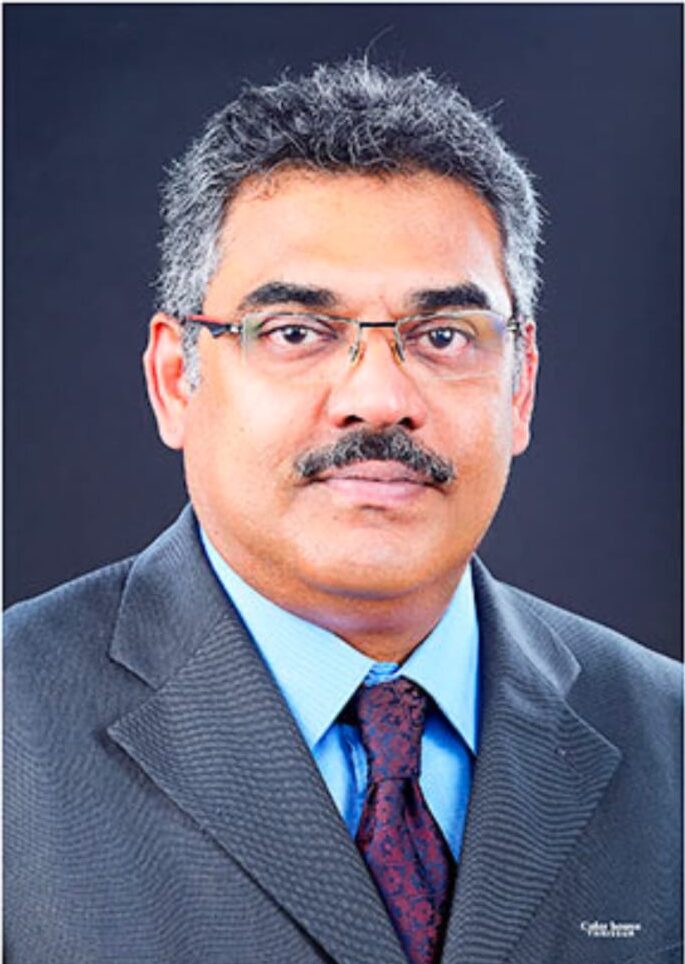
Dr. Pradeep Kumar
Plastic & Reconstructive Surgeon – Brachial Plexus & Nerve Surgery Specialist
Dr. Pradeep Kumar is an experienced plastic and reconstructive surgeon known for his expertise in brachial plexus and peripheral nerve surgery. With extensive microsurgical experience, he focuses on restoring movement and function for patients with complex nerve injuries.
Sushrutha Institute of Plastic Surgery, Elite Mission Hospital, Thrissur