7 Powerful Nerve Injury Treatment in Thrissur: Recovery Tips
Nerves carry signals between the brain, spinal cord, muscles, skin, and other parts of the body. When a nerve is compressed, stretched, cut, or damaged by disease or trauma, it can cause pain, numbness, weakness, or difficulty moving the affected area. Choosing the right nerve injury treatment in Thrissur depends on the location, severity, cause, and type of nerve damage.
Some nerve injuries are mild and improve with rest and conservative care, while more serious injuries may require specialist evaluation, rehabilitation, or surgery. Early assessment can help identify the extent of damage and support an appropriate treatment plan.
What Is a Nerve Injury
A nerve injury occurs when a nerve or group of nerves becomes damaged and cannot transmit signals normally. Nerves are essential for sensation and movement, so an injury may affect how a person feels or controls a particular body part.
Nerve damage can range from temporary irritation to complete disruption of the nerve. The treatment approach therefore varies considerably from one person to another.
Common effects include:
- Pain or burning sensations
- Tingling or pins-and-needles
- Numbness or reduced sensation
- Muscle weakness
- Difficulty coordinating movement
- Increased sensitivity to touch
- Loss of movement in severe cases
What Causes Nerve Injuries
Nerve injuries can occur because of accidents, medical conditions, repetitive pressure, or direct trauma. Identifying the underlying cause is an important part of effective nerve injury treatment in Thrissur.
Common causes include:
- Road traffic and workplace accidents
- Sports injuries
- Falls and fractures
- Deep cuts or penetrating injuries
- Nerve compression
- Repetitive movements
- Dislocations
- Surgical complications
- Certain infections
- Metabolic conditions that affect nerves
A nerve may also become compressed when surrounding tissues swell or when structural changes place pressure on it.
Types of Nerve Injuries
Understanding the type of injury helps healthcare professionals determine the likely recovery pattern and treatment requirements.
Mild Nerve Injury
A mild injury may involve temporary pressure or stretching of the nerve. Symptoms can include tingling, numbness, and temporary weakness. In many cases, the nerve may recover gradually after the underlying pressure is relieved.
Partial Nerve Damage
Partial damage can affect some nerve fibres while leaving others intact. Recovery may depend on how much of the nerve remains functional and whether the damaged fibres can regenerate.
Complete Nerve Injury
A completely disrupted nerve may be unable to transmit signals effectively. More serious injuries may require surgical evaluation, particularly when there is significant loss of movement or sensation.
What Symptoms Should You Watch For
Symptoms vary according to the affected nerve and the severity of the injury. Recognising persistent or worsening symptoms can encourage timely medical evaluation.
Possible symptoms include:
- Persistent nerve pain
- Numbness
- Tingling or burning
- Muscle weakness
- Reduced grip strength
- Difficulty moving a limb
- Loss of sensation
- Abnormal sensitivity
- Muscle wasting over time
- Changes in reflexes
Sudden weakness, major loss of sensation, or an inability to move an affected body part should receive prompt medical attention.
How Is a Nerve Injury Diagnosed
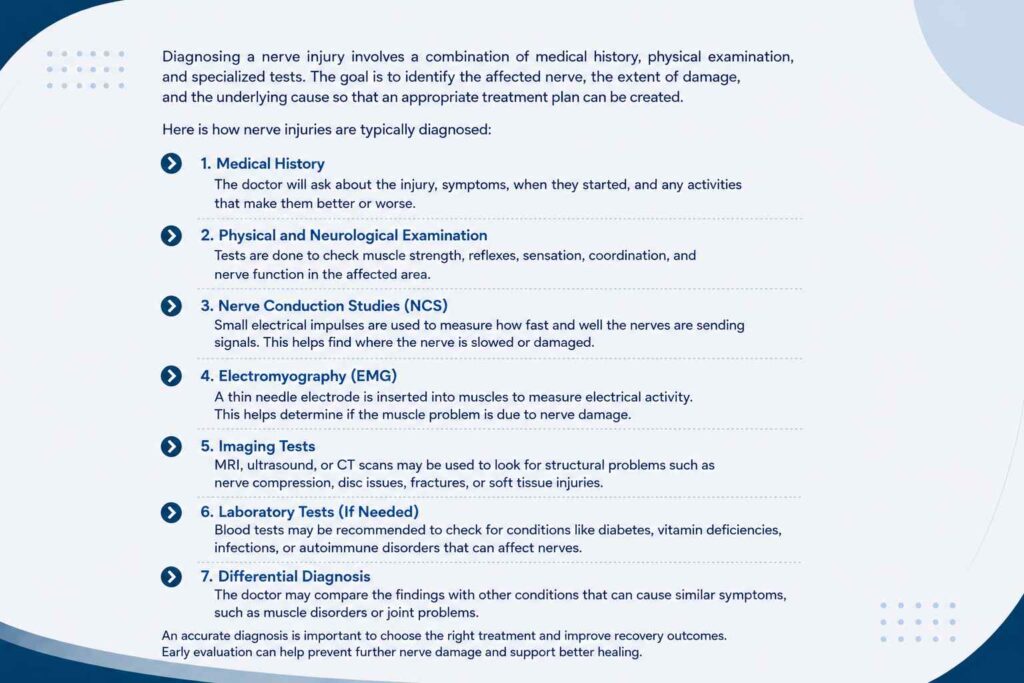
Before deciding on nerve injury treatment in Thrissur, a healthcare professional usually assesses the person’s symptoms, medical history, injury mechanism, strength, reflexes, and sensation.
Depending on the suspected injury, additional tests may be recommended.
Physical Examination
A physical examination can help identify changes in muscle strength, sensation, reflexes, and movement.
Nerve Conduction Studies
Nerve conduction testing measures how electrical signals travel through a nerve. It can provide information about whether a nerve is functioning normally and where impairment may be present.
Electromyography
Electromyography, or EMG, evaluates electrical activity in muscles and can help determine whether symptoms are associated with nerve or muscle dysfunction.
Imaging
Ultrasound, MRI, X-rays, or other imaging tests may be used when doctors need to assess surrounding tissues, fractures, compression, or structural damage.
What Are the Main Nerve Injury Treatment Options
The most suitable nerve injury treatment depends on the individual diagnosis. Treatment may involve one approach or a combination of several methods.
Rest and Activity Modification
Reducing activities that aggravate the injury can help prevent additional irritation. Depending on the injury, temporary support or immobilisation may also be recommended.
Medicines
Depending on the symptoms, healthcare professionals may recommend medicines to manage pain or inflammation. Some types of nerve pain may require specific medicines rather than conventional painkillers.
Medication should be used according to professional advice, particularly when symptoms are persistent.
Physiotherapy
Physiotherapy can be an important part of rehabilitation. A personalised programme may focus on:
- Maintaining joint flexibility
- Improving muscle strength
- Restoring movement
- Improving coordination
- Preventing stiffness
- Supporting functional recovery
Exercises should be appropriate for the type and stage of nerve injury.
Occupational Rehabilitation
When nerve damage affects hand, arm, leg, or other functional movements, occupational therapy may help a person gradually regain independence in everyday activities.
Surgical Treatment
Some severe nerve injuries may require surgery. This can be considered when a nerve has been significantly damaged, compressed, or physically disrupted.
Depending on the injury, procedures may include nerve repair, nerve grafting, nerve transfer, or decompression. The appropriate procedure depends on the specific anatomical and functional findings.
What Are the Benefits of Early Treatment
Seeking evaluation early can be valuable when symptoms suggest significant nerve damage. Early assessment allows healthcare professionals to determine whether the nerve is likely to recover naturally or whether additional intervention may be necessary.
Potential benefits of timely care include:
- Earlier identification of nerve damage
- Appropriate management of pain
- Prevention of avoidable complications
- Better rehabilitation planning
- Monitoring of nerve recovery
- Improved functional outcomes in suitable cases
The recovery potential varies considerably between different nerve injuries, so treatment expectations should be based on individual assessment rather than a fixed timeline.
How Long Does Nerve Injury Recovery Take
Nerve recovery can be gradual. The timeframe depends on the type and severity of damage, the affected nerve, the person’s overall health, and the treatment provided.
Minor nerve irritation may improve relatively quickly, whereas significant nerve damage can take months or longer to recover. In some cases, complete recovery may not occur.
Regular follow-up is useful because changes in strength, sensation, and function can help healthcare professionals determine whether recovery is progressing.
Tips to Support Nerve Injury Recovery
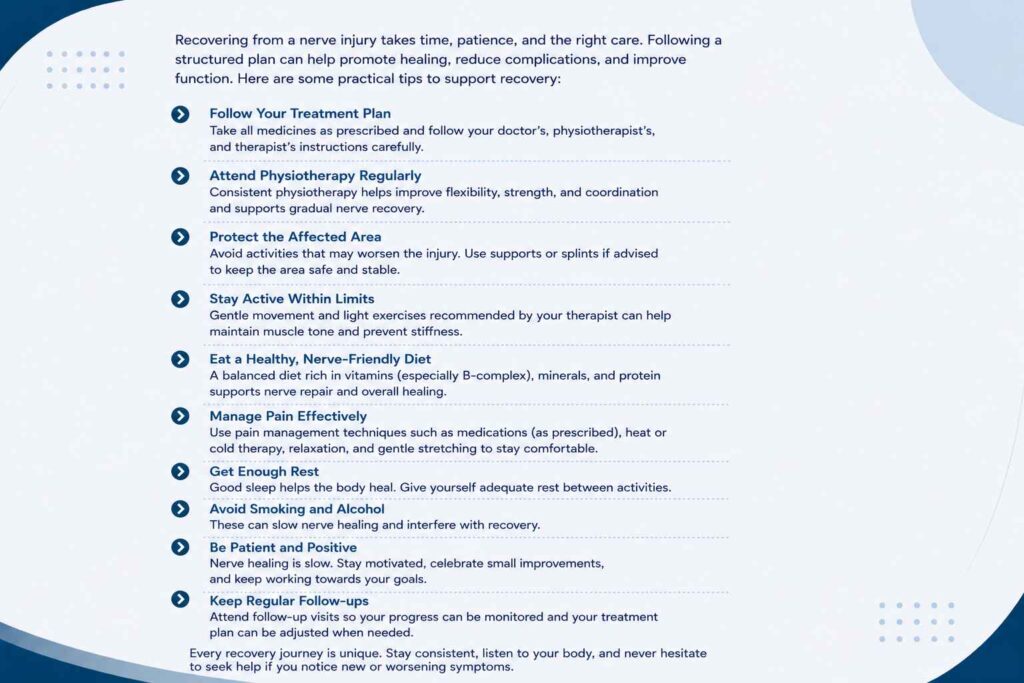
Following a structured rehabilitation plan can help support recovery and reduce the risk of additional problems.
Useful measures may include:
- Follow prescribed treatment consistently.
- Attend recommended physiotherapy sessions.
- Avoid activities that worsen symptoms.
- Protect areas with reduced sensation from burns or injuries.
- Maintain appropriate physical activity as advised.
- Take medicines exactly as directed.
- Attend follow-up appointments.
- Report new or worsening symptoms promptly.
Avoid starting aggressive exercises without professional guidance, particularly after a significant traumatic nerve injury or surgery.
When Should You Seek Medical Attention
Not every episode of tingling or numbness indicates a serious nerve injury. However, persistent, progressive, or severe symptoms deserve professional assessment.
Consider seeking medical attention when you experience:
- Persistent numbness after an injury
- Increasing weakness
- Severe or ongoing nerve pain
- Loss of movement
- Reduced sensation that does not improve
- Symptoms following a fracture or dislocation
- Problems using an affected hand or limb
- Worsening symptoms despite rest
Prompt evaluation can help distinguish a temporary nerve irritation from a more significant injury.
Conclusion
Nerve injury treatment in Thrissur should be based on an accurate diagnosis and an understanding of the affected nerve, severity of damage, and functional limitations. Treatment may include activity modification, medicines, physiotherapy, rehabilitation, or surgery when necessary. If symptoms such as persistent numbness, weakness, severe pain, or loss of movement occur after an injury, professional assessment is important. With appropriate evaluation and a structured recovery plan, many people can work toward improving function and quality of life. You can learn more about peripheral nerve injuries, their causes, symptoms, diagnosis, and treatment from the National Institute of Neurological Disorders and Stroke (NINDS) .
Frequently Asked Questions
What is the best nerve injury treatment?
Can a damaged nerve heal naturally?
Is physiotherapy useful for nerve injuries?
Does nerve injury always require surgery?
What are the first signs of nerve damage?
Can nerve pain go away?
How long does nerve healing take?
Can exercise help nerve recovery?
How is a nerve injury diagnosed?
When is nerve surgery considered?

Dr. Pradeep Kumar
Plastic & Reconstructive Surgeon – Brachial Plexus & Nerve Surgery Specialist
Dr. Pradeep Kumar is an experienced plastic and reconstructive surgeon known for his expertise in brachial plexus and peripheral nerve surgery. With extensive microsurgical experience, he focuses on restoring movement and function for patients with complex nerve injuries.
Sushrutha Institute of Plastic Surgery, Elite Mission Hospital, Thrissur