10 Essential Facts About What Is a Brachial Plexus Injury Today
A brachial plexus injury is a condition that affects the network of nerves responsible for controlling movement and sensation in the shoulder, arm, elbow, wrist, and hand. Understanding what is a brachial plexus injury is important because early diagnosis and proper treatment can improve recovery and reduce the risk of long-term disability. Many people experience these injuries after accidents, sports injuries, or difficult childbirth. Patients in Thrissur and other regions are increasingly seeking information about this condition because prompt medical attention often leads to better outcomes.
The brachial plexus is a complex group of nerves that begins in the neck and extends through the shoulder into the arm. When these nerves are stretched, compressed, torn, or completely detached from the spinal cord, normal communication between the brain and arm is disrupted. This may result in weakness, numbness, pain, or even complete paralysis of the affected limb.
Whether the injury is mild or severe, understanding the causes, symptoms, diagnosis, treatment, and rehabilitation process helps patients make informed healthcare decisions.
Understanding the Brachial Plexus
The brachial plexus is made up of five major nerve roots originating from the spinal cord:
- C5
- C6
- C7
- C8
- T1
These nerves combine and divide into multiple branches that control:
- Shoulder movement
- Arm strength
- Elbow motion
- Wrist movement
- Hand function
- Sensation throughout the upper limb
When any part of this nerve network is injured, different functions of the arm may be affected depending on the location and severity of the damage.
What Is a Brachial Plexus Injury
A brachial plexus injury occurs when the nerves of the brachial plexus become damaged due to excessive stretching, pressure, tearing, or avulsion (complete separation from the spinal cord).
The injury may affect one nerve or multiple nerves, leading to varying degrees of weakness and loss of sensation. Some people recover naturally, while others require surgery and long-term rehabilitation.
The severity depends on:
- Type of injury
- Number of nerves involved
- Age of the patient
- Time before treatment
- Overall health
Common Causes of a Brachial Plexus Injury
Several situations can damage the brachial plexus nerves.
Road Traffic Accidents
Motorcycle and car accidents are among the leading causes. High-speed impacts may stretch or tear the nerves.
Sports Injuries
Contact sports such as:
- Football
- Wrestling
- Rugby
- Martial arts
can cause sudden stretching of the neck and shoulder.
Falls
Falling heavily on the shoulder or arm may injure the nerve network.
Birth Injuries
During difficult deliveries, excessive pulling on a baby’s shoulder may cause neonatal brachial plexus injury.
Penetrating Injuries
Knife wounds or gunshot injuries may directly damage the nerves.
Tumors
Growths near the neck or shoulder can compress the nerves over time.
Radiation Therapy
Rarely, previous radiation treatment may result in nerve damage.
Types of Brachial Plexus Injury
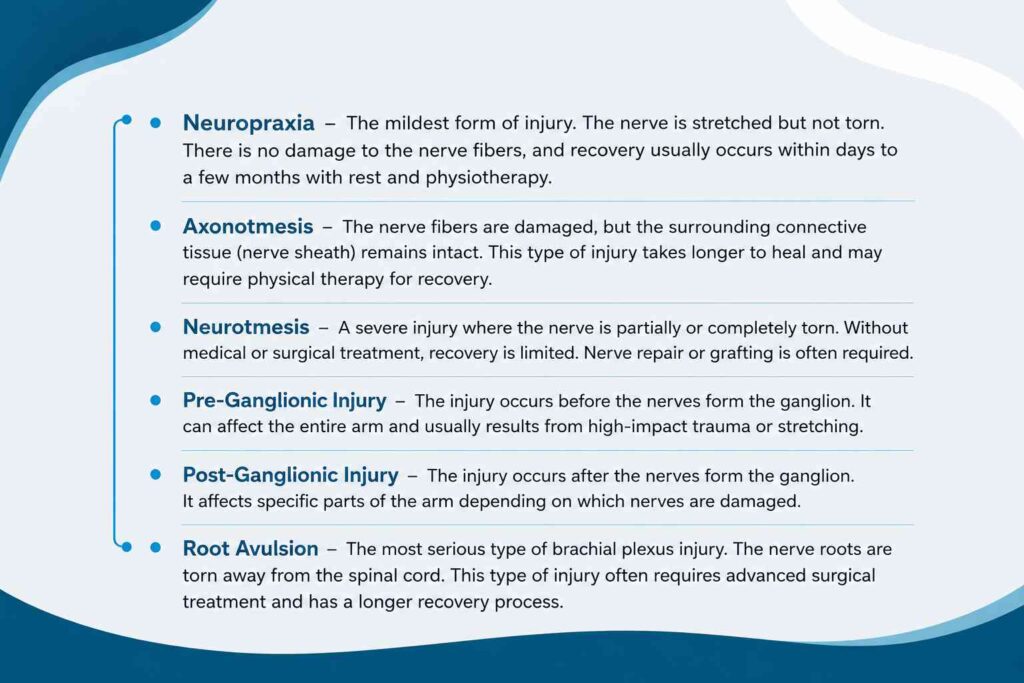
Different injuries require different treatment approaches.
Neuropraxia
The mildest form.
Characteristics include:
- Temporary stretching
- No nerve rupture
- Usually heals naturally
- Recovery within weeks or months
Neuroma
Scar tissue forms around the injured nerve.
This can interfere with nerve signals and reduce movement.
Rupture
The nerve tears but remains attached to the spinal cord.
These injuries often require surgery.
Avulsion
The most severe injury.
The nerve root is completely pulled away from the spinal cord.
Recovery without surgery is usually impossible.
Symptoms of a Brachial Plexus Injury
Symptoms depend on the severity and location of nerve damage.
Common symptoms include:
- Sudden severe pain
- Burning sensation
- Electric shock feeling
- Shoulder weakness
- Arm weakness
- Hand weakness
- Numbness
- Tingling
- Loss of grip strength
- Difficulty lifting the arm
- Muscle wasting
- Partial paralysis
- Complete paralysis in severe cases
Some patients experience severe nerve pain even after movement is lost.
Early Warning Signs
Watch for symptoms such as:
- Difficulty raising the arm
- Weak shoulder muscles
- Fingers becoming numb
- Reduced hand coordination
- Persistent neck pain after trauma
- Loss of sensation
- Inability to grip objects
Seeking medical evaluation early can improve treatment outcomes.
Risk Factors
Certain situations increase the likelihood of injury.
These include:
- Motorcycle riding
- Contact sports
- High-speed accidents
- Occupational trauma
- Difficult childbirth
- Shoulder dislocation
- Neck injuries
How a Brachial Plexus Injury Is Diagnosed
Doctors perform several evaluations.
Physical Examination
The healthcare provider checks:
- Muscle strength
- Reflexes
- Sensation
- Joint movement
Medical History
Important information includes:
- Accident details
- Previous injuries
- Pain pattern
- Weakness progression
Imaging Tests
Imaging helps locate the injury.
Common studies include:
- MRI
- CT Myelography
- Ultrasound
Electromyography (EMG)
EMG measures muscle activity.
It identifies nerve damage and recovery potential.
Nerve Conduction Studies
These evaluate how well electrical signals travel through nerves.
Treatment Options for a Brachial Plexus Injury
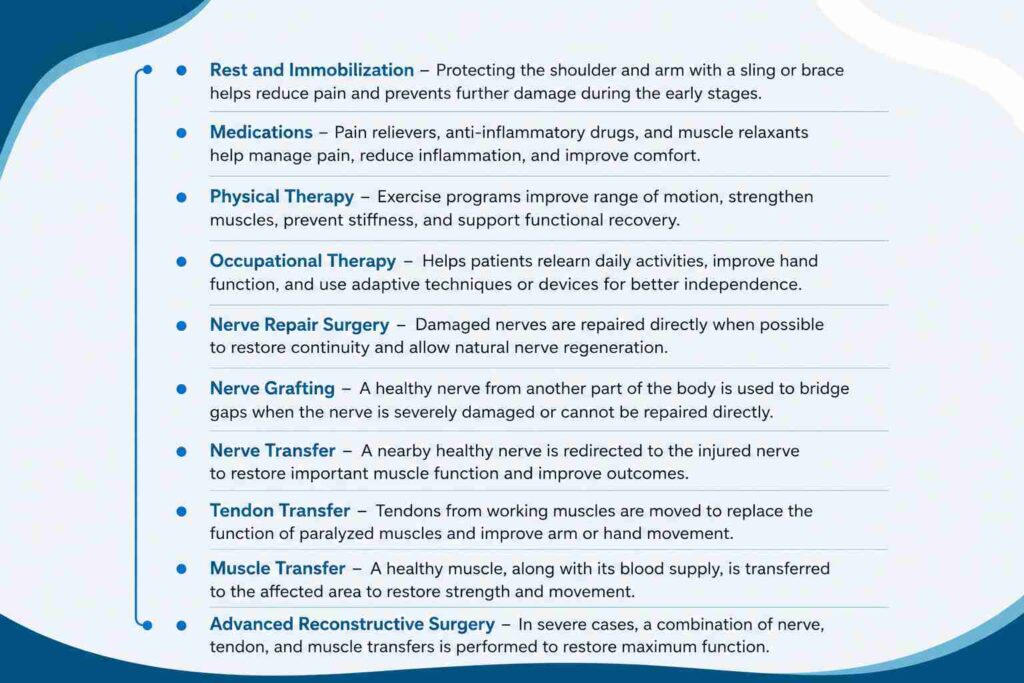
Treatment depends on:
- Severity
- Age
- Type of injury
- Time since injury
Observation
Minor stretch injuries often heal naturally.
Regular follow-up monitors progress.
Medications
Doctors may prescribe medications for:
- Pain relief
- Nerve pain
- Muscle spasms
- Inflammation
Physical Therapy
Physical therapy plays a major role.
Exercises help:
- Improve flexibility
- Prevent stiffness
- Strengthen muscles
- Improve coordination
- Restore movement
Occupational Therapy
Patients learn techniques to perform daily activities safely.
Therapists also recommend adaptive equipment when needed.
Nerve Repair Surgery
Damaged nerves may be directly repaired if possible.
Nerve Grafting
Healthy donor nerves replace damaged sections.
Nerve Transfer Surgery
Healthy functioning nerves are redirected to restore important movements.
Muscle or Tendon Transfer
When nerve recovery is incomplete, surgeons may transfer muscles or tendons to improve function.
Benefits of Early Treatment
Early management offers many advantages.
These include:
- Better nerve recovery
- Improved arm movement
- Reduced muscle wasting
- Less chronic pain
- Better hand function
- Improved independence
- Higher quality of life
Recovery After Treatment
Recovery varies greatly.
Factors affecting recovery include:
- Age
- Injury severity
- Time before surgery
- Rehabilitation participation
- Overall health
Nerves regenerate slowly.
Recovery may continue for:
- Several months
- One year
- Two years
- Occasionally longer
Rehabilitation After a Brachial Plexus Injury
Rehabilitation is essential.
It may include:
Range-of-Motion Exercises
Prevent joint stiffness.
Strengthening Exercises
Improve muscle function.
Functional Training
Restore daily activities.
Pain Management
Reduce discomfort during recovery.
Home Exercise Program
Supports continued improvement between therapy sessions.
Possible Complications
Untreated injuries may lead to:
- Permanent weakness
- Chronic pain
- Muscle wasting
- Joint stiffness
- Loss of arm function
- Reduced quality of life
- Psychological stress
Can a Brachial Plexus Injury Heal Naturally
Some mild injuries recover without surgery.
Recovery depends on:
- Amount of nerve stretching
- Absence of tearing
- Early rehabilitation
- Overall nerve health
Severe ruptures and avulsions usually require surgical intervention.
Tips for Supporting Recovery
Patients can improve rehabilitation by:
- Following medical advice
- Attending therapy sessions
- Performing prescribed exercises
- Eating a balanced diet
- Staying physically active within limits
- Avoiding smoking
- Managing diabetes if present
- Reporting new symptoms promptly
Preventing Brachial Plexus Injuries
Although not every injury can be prevented, these measures help reduce risk.
Wear Protective Gear
Especially during sports.
Drive Safely
Use seat belts and helmets.
Improve Workplace Safety
Use proper lifting techniques.
Exercise Regularly
Strong muscles protect joints and nerves.
Follow Sports Safety Guidelines
Proper training reduces injury risk.
Living With a Brachial Plexus Injury
Many patients regain useful arm function through proper treatment and rehabilitation.
Emotional support, family involvement, occupational therapy, and consistent physical therapy help patients return to work and daily activities.
Recovery requires patience because nerve healing is naturally slow.
When Should You Seek Medical Attention
Consult a healthcare professional immediately if you experience:
- Sudden arm weakness
- Severe shoulder pain
- Numbness after trauma
- Difficulty moving the arm
- Loss of hand function
- Neck injury followed by arm symptoms
Early evaluation may improve recovery outcomes.
Conclusion
Understanding what is a brachial plexus injury helps patients recognize symptoms early and seek timely medical care. Whether the injury is caused by trauma, sports, birth complications, or other factors, modern diagnostic techniques and treatment options offer hope for improved recovery. Early rehabilitation, appropriate therapy, and, when necessary, surgical intervention can restore movement and function for many patients. If you or a loved one develops symptoms suggestive of a brachial plexus injury, prompt medical evaluation is recommended. Individuals seeking specialized care in Thrissur should consult an experienced healthcare provider for an accurate diagnosis and personalized treatment plan. Learn more about brachial plexus injuries, including symptoms, diagnosis, and treatment, from the Mayo Clinic .
Frequently Asked Questions
1. What is a brachial plexus injury?
2. What causes a brachial plexus injury?
3. Can a brachial plexus injury heal without surgery?
4. How long does recovery take?
5. What are the early symptoms of a brachial plexus injury?
6. Is surgery always necessary for a brachial plexus injury?
7. What tests are used to diagnose a brachial plexus injury?
8. Can children develop brachial plexus injuries?
9. Can physical therapy help after a brachial plexus injury?
10. Can a brachial plexus injury cause permanent disability?

Dr. Pradeep Kumar
Plastic & Reconstructive Surgeon – Brachial Plexus & Nerve Surgery Specialist
Dr. Pradeep Kumar is an experienced plastic and reconstructive surgeon known for his expertise in brachial plexus and peripheral nerve surgery. With extensive microsurgical experience, he focuses on restoring movement and function for patients with complex nerve injuries.
Sushrutha Institute of Plastic Surgery, Elite Mission Hospital, Thrissur