Understanding Brachial Plexus Injury
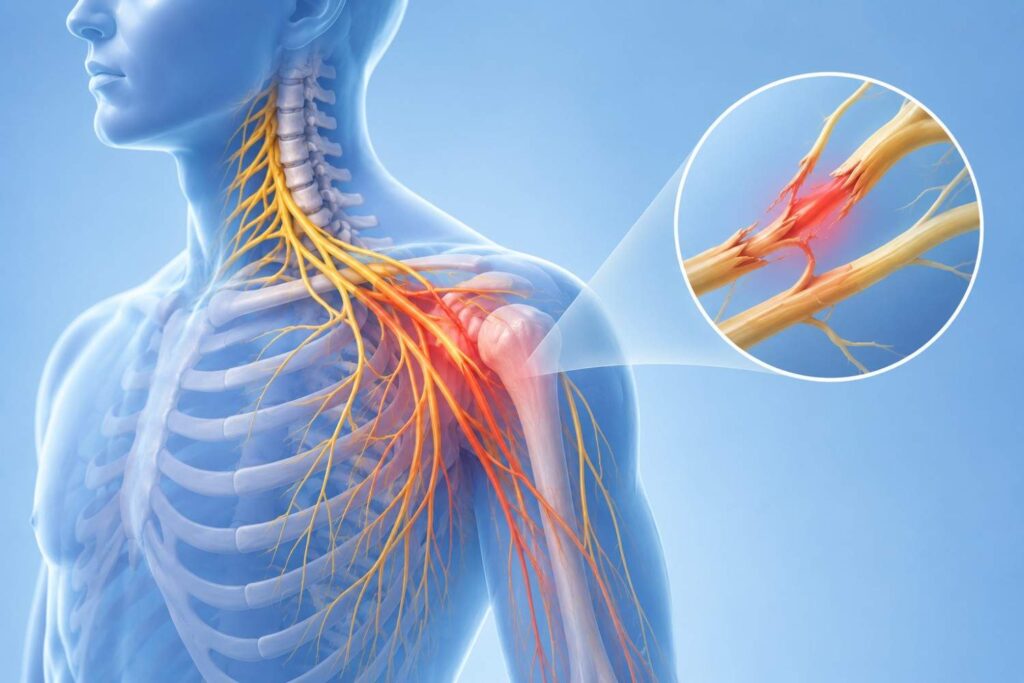
A brachial plexus injury occurs when the network of nerves that controls movement and sensation in the shoulder, arm, and hand becomes stretched, compressed, or torn. These nerves originate from the spinal cord in the neck and play a vital role in arm and hand function.
The severity of a brachial plexus injury can range from temporary weakness and numbness to complete loss of movement and sensation in the affected limb. Understanding what is brachial plexus injury can help individuals recognize symptoms early and seek appropriate treatment to improve recovery and restore function.
Table of Contents
- What Causes Brachial Plexus Injury?
- Common Symptoms of Brachial Plexus Injury
- Types of Brachial Plexus Injury
- How Is Brachial Plexus Injury Diagnosed?
- Treatment Options for Brachial Plexus Injury
- When to Consult a Doctor
- Conclusion
- Frequently Asked Questions
Brachial plexus Injury
To understand what is brachial plexus injury, it is important to know how this condition develops. A brachial plexus injury occurs when the nerves connecting the spinal cord to the shoulder, arm, and hand are stretched, compressed, or torn.
Common causes include:
- Sports-related injuries
- Falls and workplace accidents
- Birth-related nerve injuries
- Penetrating trauma such as cuts or wounds
- Tumors affecting the brachial plexus
Understanding what is brachial plexus injury and its causes can help individuals seek medical attention before long-term nerve damage occurs.
Common Symptoms of Brachial Plexus Injury
When learning what is brachial plexus injury, recognizing the symptoms is equally important. The symptoms depend on the location and severity of the nerve damage.
Common symptoms include:
- Weakness in the arm or hand
- Numbness or tingling
- Loss of sensation
- Shoulder or arm pain
- Reduced grip strength
- Difficulty lifting the arm
- Partial or complete paralysis
Types of Brachial Plexus Injury
A better understanding of what is brachial plexus injury includes knowing the different types of nerve damage that can occur.
Stretch Injury (Neuropraxia)
This is the mildest form of brachial plexus injury. The nerve is stretched but remains intact, and recovery often occurs naturally.
Rupture
A rupture occurs when a nerve tears but remains connected to the spinal cord. Surgical intervention may be necessary.
Avulsion
Avulsion is the most severe form of brachial plexus injury, where the nerve is completely detached from the spinal cord.
Compression Injury
Compression injuries occur when surrounding tissues place pressure on the nerves, affecting their normal function.
Understanding these categories helps explain what is brachial plexus injury and how treatment options may vary between patients.
How Is Brachial Plexus Injury Diagnosed?
For patients asking what is brachial plexus injury, diagnosis is an important step in determining the extent of nerve damage.
Doctors may recommend:
- Physical examination
- Neurological assessment
- MRI scans
- CT myelography
- Electromyography (EMG)
- Nerve conduction studies
These investigations help confirm what is brachial plexus injury, identify the affected nerves, and guide treatment planning.
Treatment Options for Brachial Plexus Injury
After understanding what is brachial plexus injury, the next step is exploring treatment options. Treatment depends on the severity of nerve damage and the patient’s symptoms.
Conservative Treatment
Mild injuries may improve with:
- Physical therapy
- Occupational therapy
- Pain management
- Regular follow-up assessments
Surgical Treatment
Severe cases may require:
- Nerve repair
- Nerve grafting
- Nerve transfer procedures
- Tendon or muscle transfer surgery
Early treatment often improves recovery outcomes in patients diagnosed with what is brachial plexus injury.
When to Consult a Doctor
Anyone experiencing symptoms suggestive of what is brachial plexus injury should seek medical attention, especially if they notice:
- Persistent arm weakness
- Numbness after an injury
- Loss of hand function
- Severe shoulder pain
- Difficulty moving the arm
- Progressive neurological symptoms
Early evaluation can help prevent complications and improve long-term recovery.
Conclusion
Understanding what is brachial plexus injury is essential for recognizing the signs of nerve damage and seeking timely treatment. This condition can significantly affect arm movement, sensation, and daily activities if left untreated. With early diagnosis, rehabilitation, and appropriate surgical intervention when necessary, many patients can achieve meaningful recovery and improved quality of life.
For additional information about brachial plexus injuries and peripheral nerve disorders, please visit the National Institute of Neurological Disorders and Stroke (NINDS).
Frequently Asked Questions
What is brachial plexus injury?
A brachial plexus injury occurs when the nerves controlling the shoulder, arm, and hand are damaged.
What are the first symptoms of brachial plexus injury?
Common symptoms include weakness, numbness, tingling, and difficulty moving the arm.
Can brachial plexus injury heal on its own?
Mild injuries may recover naturally, while severe nerve damage may require surgery.
Is brachial plexus injury permanent?
Not always. Recovery depends on the severity and type of nerve injury.
Can brachial plexus injury cause arm weakness?
Yes. Arm weakness is one of the most common symptoms of brachial plexus injury.
How is brachial plexus injury diagnosed?
Doctors may use physical examinations, MRI scans, EMG tests, and nerve conduction studies.
When is surgery needed for brachial plexus injury?
Surgery may be recommended when nerves are torn, ruptured, or fail to recover naturally.
How long does recovery take?
Recovery can take several months to years, depending on the severity of the injury.
Can physical therapy help brachial plexus injury?
Yes. Physical therapy can improve strength, flexibility, and functional recovery.
Can brachial plexus injury affect hand movement?
Yes. Severe nerve damage can impair hand movement, grip strength, and sensation.

Dr. Pradeep Kumar
Plastic & Reconstructive Surgeon – Brachial Plexus & Nerve Surgery Specialist
Dr. Pradeep Kumar is an experienced plastic and reconstructive surgeon known for his expertise in brachial plexus and peripheral nerve surgery. With extensive microsurgical experience, he focuses on restoring movement and function for patients with complex nerve injuries.
Sushrutha Institute of Plastic Surgery, Elite Mission Hospital, Thrissur