The brachial plexus is a delicate network of nerves that controls movement and sensation in the shoulder, arm, and hand. Any tumour affecting this vital nerve system can cause weakness, numbness, pain, and severe functional limitations. For many patients, the journey from symptoms to diagnosis and finally treatment can feel overwhelming.
This detailed guide is designed to give patients and families a complete, easy-to-understand overview of brachial plexus tumour surgery, treatment pathways, recovery expectations, and why Thrissur has become one of the most trusted destinations for advanced nerve surgery in Kerala.
Whether a patient is dealing with a benign tumour, a compressive lesion, a malignant tumour, or a complex condition requiring reconstructive nerve procedures, this blog walks through everything they need to know — step by step.
What Is the Brachial Plexus?
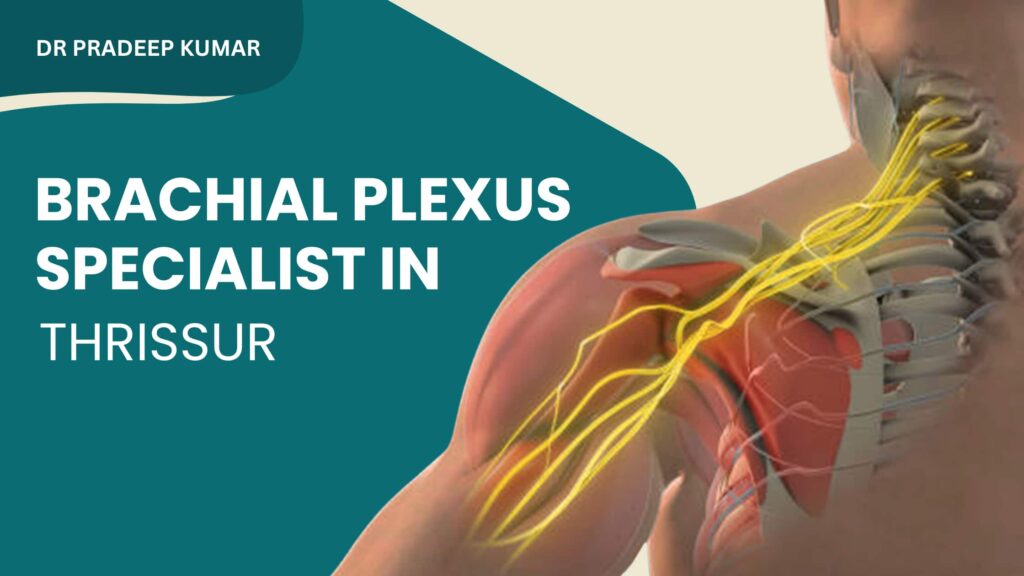
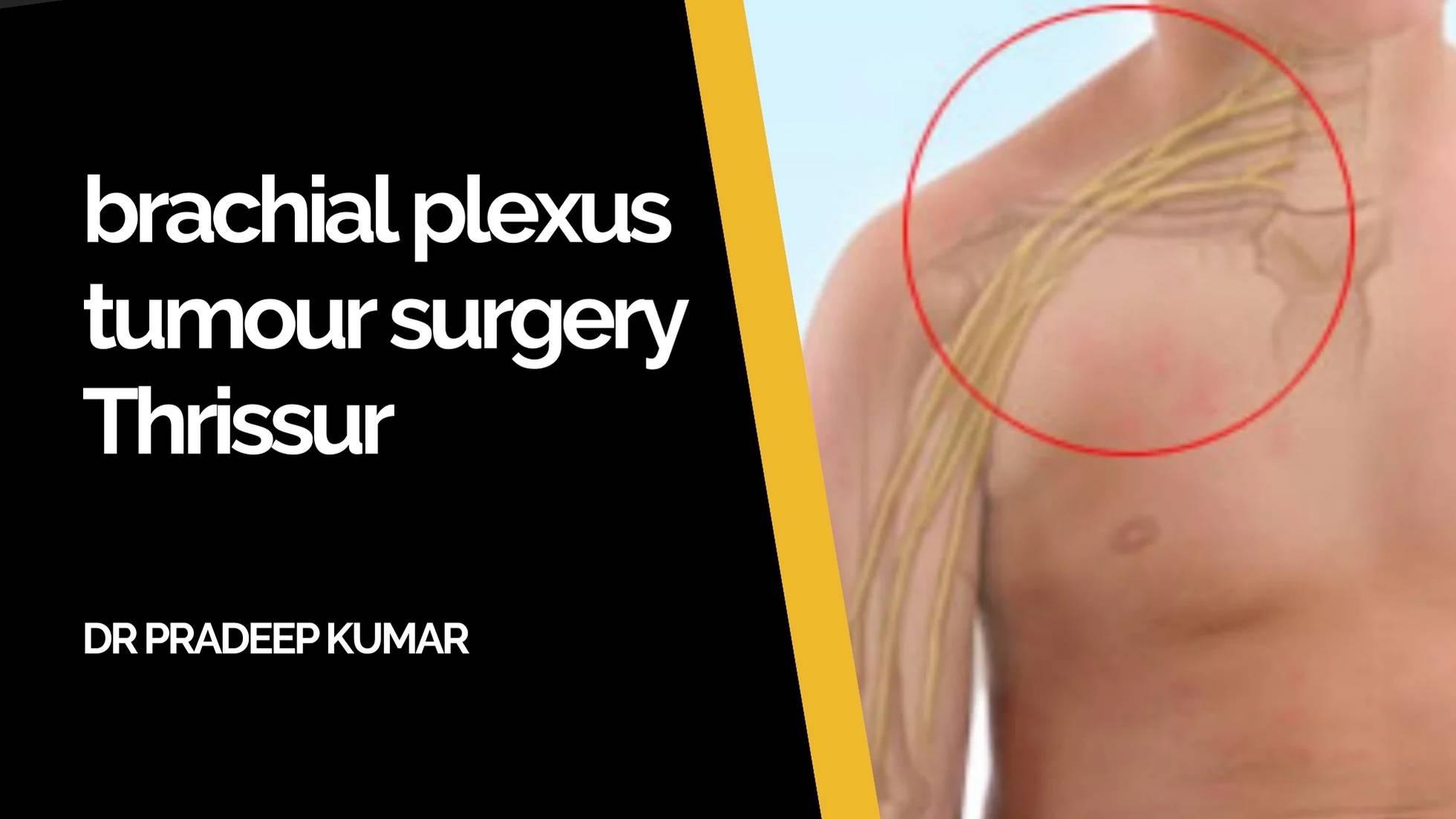
The brachial plexus is a highly complex network of nerves located between the neck and shoulder. It branches out into multiple nerves that power every movement of the upper limb.
It controls:
Shoulder movement
Elbow bending and straightening
Wrist motion
Finger movement
Sensation throughout the arm
When a tumour develops anywhere near or within this nerve network, it can interfere with signal transmission, causing problems ranging from mild tingling to complete paralysis of the arm. Early diagnosis and precise treatment are essential.
What Is a Brachial Plexus Tumour?
A brachial plexus tumour is an abnormal growth arising from the nerve sheath or surrounding structures. These tumours may be:
1. Benign tumours
Schwannomas
Neurofibromas
Lipomas
Ganglioneuromas
These usually grow slowly and may cause symptoms only when they compress nerves.
2. Malignant tumours
Malignant peripheral nerve sheath tumours (MPNST)
Sarcomas involving the plexus
These require early intervention for the best outcomes.
3. Secondary/Metastatic tumours
Tumours from nearby organs or lymph nodes may invade the plexus.
Depending on size, location, and type, treatment plans vary widely — from conservative monitoring to advanced microsurgery.
Symptoms: When to Suspect a Brachial Plexus Tumour
Patients often ignore early symptoms thinking they are caused by muscle strain or spine issues. But persistent or progressive symptoms should not be overlooked.
Common warning signs include:
Constant pain in shoulder or arm
Weakness while lifting, holding, or gripping
Numbness or tingling in fingers
Loss of hand coordination
Muscle wasting of upper limb
Electric-shock–like sensations
Lump or swelling in the supraclavicular region
Reduced shoulder mobility
Unexplained arm heaviness
Any of these symptoms should be evaluated by a nerve specialist, particularly if they worsen over time.
Diagnosis: How Experts Identify Brachial Plexus Tumours
Accurate diagnosis is the foundation of successful treatment. In Thrissur, centres specialising in nerve surgery use a combination of advanced imaging and functional tests.
1. MRI (Magnetic Resonance Imaging)
Gold standard
Shows tumour size, location, nerve involvement
2. MR Neurography
Provides enhanced nerve pathway visibility
Helps plan microsurgery precisely
3. CT Scan
Useful for tumours involving bones or chest wall
4. Ultrasound
Helps differentiate between cystic and solid lesions
5. Nerve Conduction Studies / EMG
Assesses nerve function and damage extent
6. Biopsy (Selected cases)
FNAC or core biopsy, done with extreme caution to avoid nerve injury
Combining these tools gives a complete understanding of the tumour’s nature and helps create an accurate surgical roadmap.
Treatment Options for Brachial Plexus Tumours
Treatment varies depending on tumour type, symptoms, and functional loss.
✔ 1. Observation (for small, non-symptomatic benign tumours)
Regular monitoring with MRI scans.
✔ 2. Surgical Removal (Most common option)
Removes tumour completely
Relieves pressure on nerves
Prevents future nerve damage
Often restores function
✔ 3. Nerve Reconstruction Procedures (when required)
Nerve repair
Nerve grafting
Nerve transfer
Tendon transfer
Muscle transfer
✔ 4. Radiotherapy / Chemotherapy
Used in malignant or metastatic tumours.
✔ 5. Rehabilitation
Physiotherapy and occupational therapy are crucial for regaining limb function after surgery.
Why Thrissur Is Becoming a Preferred Centre for Brachial Plexus Tumour Surgery
Thrissur is rapidly emerging as a strong medical hub in Kerala, especially for advanced reconstructive and nerve surgeries. Patients from various districts — and even outside Kerala — choose Thrissur for the following reasons:
🌟 1. Expertise in Complex Nerve Surgery
Advanced training, microsurgical skills, and years of experience handling complicated brachial plexus tumour cases.
🌟 2. Modern Operating Theatres
High-precision microscopes, nerve stimulators, microinstruments, and intraoperative monitoring systems make surgery safer.
🌟 3. Multidisciplinary Support
Collaboration between neurosurgeons, plastic surgeons, oncologists, radiologists, anaesthetists, and rehabilitation specialists.
🌟 4. Structured Postoperative Care
Centers in Thrissur offer specialized physiotherapy units designed for upper-limb nerve recovery.
🌟 5. Better Recovery Rates
Early functional return and higher limb preservation success in complex cases.
🌟 6. Patient-Centred Approach
Complete guidance from diagnosis to long-term rehabilitation.
The Surgery: What Actually Happens?
Surgery on the brachial plexus is considered one of the most delicate procedures in reconstructive surgery. Tumours often lie extremely close to critical nerves, making accuracy vital.
1. Incision and Access
The surgeon uses specialized approaches around the neck, shoulder, or armpit depending on tumour location.
2. Microscopic Dissection
Under high magnification, nerves are identified, protected, and separated from the tumour.
3. Tumour Excision
The tumour is carefully peeled away, ensuring maximum nerve preservation.
4. Reconstruction (If Needed)
If nerve fibres are damaged or removed along with a malignant tumour, reconstruction is performed using:
Nerve grafts
Nerve transfers
Tendon transfers
Muscle transfers
5. Wound Closure
Precise closure is done to minimize scarring and preserve muscle function.
This entire process requires patience, expertise, and an advanced surgical setup.
Types of Tumours Commonly Treated
1. Schwannomas
Benign and usually well-defined.
2. Neurofibromas
May be associated with neurofibromatosis.
3. Lipomas
Fat-containing tumours that compress nerves.
4. Malignant Peripheral Nerve Sheath Tumours
Require aggressive treatment and reconstruction.
5. Plexiform Neurofibromas
Complex and often involve multiple nerve branches.
6. Metastatic Tumours
Spread from other organs into the plexus region.
Recovery After Brachial Plexus Tumour Surgery
Recovery varies depending on tumour type and extent of reconstruction.
✔ Immediately After Surgery
Arm may feel heavy or numb
Mild swelling
Pain is usually well-controlled
✔ First Three Months
Gradual improvement in strength
Nerve regeneration begins
Range of motion exercises start
✔ Six Months to One Year
Major functional recovery
Muscle reactivation through physiotherapy
Reconstruction results become evident
✔ Long-Term
Depending on tumour type and surgery, patients may regain full or partial function
Regular follow-ups ensure stable nerve recovery
Importance of Physiotherapy
Physiotherapy is just as crucial as surgery. Without rehabilitation, even the best surgical reconstruction may not give optimal results.
Therapy focuses on:
Strengthening shoulder muscles
Improving arm coordination
Restoring hand grip
Preventing stiffness
Enhancing nerve regeneration
Specialized physiotherapists trained in brachial plexus rehabilitation play a major role in the patient’s long-term outcome.
When Should a Patient Seek Immediate Help?
Patients should consult a nerve specialist if they notice:
Sudden increase in pain
Rapid loss of muscle strength
Visible arm muscle shrinking
Numbness spreading
A growing lump near the collarbone
Difficulty performing daily tasks
These may indicate tumour progression or nerve compression.
Emotional and Psychological Support
Brachial plexus conditions affect not just physical health but also mental well-being. Patients may experience:
Anxiety due to limb weakness
Difficulty at work
Body image concerns
Stress during recovery
Thrissur’s multidisciplinary centres offer counselling and patient support programs to improve emotional resilience.
Cost of Brachial Plexus Tumour Surgery in Thrissur
The cost varies depending on:
Tumour size and type
Need for microsurgery
Reconstruction requirements
Hospital stay duration
Physiotherapy needs
Compared to metropolitan cities, Thrissur provides advanced surgical care at more affordable rates while maintaining high standards.
Success Rates
With modern microsurgery and structured rehabilitation, outcomes have significantly improved:
Early tumour removal often leads to complete functional recovery
Benign tumour surgeries have excellent success rates
Malignant conditions, when treated early, show improved outcomes
Reconstruction helps restore meaningful movement even in severe cases
Why Early Treatment Matters
Delaying treatment can cause:
Permanent nerve damage
Muscle wasting
Difficulty regaining arm movement
Limited reconstruction possibilities
Tumour progression
Early surgery gives the best chance for long-term recovery.
Brachial Plexus Tumour Surgery Thrissur — Treatment Access
Patients searching for brachial plexus tumour surgery Thrissur can find advanced nerve surgery and reconstruction services provided by experienced microsurgical teams. The region is now recognized as one of Kerala’s trusted centres for complex nerve tumour management.
A brachial plexus tumour is an abnormal growth that forms on or around the nerves controlling the shoulder, arm, and hand. These tumours may be benign or malignant and can affect nerve function.
Common symptoms include shoulder pain, arm weakness, numbness, tingling, reduced grip strength, and a lump near the collarbone. Persistent or worsening symptoms should be evaluated promptly.
Diagnosis is usually done through MRI, MR neurography, nerve conduction studies, ultrasound, and sometimes a biopsy. These tests help determine tumour type, size, and nerve involvement.
Not always. Small, non-symptomatic benign tumours may be monitored. Surgery is recommended when the tumour causes pain, weakness, nerve compression, or risk of long-term nerve damage.
Surgeons use microsurgical techniques to carefully separate the tumour from the nerves. If any nerve fibres are affected, reconstruction techniques like nerve grafting or transfers may be performed.
Recovery varies depending on tumour type and reconstruction. Patients may see improvement within weeks, but full nerve recovery can take 6 to 12 months. Physiotherapy plays a major role in regaining function.
Most are benign, such as schwannomas or neurofibromas. However, some can be malignant. Early diagnosis helps determine the correct treatment approach.
Many patients experience significant improvement, especially if the tumour is removed early. Recovery depends on tumour size, nerve involvement, and the success of physiotherapy.
Possible risks include temporary numbness, weakness, infection, or scarring. With advanced microsurgical techniques, complications are minimized and outcomes are generally positive.